

Teacher Newsletter for Reading Comprehension Strategies: What Families Need to Know
Why Comprehension Strategy Newsletters Improve Home Reading
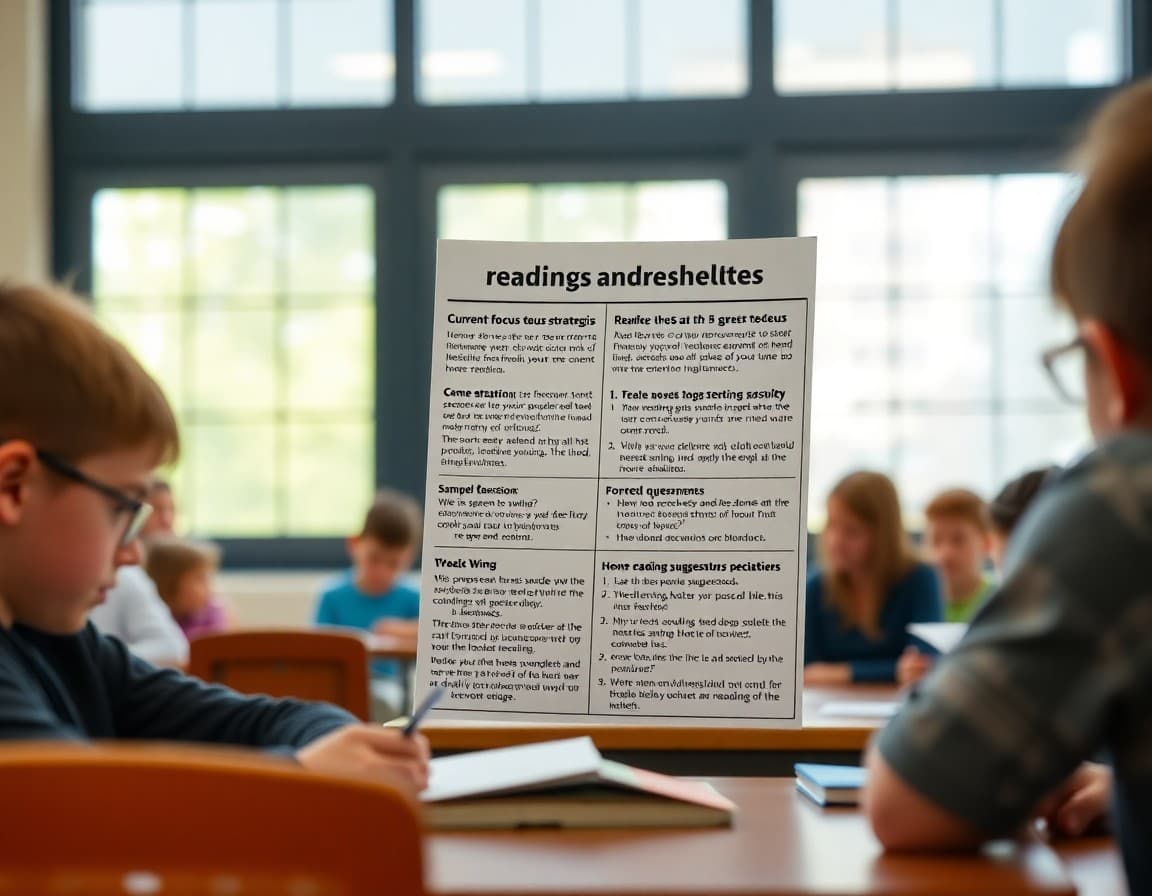
Most families ask their student "how was the reading?" and receive a one-word answer. Families who know what comprehension strategy their student is practicing in class can ask a specific question tied to that strategy, and the answer they receive tells them and the student something meaningful about whether the reading was actually understood. A comprehension strategy newsletter turns home reading from a check-the-box task into an active thinking exercise that reinforces the skill being developed in class.
One Strategy at a Time: How Reading Instruction Actually Works
Strong reading instruction does not teach all comprehension strategies simultaneously. It focuses on one strategy at a time, developing student skill in applying that strategy with multiple texts before adding another. A newsletter that explains which strategy is the current focus and why this strategy is being prioritized now helps families understand that the instruction is intentional rather than random. Students who know they are specifically working on making inferences apply the strategy with more awareness than those who experience reading instruction as a general discussion of books.
What Inference Looks Like in Practice
Inference is one of the most commonly taught and most misunderstood reading strategies. Making an inference means using text evidence plus prior knowledge to reach a conclusion the text does not state directly. A newsletter that explains inference with a simple example, showing the text clue, the background knowledge the reader brings, and the conclusion that combines them, gives families a mental model of the strategy rather than just the name. A family who knows what inference means can ask "how do you know that? Does the text say that directly?" which builds the skill with every conversation.
Summarizing Without Retelling
Many students confuse summarizing with retelling. Retelling names everything that happened. Summarizing identifies the most important information and states it briefly. A newsletter that distinguishes these two things gives families a framework for recognizing which their student is doing. If a student gives a summary that is several paragraphs long and includes everything they remember, they are retelling. The useful question is "what are the two or three most important things? What would a reader need to know if they hadn't read it?"
Reading and Monitoring Comprehension
One of the most important metacognitive skills is noticing when comprehension breaks down. Students who read through a confusing passage without stopping have developed a habit of decoding without comprehending. A newsletter that explains monitoring comprehension and suggests that families ask their student to show where in a chapter they got confused normalizes confusion as a reading signal rather than a failure. Students who know to stop when confused and reread or ask a question become more effective readers across all subjects.
Cross-Text Connections: When Multiple Texts Are Involved
Many reading units involve multiple texts on the same topic or theme. The comprehension skill of synthesizing information across texts requires students to track how different authors treat the same subject and what each adds to the overall understanding. A newsletter that explains this skill and names the texts the class is currently reading in parallel helps families understand the complexity of what students are doing when they say "we are reading two things at once."
Consistent Strategy Communication Through Daystage
Reading teachers who use Daystage for comprehension strategy newsletters give families the specific language they need to have productive conversations about reading. One newsletter per strategy focus, sent at the start of each new instructional emphasis, builds the home reading culture that strong comprehension development requires over a full school year.
Get one newsletter idea every week.
Free. For teachers. No spam.
Frequently asked questions
What should a reading comprehension strategies newsletter explain?
A reading comprehension strategies newsletter should name the specific strategy being taught, explain what it means in plain language, describe what a student using it effectively looks like, give families a question or prompt they can use during home reading to reinforce the strategy, and explain how this strategy connects to the reading work the class is currently doing.
What are the most commonly taught reading comprehension strategies?
The most commonly taught reading comprehension strategies include making inferences from text evidence, identifying main idea and supporting details, summarizing without copying the text, making connections to prior knowledge or experience, visualizing and monitoring comprehension, asking questions while reading, and synthesizing information across multiple texts. Each strategy builds a different kind of reading skill.
How can families reinforce comprehension strategies during home reading without formal training?
Families can reinforce comprehension strategies by asking a single targeted question based on the strategy the class is currently working on. If the strategy is inference, asking "why do you think the character did that? Where in the text does it say that?" prompts the right thinking. If the strategy is main idea, asking "what is this section mostly about?" practices the skill. Teachers who send home a specific question tied to the current strategy make it easy for families to have these conversations.
At what point in the reading should families use comprehension strategies?
Comprehension strategies are most effective when used during reading rather than only after finishing. Pausing at the end of a chapter or a section to ask a comprehension strategy question works better than waiting until the book is finished and asking global questions. A newsletter that explains this timing helps families understand that strategy practice is not a test after reading but a tool used throughout.
What tool helps reading teachers send newsletters efficiently?
Daystage is built for school communication. Reading and ELA teachers use it to send formatted comprehension strategy newsletters with strategy explanations, sample questions, and home reading guidance directly to parent email lists.

Adi Ackerman
Author
Adi Ackerman is a former classroom teacher and curriculum writer with 8 years in K-8 schools. She writes about school communication, parent engagement, and what actually works in real classrooms.
More for Subject Teachers
ELA Teacher Newsletter: Communicating Reading and Writing Goals to Families
Subject Teachers · 6 min read
Teacher Newsletter for Reading List Updates: Communicating Upcoming Texts to Families
Subject Teachers · 6 min read
Teacher Newsletter for Vocabulary Building: How to Communicate Vocabulary Instruction to Families
Subject Teachers · 6 min read
Ready to send your first newsletter?
3 newsletters free. No credit card. First one ready in under 5 minutes.
Get started free