

Teacher Newsletter for Science Writing: Helping Families Support Evidence-Based Scientific Explanation
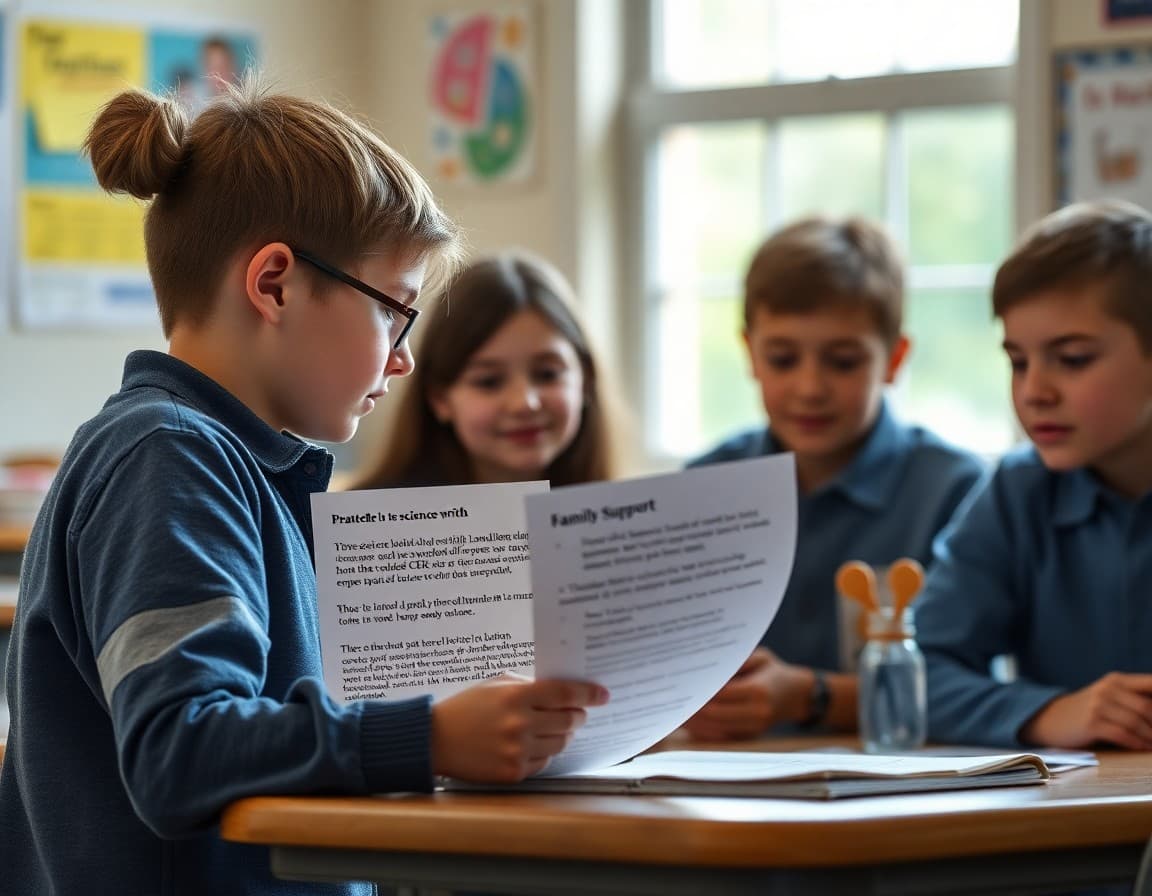
Science Writing Is a Different Skill From ELA Writing
Students who are strong writers in English class sometimes struggle with science writing because the forms are different. Science writing is not narrative or persuasive in the rhetorical sense; it is evidence-based and discipline-specific. The goal of science writing is to communicate scientific claims supported by data and connected to scientific principles, clearly enough that another scientist could evaluate the reasoning. A newsletter that explains this distinction helps families support science writing without inadvertently encouraging the ELA approaches that do not apply.
The CER Framework: What It Requires
CER writing is the most commonly used science writing framework in K-12 science education. A Claim is a direct answer to the scientific question being investigated. It is specific, testable, and does not begin with "I think" or "I believe." Evidence is quantitative or qualitative data from an investigation or a reputable source. Reasoning connects the evidence to the claim by explaining the scientific principle that makes the evidence relevant. A newsletter that defines each component with a one-sentence example shows families what students are trying to produce.
What Distinguishes Strong Reasoning From Weak Reasoning
The reasoning section is the hardest part of CER and the part students most frequently underdevelop. Weak reasoning repeats the evidence: "this shows that my claim is correct." Strong reasoning explains the scientific mechanism: "this shows that the claim is correct because the scientific principle that governs this situation is..." Families who know to ask "can you explain why that evidence matters?" rather than "does your answer make sense?" are prompting the right cognitive work without needing to understand the science themselves.
Science Writing in Lab Reports and Short Answer
CER writing appears in two main contexts: extended lab report writing and short-answer test questions. Students who learn the framework for lab reports can apply it in shorter form on test questions, where a complete CER response in three to five sentences earns full credit for an evidence-based explanation question. A newsletter that connects lab writing practice to test performance helps students understand why science writing skills are worth developing carefully rather than treating as a box to check.
Using Data as Evidence
Many students include data in their CER writing without using it as evidence. Writing "the temperature was 45 degrees" is including data. Writing "the temperature of 45 degrees Celsius was significantly higher than the control group's 22 degrees Celsius, demonstrating a clear difference in the experimental condition" is using data as evidence. A newsletter that explains this distinction and shows an example gives families the frame to ask "are you using your data as evidence, or just reporting it?" which is a useful self-check students can apply to their own drafts.
Improving Science Writing Through Revision
Science writing improves through revision guided by specific feedback. Students who receive feedback naming exactly which part of the CER needs development, "your reasoning does not include the scientific principle," can revise purposefully. Students who receive only a grade cannot identify what to improve. A newsletter that explains how science writing is assessed and what specific feedback looks like helps families understand how to use the feedback their student receives on writing assignments.
Science Writing Communication Through Daystage
Science teachers who use Daystage to communicate about science writing expectations give families the framework they need to have productive conversations about their student's work. Understanding what CER writing is and what the common challenges are allows families to ask the right questions and help their student develop one of the most transferable skills in their science education.
Get one newsletter idea every week.
Free. For teachers. No spam.
Frequently asked questions
What should a science writing newsletter explain to families?
A science writing newsletter should explain the specific writing format the class is using (such as CER: Claim, Evidence, Reasoning), describe what each component requires, show an example of a strong response and a weak response for comparison, explain how science writing is assessed, and give families a specific question to ask their student that checks whether they understand the format.
What is CER writing and why do science teachers use it?
CER stands for Claim, Evidence, Reasoning. A Claim is a statement that answers the scientific question. Evidence is specific data that supports the claim. Reasoning explains why the evidence supports the claim by connecting it to the relevant scientific concept or principle. CER gives students a structure for evidence-based argument that mirrors how scientists communicate findings. It is one of the most widely used writing frameworks in science education because it directly develops scientific thinking alongside writing skill.
What is the most common mistake students make in CER writing?
The most common CER mistake is writing a reasoning section that restates the evidence rather than explaining why the evidence supports the claim. Reasoning that says "the temperature went up, which supports my claim that more heat produces faster reactions" is restating the evidence. Strong reasoning says "the temperature increase supports the claim because according to collision theory, higher temperatures give molecules more kinetic energy, which leads to more frequent and more forceful collisions that break reactant bonds." Teaching students to include the scientific principle is the key revision.
How can families help with science writing when they do not know the science?
Families can support science writing by asking their student to read their CER response aloud and then answer three questions: What is your claim? What evidence did you use? Why does that evidence support your claim? If the student cannot answer the third question without referencing the evidence again, the reasoning needs development. This check does not require the family to know the science content.
What tool helps science teachers send writing newsletters efficiently?
Daystage is built for school communication. Science teachers use it to send formatted science writing newsletters with framework explanations, example responses, and family support strategies directly to parent email lists.

Adi Ackerman
Author
Adi Ackerman is a former classroom teacher and curriculum writer with 8 years in K-8 schools. She writes about school communication, parent engagement, and what actually works in real classrooms.
More for Subject Teachers
Teacher Newsletter for Lab Reports: Helping Families Understand What Strong Lab Reports Require
Subject Teachers · 6 min read
Teacher Newsletter About Science Homework: Helping Families Support Effective Study
Subject Teachers · 6 min read
Teacher Newsletter for Citation Guides: Helping Families Support Research and Source Documentation
Subject Teachers · 6 min read
Ready to send your first newsletter?
3 newsletters free. No credit card. First one ready in under 5 minutes.
Get started free