

Teacher Newsletter for Environmental Science: Connecting Families to Sustainability Learning
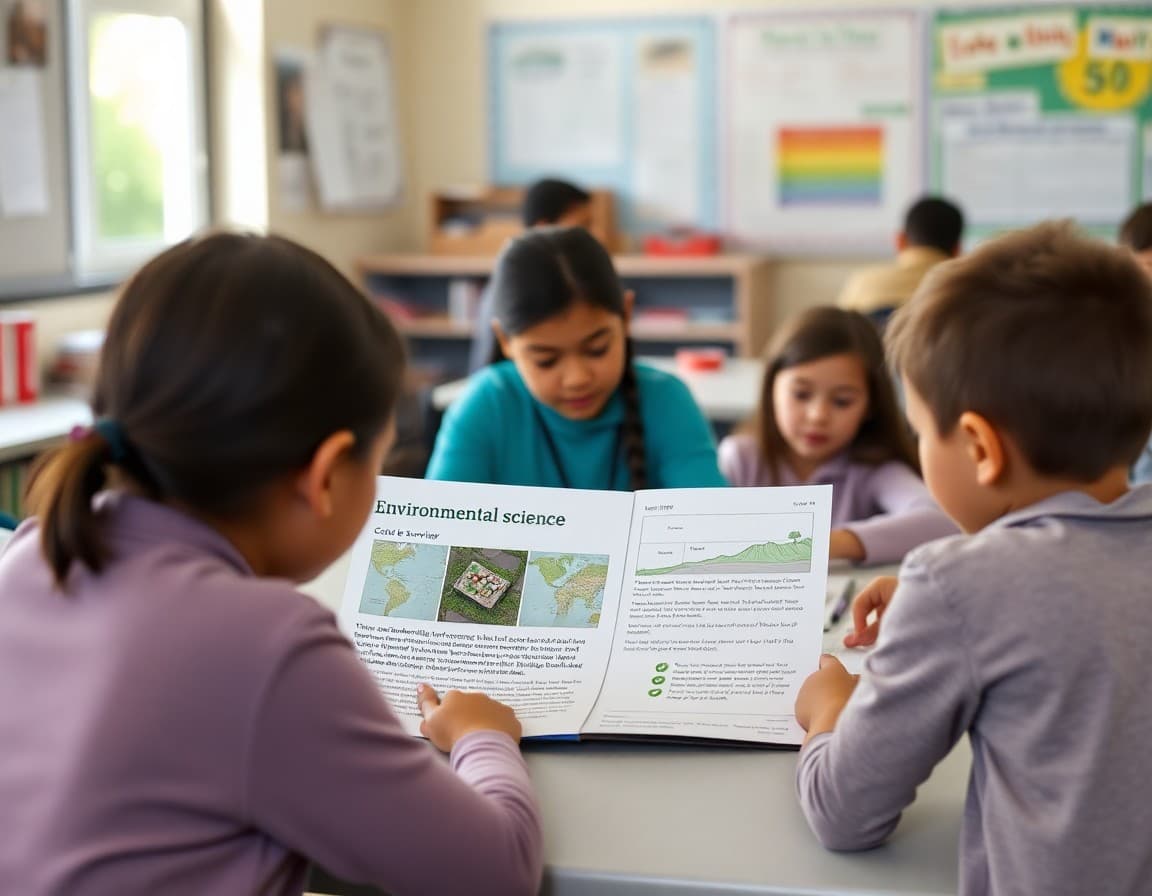
Environmental Science Is Where the Classroom Meets the Community
Environmental science is the most directly connected to students' actual lives of any science course. The water quality of a local stream, the air quality on a smoggy day, the energy source powering the school, and the waste produced by a household are all environmental science data points. A newsletter that opens each unit by naming the local or regional environmental context of the current topic transforms abstract ecological concepts into conditions families can observe and discuss. Environmental science does not require a field trip to become relevant; it only requires knowing where to look.
What This Environmental Science Unit Covers
Environmental science units address specific environmental systems or problems. A unit on ecosystems examines how energy flows and matter cycles through communities of organisms. A unit on water systems examines the hydrological cycle and the factors affecting water quality and availability. A unit on climate covers how greenhouse gases affect global temperature and what the projected consequences are. A unit on biodiversity examines what species diversity means for ecosystem health. A newsletter that names the specific unit topic and explains the central question it addresses gives families the framing for everything that follows.
The Science Behind the Environmental Issue
Environmental science topics appear regularly in news coverage, often without the scientific context that makes the reporting meaningful. A newsletter that explains the scientific mechanism behind the unit topic, "atmospheric CO2 traps outgoing infrared radiation, which warms the lower atmosphere" rather than just "climate change is happening," gives students and families the scientific foundation that distinguishes informed understanding from opinion. Students who understand the mechanism can evaluate new information rather than only accepting it.
Local and Regional Connections
One of the strengths of environmental science as a school subject is that every unit has a local version. Air quality units connect to local industrial or traffic pollution data. Water units connect to the local watershed and drinking water source. Biodiversity units connect to local species loss and conservation efforts. A newsletter that names the local environmental context of the current unit gives families a way to visit, observe, or research the issue in their own community, which is the kind of direct engagement that makes environmental education stick.
Solutions and Student Agency
Environmental science can feel overwhelming when it focuses exclusively on problems. A newsletter that names the solutions the unit also examines, whether renewable energy, habitat restoration, sustainable agriculture, or policy approaches, helps students and families leave the unit with a sense of possibility rather than despair. Students who understand both the problem and the range of responses are better prepared for environmental citizenship than those who only learn what is going wrong.
Field Work and Outdoor Learning
Environmental science often includes outdoor investigation. Stream sampling, vegetation surveys, air quality monitoring, and species identification walks all generate real data from the local environment. A newsletter that names the outdoor components of the current unit and explains what students will be doing and learning from the experience helps families understand why outdoor class time is not a break from learning but a form of it.
Environmental Science Communication Through Daystage
Environmental science teachers who use Daystage for unit newsletters connect families to the local and global environmental story their student is learning to read. When families know what ecological systems the class is studying, they see those systems differently in their own lives, which is the transfer of learning that environmental science aims for.
Get one newsletter idea every week.
Free. For teachers. No spam.
Frequently asked questions
What should an environmental science unit newsletter include?
An environmental science unit newsletter should describe the environmental systems or issues the unit examines, explain the science behind the environmental topic, connect the unit to local or regional environmental conditions families can observe, name any field work or community-based learning components, and give families specific actions or observations they can do together that reinforce the unit content.
How does environmental science differ from biology or earth science?
Environmental science is an interdisciplinary subject that draws on biology, chemistry, physics, earth science, economics, and policy to examine how human activity affects natural systems and how those systems function. Unlike a single-discipline science course, environmental science asks students to understand the connections between human choices and ecological outcomes, which requires integrating scientific data with social and economic reasoning.
How can families support environmental science learning at home?
Families can support environmental science learning by tracking their household's energy and water use alongside a unit on resource consumption, visiting a local natural area during an ecology unit, discussing news coverage of environmental events during a climate or pollution unit, and reducing waste as a family project during a unit on sustainability. Environmental science is one of the few subjects where homework can happen in the kitchen and backyard.
How should teachers handle controversial environmental topics in newsletters?
Environmental science includes topics where scientific consensus and political opinion diverge. A newsletter should clearly distinguish between the scientific findings (which have high consensus among scientists) and the policy debates (which involve value trade-offs and political disagreement). Presenting the scientific basis of the topic factually while acknowledging that policy responses are debated maintains academic integrity and respects the range of family perspectives in any classroom.
What tool helps environmental science teachers send newsletters efficiently?
Daystage is built for school communication. Environmental science teachers use it to send formatted unit newsletters with concept overviews, local connection ideas, and family engagement suggestions directly to parent email lists.

Adi Ackerman
Author
Adi Ackerman is a former classroom teacher and curriculum writer with 8 years in K-8 schools. She writes about school communication, parent engagement, and what actually works in real classrooms.
More for Subject Teachers
Teacher Newsletter for Earth Science Units: Bringing Geoscience Home to Families
Subject Teachers · 6 min read
Teacher Newsletter for Biology Units: Connecting Families to Life Science Learning
Subject Teachers · 6 min read
Teacher Newsletter About Science Homework: Helping Families Support Effective Study
Subject Teachers · 6 min read
Ready to send your first newsletter?
3 newsletters free. No credit card. First one ready in under 5 minutes.
Get started free