

Social Studies Teacher Newsletter: Parent Conference Newsletter Template
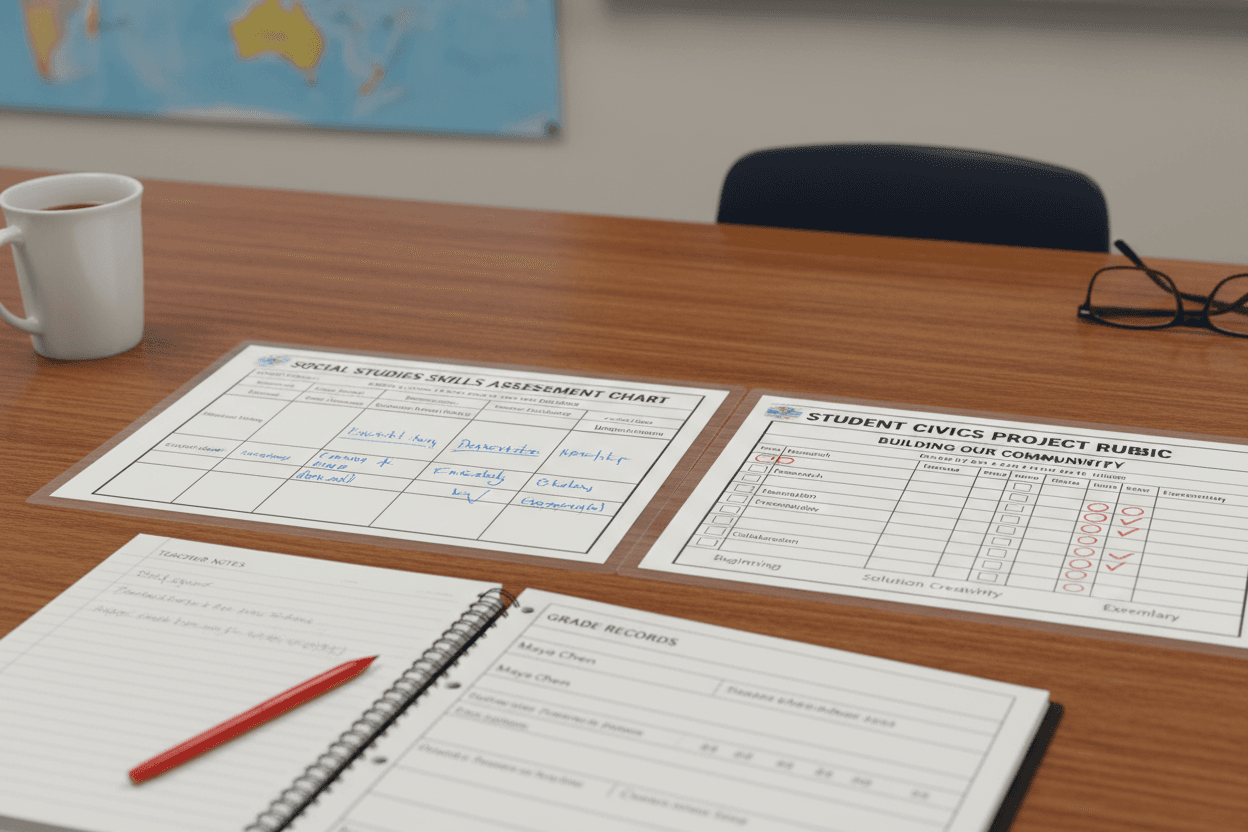
Social studies parent conferences can be hard to navigate when families arrive without context. Parents tend to think of social studies as a subject about memorizing dates and places, so when the conference reveals that their student is being assessed on historical thinking, geographic reasoning, and primary source analysis, the conversation often stalls while you explain the framework before you can discuss the student. A pre-conference newsletter closes that gap.
This guide covers what to include in a social studies pre-conference newsletter, how to explain historical thinking skills and geographic reasoning in plain language, and how to set up a conference conversation that actually focuses on growth and next steps.
Send the newsletter five to seven days before conferences begin
A pre-conference newsletter serves its purpose only if families have time to read it before walking into the meeting. Send it the week before conferences, not the night before. Families who have had a few days to process the information arrive with better questions and engage more productively with the data you share.
Include the conference scheduling link or sign-up instructions if families still need to book an appointment. Combining logistics and content in the same newsletter reduces the number of separate messages families need to track, which increases the chance they actually read the content section.
Summarize the units covered so far this year
Many parents are not sure exactly what their student has studied in social studies beyond a general unit name. Give a two-sentence summary of each major unit: what time period or region it covered, what the central questions or themes were, and what types of sources students used. This brief summary gives parents a shared reference point for the conference conversation and shows that the curriculum has been substantive and cumulative.
Situate each unit briefly within a larger arc. A parent who can see that the class moved from exploration to colonization to revolution to the early republic understands the scope and sequence rather than seeing each unit as a disconnected topic. That understanding changes what they notice in their student's work and what questions they think to ask.
Explain historical thinking skills before the conference
Historical thinking is the framework most contemporary social studies teachers use to organize instruction and assessment, but very few parents know what it means. Your pre-conference newsletter should define it briefly and explain why it matters more than factual recall alone.
Name the specific skills: chronological reasoning, which is understanding how events relate in time and what caused what; sourcing, which is considering who wrote a document, when, and for what audience; corroboration, which is comparing how multiple sources describe the same event; and contextualization, which is understanding how the historical moment shaped what people believed and chose to do. Tell parents which of these skills have been assessed and where their student stands. A parent who understands this framework will engage very differently with their student's primary source work than one who thinks the goal is memorizing facts.
Distinguish geographic reasoning from map memorization
When parents hear "geography," they typically picture a map of countries and capitals. Contemporary social studies assessments measure something more analytical than that. Explain in the newsletter that you assess students on geographic reasoning: understanding how physical features influence where people live, how goods are traded, and why conflicts arise in specific places, not only whether they can point to a country on a blank map.
Give one concrete example of geographic reasoning so parents know what you mean: "When students look at a map of ancient Mesopotamia, they should be able to explain why civilization developed between those two rivers and not somewhere else, based on what the physical geography tells them about water access, soil quality, and trade routes." That single example makes the skill visible and distinguishable from rote location knowledge.
Describe primary source skills with a concrete example
Primary source analysis is consistently one of the most assessed skills in social studies and one of the least understood by families. Many parents learned history from textbooks alone and have no framework for thinking about primary source documents. Your newsletter should explain what students are expected to do with primary sources and give one brief, accessible example.
Explain that students are expected to read a historical document, image, map, or political cartoon and identify who created it, what perspective it reflects, what it reveals about the historical period, and how it connects to or complicates what the textbook says. An example: "When students read Lincoln's Emancipation Proclamation, they analyze not just what it says but which enslaved people it applied to, why Lincoln issued it when he did, and what political purpose it served alongside its moral one." That level of analysis is the skill, not the fact that the Proclamation existed.
Preview the student portfolio or project work you will share
If you plan to share student work samples, projects, or assessment results during the conference, tell families in advance what they will see. A parent who arrives knowing they will look at a primary source document analysis, a geography mapping project, and a historical essay is better prepared to engage with that work than one who encounters it for the first time at the table.
If you use a rubric to evaluate major projects, include a simplified version of it in the newsletter with a one-sentence explanation of each dimension. Parents who understand what you are looking for in historical analysis or a research project will notice it in the student's work rather than focusing only on superficial features like length and neatness.
Close with suggested questions and conference logistics
Give parents three specific questions to bring: What historical thinking skill is my child developing most confidently? Where does my child struggle most with analysis, and what does that look like in their work? How can we connect what the class is studying to events or issues our family can talk about at home?
Follow with clear logistics: the conference date range, how long each appointment is, whether students will be present, and any materials parents should bring. A brief, organized close gives families everything they need to arrive on time and ready to have a genuine conversation about their student's work.
Get one newsletter idea every week.
Free. For teachers. No spam.
Frequently asked questions
What should a social studies teacher cover in a pre-conference newsletter?
Explain what parents will see and hear during the conference: which units have been covered so far, how student understanding has been assessed, what skills the assessments measure beyond content recall, and where each student's areas of strength and growth lie. For social studies specifically, parents often do not know that the subject is assessed on analytical skills like historical thinking, geographic reasoning, and primary source interpretation, not just factual recall. A pre-conference newsletter that explains this framing helps parents engage meaningfully with the data you present.
How do social studies teachers explain historical thinking skills to parents before a conference?
Describe the skills plainly and give one concrete example of each. Historical thinking includes chronological reasoning (understanding how events relate in time and cause and effect), sourcing (considering who wrote a document and why), corroboration (comparing what multiple sources say about the same event), and contextualization (understanding how the historical moment shaped what people believed and did). A parent who walks into the conference knowing these skill categories will understand why their student's score on a document-based question is a different measure than their score on a factual recall quiz.
How should social studies teachers talk about geography skills at a parent conference?
Distinguish between locational geography and geographic reasoning. Locational geography is knowing where countries, capitals, and physical features are. Geographic reasoning is understanding why human settlements, trade routes, conflict zones, and economic patterns look the way they do given the physical environment. Both are assessed in social studies, and they require different skills. A student can struggle with map identification but excel at geographic analysis, or vice versa. Tell parents which skill their student is stronger in and what growth looks like in the other.
What questions should social studies teachers encourage parents to ask at the conference?
Invite parents to ask: What historical thinking skill is my child developing most strongly right now? Where does my child struggle most with analysis, and what does that look like in their work? Is there a way to connect what we are studying to things my child sees in the news or our community? How is my child doing with primary source reading, and what can we do at home to build that skill? These questions move the conversation from grade reporting to genuine curriculum and growth discussion.
How does Daystage help social studies teachers send parent conference newsletters?
Daystage lets social studies teachers send a professional pre-conference newsletter to every family in minutes. You write the unit overview, skill explanations, conference logistics, and suggested questions once, then update the scheduling details each conference round. Families receive a clean, readable email they can reference before they arrive for their appointment. You can see who opened it, which helps you identify families who may not have received the context before walking into the conference.

Adi Ackerman
Author
Adi Ackerman is a former classroom teacher and curriculum writer with 8 years in K-8 schools. She writes about school communication, parent engagement, and what actually works in real classrooms.
More for Subject Teachers
Ready to send your first newsletter?
3 newsletters free. No credit card. First one ready in under 5 minutes.
Get started free