
The Principal's Monthly Newsletter: A Practical Guide for Every Month of the School Year
A monthly newsletter from the principal is one of the most effective ways to build trust with families over the course of a school year. Done consistently, it becomes something families look forward to. Done inconsistently, it becomes something families ignore because they cannot predict when or whether it will arrive.
This guide covers how to structure a principal newsletter, what to include each month, and how to build a routine that is sustainable even in the middle of testing season or a busy spring schedule.
Why a monthly cadence works better than weekly for principals
Teachers communicate with families weekly. That frequency works because teachers have classroom-specific updates: homework, upcoming tests, project deadlines, behavior notes. The content changes every week.
For principals, a weekly newsletter quickly runs out of meaningful content. You end up repeating yourself or filling space with fluff. Families notice. Monthly newsletters from the principal work better because:
- You have enough school-level news to fill a meaningful newsletter each month
- Families learn to expect it on a predictable schedule (first Monday of the month, for example)
- You can be more thoughtful about what you include, rather than scrambling every Friday afternoon
- The newsletter feels like an event rather than background noise
If something urgent happens between monthly newsletters, send a standalone alert. Keep the monthly newsletter as your regular, relationship-building channel.
The structure that works for principal newsletters
A principal newsletter does not need to be long to be effective. Three to five sections, clearly labeled, totaling four to six minutes of reading time, hits the sweet spot.
Sections that consistently perform well:
- A personal message from you. Two to three paragraphs. What you observed this month. Something a student or teacher did that stood out. A reflection on where the school is in the year. This is the most read section of any principal newsletter. Families want to hear from a real person, not a committee.
- Upcoming dates and events. The next four to six weeks. Not the whole calendar, just what is coming soon and what families need to prepare for. Include parent-teacher conferences, holidays, testing windows, school events.
- Student spotlight or achievement recognition. One student, class, or grade-level achievement. Keep it specific. "Grade 4 completed their first coding project and presented it to parents" is better than "Students are doing great work."
- School initiative or focus area update. One paragraph on a school-wide goal: attendance improvement, reading scores, the new PBIS system, the renovation project. Families appreciate knowing what the school is actively working on.
- How to reach us. Include the main office number, your email, and the best time to reach you. Every newsletter, not just the first one.
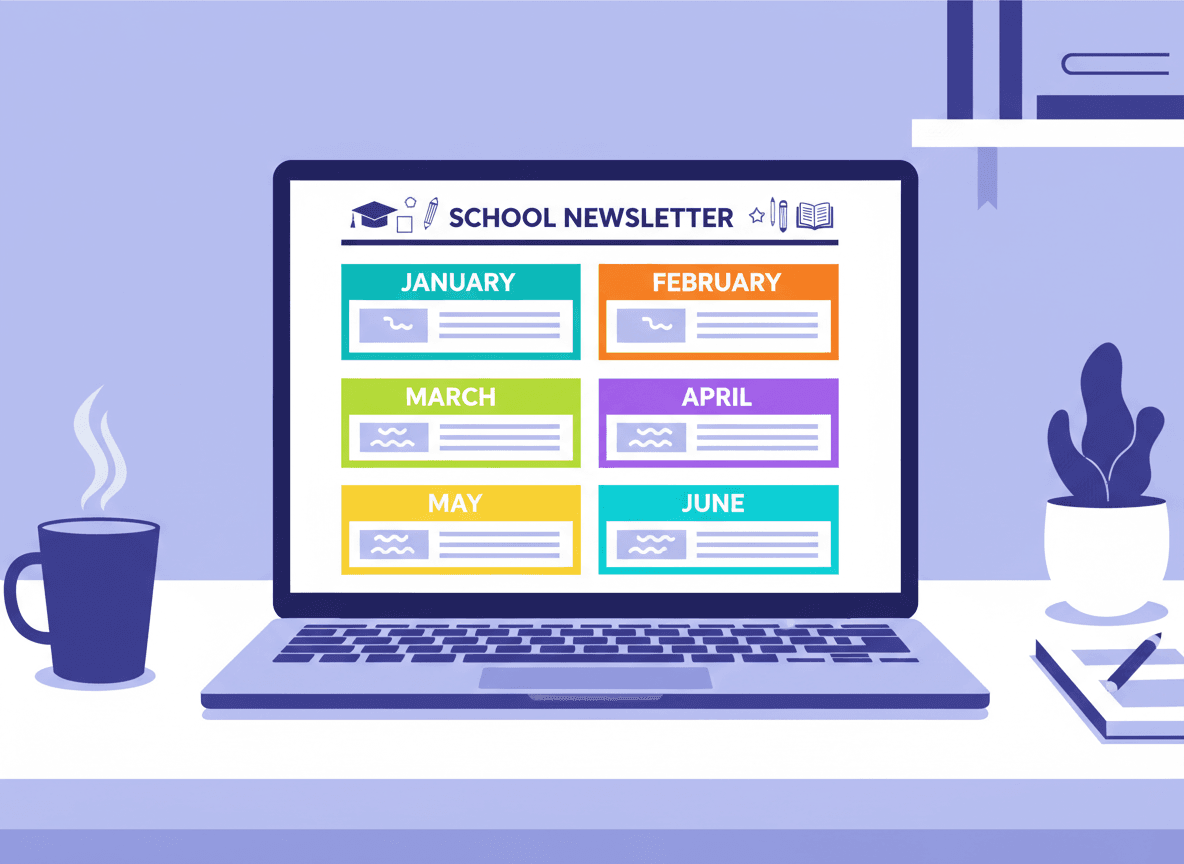
What to write each month of the school year
One of the biggest obstacles to consistent principal newsletters is not having enough to say. Here is a month-by-month guide to the natural topics each month brings:
August/September: Welcome back, first-day procedures, the year ahead, staff introductions, school goals for the year.
October: Fall conferences (if applicable), first grading period update, attendance messaging, Halloween or fall event details.
November: Gratitude theme, first semester check-in, Thanksgiving break schedule, any early holiday event planning.
December: End of first semester reflection, winter break schedule, holiday event details, a personal message of appreciation to families.
January: New year focus, second semester goals, any schedule changes, curriculum highlights from the first semester.
February: Student achievement recognition, testing preparation if spring testing is approaching, Black History Month programming.
March: Spring testing schedule, parent engagement opportunities, spring break dates.
April: Testing season support for families, spring events, teacher appreciation planning.
May: End-of-year schedule, graduation or promotion details, teacher appreciation week, summer learning resources.
June: Year-end reflection, celebration of accomplishments, transition information for next year, goodbye and thank you message.
The personal message section is the most important part
Many principals treat the personal message as a formality. It is not. It is the section families remember. When principals share a genuine observation or reflection, rather than a generic welcome, families feel like they know the person leading the school.
Good personal message topics:
- Something you observed while walking classrooms that made you proud
- A challenge the school is facing and how you are addressing it
- A book or idea that is shaping your thinking this month
- A shout-out to a teacher or staff member who went above and beyond
- A memory from your own school years that connects to what students are doing now
The personal message should sound like you. Read it out loud before you send it. If it sounds like a press release, rewrite it.
How to build a newsletter routine that you actually stick to
The biggest reason principal newsletters stop is that there is no system behind them. The principal intends to send one, gets busy with a discipline situation or a staff emergency, and it slips. Two months go by. Now it feels awkward to restart.
Three things that make monthly newsletters sustainable:
- Block 60 minutes on your calendar the third week of each month specifically for drafting the newsletter. Treat it like a meeting. It is one of your most consistent family-facing communications.
- Keep a running notes file throughout the month. When something happens that is worth sharing, add a sentence to the file. By the time you sit down to write, you have material ready.
- Use a template. The same five sections every month. Different content, same structure. You are not reinventing the format each time, just filling in the content.
How Daystage helps principals build a consistent newsletter habit
Daystage's school newsletter platform was built for exactly this workflow. Set up your school profile once with your name, logo, and brand color. Every newsletter you create from that point inherits the branding automatically. Duplicate last month's newsletter, update the content, and send. The whole process takes under 15 minutes once you have a rhythm.
The inline email format means your newsletter arrives formatted in parents' inboxes, not as a link that requires a second click. Open rates are significantly higher with inline email delivery than with link-based delivery.
Subscriber management handles your full parent list. You can segment by grade level or classroom if you need to send a targeted message. And the send history keeps a permanent record of every newsletter, so families who missed a month can find it.
Get one newsletter idea every week.
Free. For teachers. No spam.
Frequently asked questions
When should a principal send their monthly newsletter?
Send on the same day every month, such as the first Monday, and hold that date without exception. Families who know when to expect communication build a habit around it. Inconsistent timing trains families to treat the newsletter as unpredictable, which means lower open rates and less engagement with the content.
What should a principal include in a monthly newsletter?
Five sections cover the essential ground: a personal message from you, upcoming dates for the next four to six weeks, a specific student spotlight or achievement, a one-paragraph update on a school-wide goal, and clear contact information. The personal message is the most read section by a significant margin. Write it like a person, not a committee.
How often should a principal send a newsletter to families?
Monthly works better than weekly for most principals. Weekly newsletters quickly run out of meaningful school-level content and families start to tune them out. One newsletter per month gives you enough school-level news to fill a meaningful communication and enough lead time to write something worth reading. Reserve urgent alerts for standalone sends between monthly issues.
What do principals commonly get wrong in monthly newsletters?
The most common failure is treating the personal message as a formality and writing something generic that could apply to any school. The second most common failure is having no system, which means the newsletter slips in busy months and never becomes consistent. Without a blocked 60-minute drafting slot and a running notes file, most principals' newsletters eventually stop.
What is the best tool for principals to build a consistent monthly newsletter habit?
Daystage is built for this exact workflow. Set up your school profile once, duplicate last month's newsletter each cycle, update the sections, and send. The inline email format means parents receive it directly in Gmail or Outlook without a second click, which consistently produces higher open rates than link-based newsletter tools.

Adi Ackerman
Author
Adi Ackerman is a former classroom teacher and curriculum writer with 8 years in K-8 schools. She writes about school communication, parent engagement, and what actually works in real classrooms.
More for Principals
Ready to send your first newsletter?
3 newsletters free. No credit card. First one ready in under 5 minutes.
Get started free