
Social Studies Teacher Newsletter: National Month Newsletter Ideas
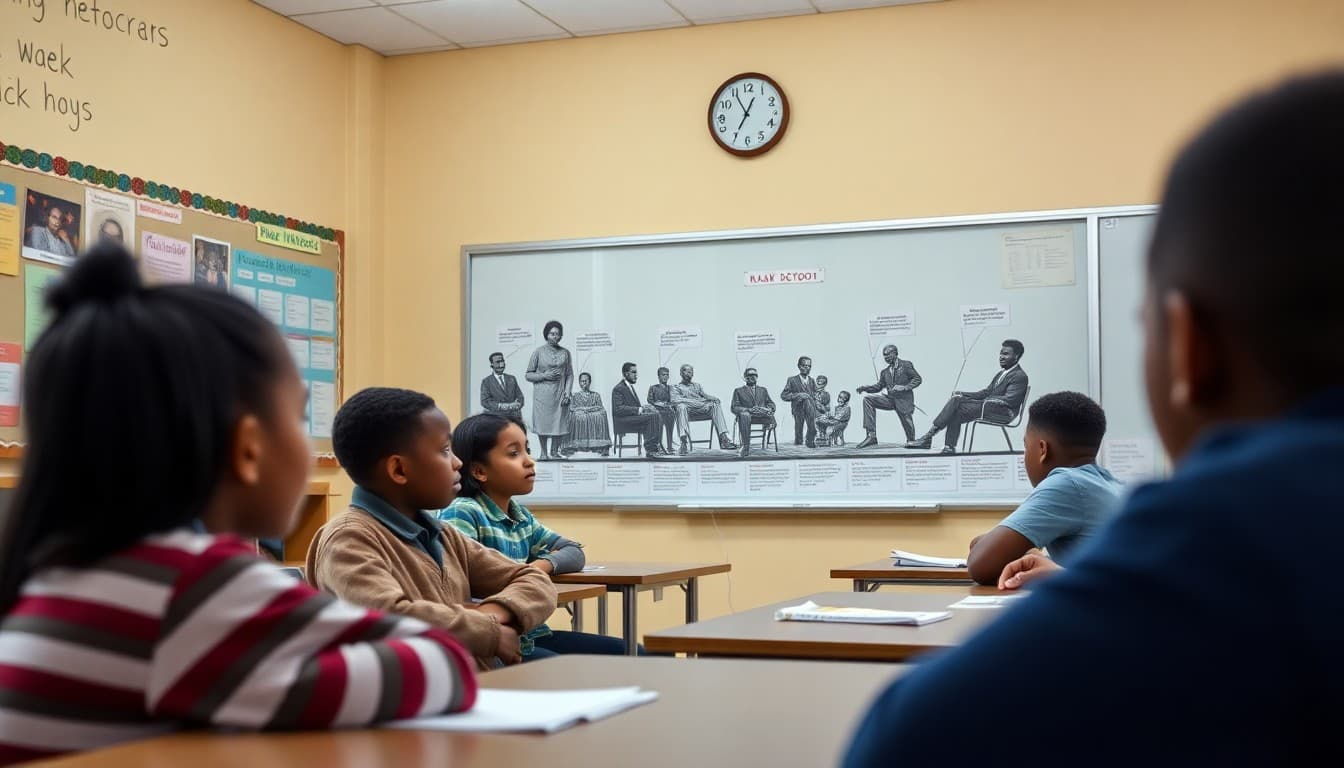
Social studies teachers have more awareness months and commemorative days to work with than almost any other subject. The question is not which ones to observe. The question is which ones to write a newsletter about, and how to make that newsletter more than a generic announcement that families file and forget. The newsletters that work are the ones that connect the month to what students are actually doing in class.
Black History Month (February): lead with the scholarship
The strongest Black History Month newsletters in social studies classrooms are not about the month. They are about the history itself. "In February we are examining the Great Migration, the movement of more than six million Black Americans from the South to Northern cities between 1910 and 1970. Students are working with a combination of census data, personal letters, and newspaper accounts from both the South and the North. The central question: What drove the migration, and what did Black Americans find when they arrived? The answer is more complicated than either the official story of opportunity or the story of continued oppression."
Include a book or documentary recommendation for families who want to learn alongside their student. Isabel Wilkerson's The Warmth of Other Suns is the standard recommendation for this unit and accessible to most families.
Hispanic Heritage Month (September 15 to October 15): use the timing strategically
Hispanic Heritage Month falls at the start of the school year, which makes it natural to connect to an introductory unit on Latin American history, the Age of Exploration and conquest, or contemporary immigration patterns. "Our fall semester opens with the period of Spanish colonization in the Americas. Hispanic Heritage Month is a useful moment to examine this history not only from the perspective of conquest but from the perspectives of the Indigenous civilizations that existed before Spanish arrival, the Mestizo communities that formed afterward, and the political independence movements of the 19th century. We are not celebrating a single story. We are examining a region's full complexity."
Constitution Day (September 17): a newsletter that teaches while it informs
Constitution Day falls right at the start of the school year for most civics and US Government courses. Here is a newsletter excerpt that uses it effectively:
"September 17 is Constitution Day, the anniversary of the day in 1787 when delegates signed the final document in Philadelphia. This week in class we are examining what was actually debated at the Constitutional Convention, not just what the Framers decided, but why. Students are reading excerpts from Madison's notes on the debates and encountering a document that almost did not exist. The Great Compromise that created the Senate and House structure passed by a single vote. Students who understand the contingency of history, that things could have turned out differently and almost did, become more thoughtful observers of the political system they are inheriting."
Veterans Day (November 11): honor and analyze simultaneously
Veterans Day newsletters in social studies can do more than acknowledge the holiday. They can connect it to specific units. "On Veterans Day we are midway through our unit on World War II. This week students are reading excerpts from letters written by American soldiers stationed in Europe and the Pacific, alongside wartime newspaper coverage at home. The juxtaposition of what soldiers were actually writing about, the boredom, the fear, the black humor, and what the domestic press was reporting produces exactly the kind of source analysis we have been practicing all semester."
If any families in your class have veterans in their household, an invitation for those family members to speak to the class is a powerful option to offer. "If your family has a veteran who would be willing to share a brief experience with the class in the week of November 11, please email me. We have done this in previous years and it is one of the most memorable class sessions of the year."
Women's History Month (March): integrate rather than add on
The most effective Women's History Month newsletter from a social studies teacher is one that explains how women's history is integrated throughout the year, not just featured in March. "Women's History Month is a good time to note that women's voices appear throughout our curriculum year-round: in the primary sources from the Abolitionist movement, in the suffrage documents, in the labor history of the early 20th century, and in the civil rights leadership that went beyond the figures most students already know. March is an opportunity to foreground these voices, but they are not isolated to this month."
Include a short reading list: one biography, one primary source collection, and one contemporary film or documentary that connects to what students are studying.
Holocaust Remembrance Day (January 27): be direct about the purpose
If your course covers World War II or genocide more broadly, a Holocaust Remembrance Day newsletter is worth sending. "January 27 marks Holocaust Remembrance Day, the anniversary of the liberation of Auschwitz-Birkenau in 1945. Our unit on World War II includes a structured examination of the Holocaust because understanding the mechanisms by which genocide is organized and executed is one of the most important and difficult things this class covers. If your student comes home with questions or reactions from our discussions, I welcome those continuing at home. I can also share a brief parent guide to discussing genocide with students if that would be useful."
Close every awareness-month newsletter with a home connection
End with one thing families can do. For Black History Month: "Ask your student to explain the Great Migration to you and why it matters for understanding where major American cities are today." For Constitution Day: "Ask your student to name one thing the Framers argued about that surprised them." One question, specific to the month's content. Families who use it have a dinner table conversation that actually connects to what is happening in the classroom.
Get one newsletter idea every week.
Free. For teachers. No spam.
Frequently asked questions
Which national months and days are most relevant to social studies teachers?
The most directly relevant are: Black History Month (February), Hispanic Heritage Month (September 15 to October 15), Native American Heritage Month (November), Women's History Month (March), Constitution Day (September 17), Veterans Day (November 11), and Holocaust Remembrance Day (January 27). The ones that deserve newsletters are those that connect to what students are currently studying, not all of them. A newsletter for Constitution Day makes sense if you are in your civics unit. A newsletter for Black History Month makes sense if Black history appears in your curriculum year-round and this is an opportunity to go deeper.
How do I write a meaningful Constitution Day newsletter that goes beyond a generic announcement?
Connect it to what students are actually examining. 'On September 17 we mark Constitution Day. In our class this week, students are reading Article I alongside the contemporaneous debates from the Constitutional Convention to examine what the Framers were actually arguing about when they designed the legislative structure. Most students are surprised by how contentious the convention was. The clean document they know from textbooks was the product of weeks of failed proposals and intense compromise.' That kind of specificity makes a Constitution Day newsletter actually worth reading.
My school does not formally observe certain awareness months. Should I still send a newsletter?
Yes, if it connects to what you are teaching. You do not need an institutional observance to write a thoughtful newsletter that connects your current unit to a larger historical theme or awareness month. 'We do not have a formal school program this month, but our current unit on the Harlem Renaissance connects directly to Black History Month themes, and I wanted to share a few resources for families who want to learn alongside their student.' You control your classroom communication and your connections to the curriculum are your own to share.
How do I handle Veterans Day in a way that respects the complexity of military history?
Acknowledge the day directly and explain the instructional approach. 'On November 11 we observe Veterans Day. In this class, we honor the service and sacrifice of veterans while also examining the complex history of US military involvement overseas. These two things are not in conflict. Understanding why the US entered specific conflicts, what veterans experienced, and what the political and civilian consequences were at home is how we take veterans' service seriously rather than treating it as a symbol.' This framing respects both the observance and the intellectual work of the class.
What platform helps social studies teachers send awareness-month newsletters?
Daystage works well because it lets you send a clean, focused newsletter with links to primary sources, timelines, or recommended family reading directly to family inboxes. For months that connect to sensitive historical topics, having a professional-looking newsletter that families receive via email gives the communication a weight that a classroom note or app notification does not. You can also schedule the newsletter in advance so it arrives on the relevant date without having to remember to send it manually.

Adi Ackerman
Author
Adi Ackerman is a former classroom teacher and curriculum writer with 8 years in K-8 schools. She writes about school communication, parent engagement, and what actually works in real classrooms.
More for Subject Teachers
Ready to send your first newsletter?
3 newsletters free. No credit card. First one ready in under 5 minutes.
Get started free