
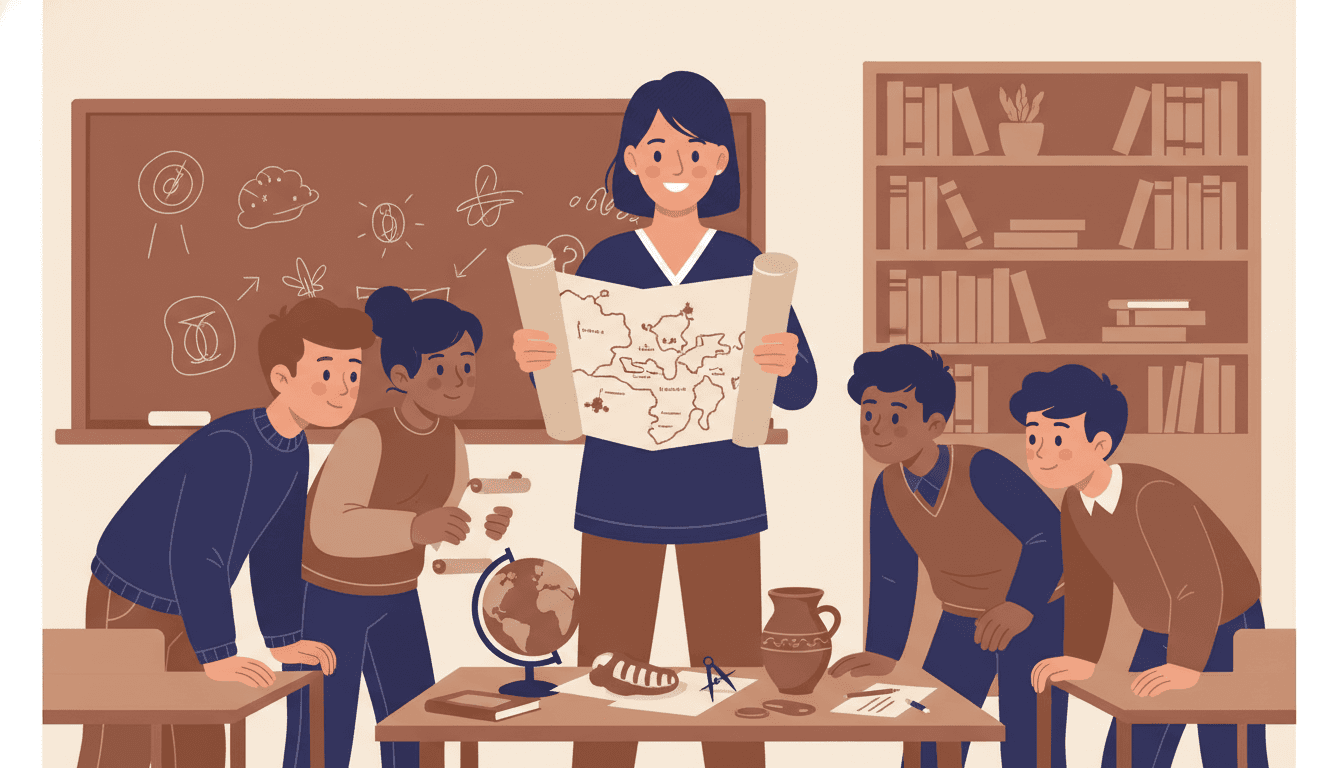
Social Studies Teacher Newsletter: Connecting Classroom Learning to the World Around Us
Social studies has a built-in advantage that most subjects lack: everything you teach connects to something happening in the real world. The question is whether families know that connection is there. A good social studies newsletter bridges the classroom and the dinner table, giving families the context they need to extend learning beyond the school building.
This guide covers what to include in a social studies newsletter, how to tie classroom content to current events thoughtfully, and how to communicate in a way that invites families into the subject rather than lecturing them about it.
What makes social studies newsletters unique
Social studies sits at the intersection of history, geography, civics, economics, and current events. That breadth is a strength in the classroom, but it can make newsletters feel scattered if you are not deliberate. The solution is to anchor each newsletter to one big question or one current unit rather than trying to cover every strand.
A newsletter organized around a question ("Why did the Revolutionary War happen when it did?" or "How does local government affect your daily life?") is easier to read and more memorable than a list of topics covered this week. It also gives families a conversation starter, which is the most practical thing a newsletter can provide.
How often to send a social studies newsletter
One newsletter per unit is the floor. Social studies units are often longer than other subjects, running three to six weeks, so monthly communication is a reasonable baseline.
Consider adding a mid-unit newsletter when the unit includes a major project, simulation, or current events connection. If you are running a mock trial, a debate, or a civics project, a mid-unit newsletter lets families follow the process and ask their child about it. That second touchpoint often generates more engagement than the unit opener.
What to include in a social studies newsletter
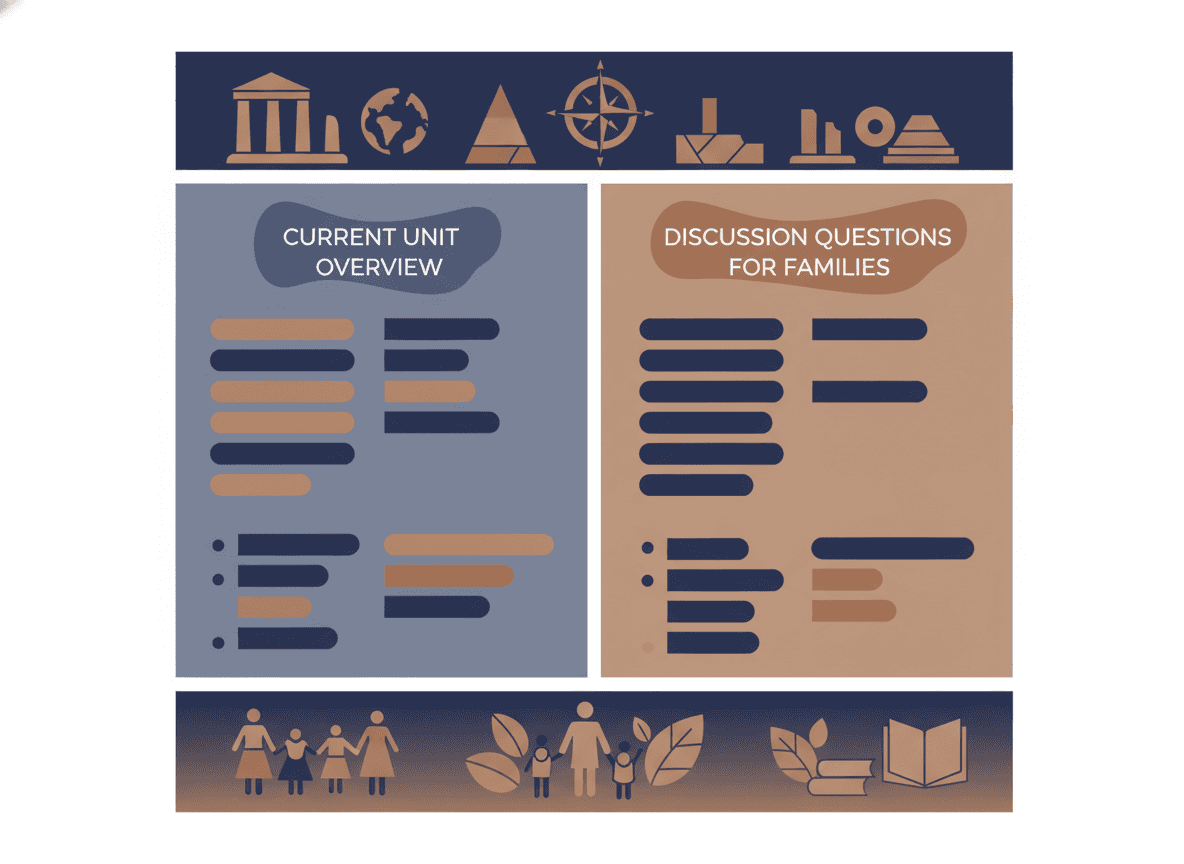
- The current unit and its central question. Name the unit and frame it around a question students are investigating. "We are studying the civil rights movement and asking: what makes a social movement successful?" gives families a mental frame. They can follow their child's thinking over the unit, not just receive a list of events and dates.
- Key concepts and vocabulary. Social studies has specialized vocabulary that parents may not have encountered since their own school days. Define terms like "federalism," "primary source," "push and pull factors," or "checks and balances" in plain language. Four to six terms per newsletter is enough. More than that and families stop reading.
- A real-world connection. This is the section that makes social studies newsletters stand out. A sentence or two connecting the unit to something happening right now makes the content feel relevant. "We are studying ancient trade routes this month, which connects to conversations about global supply chains that families may be hearing about in the news." Keep it neutral. The goal is connection, not commentary.
- What students are producing or doing. Name the project, assessment, or activity coming up. If students are building a timeline, writing a persuasive essay, presenting a research project, or participating in a simulation, tell families what that looks like and when to expect it.
- Discussion questions for home. Social studies is uniquely suited to dinner table conversation. Give families two or three open-ended questions that extend the unit thinking. "What would you have done if you had been a loyalist in 1776?" or "What rights do you think are most important and why?" These questions do not require parents to know anything about the unit. They just require curiosity.
Navigating current events carefully
Social studies teachers are often asked about current events, and the newsletter is an opportunity to connect classroom learning to the world students are growing up in. But current events can be politically charged, and families have a wide range of views.
The safest approach is to make connections without taking positions. "We are studying how governments respond to economic crises, and there are current examples around the world worth tracking" keeps the connection open without prescribing which side of any issue families should land on. That approach respects family values while still making the subject feel alive.
If your school or district has guidance on current events communication, follow it. If not, a good rule of thumb: connect to current events in a way that would not surprise or concern a parent of any political background.
Using primary sources and artifacts in newsletters
Social studies teachers often work with primary sources: photographs, documents, speeches, maps. Including one in your newsletter is one of the most powerful things you can do. A link to a historical photograph your students analyzed, or a short excerpt from a primary document, gives families a window into the kind of thinking happening in your classroom.
Keep the primary source brief and add a sentence of context. "This week, students analyzed this 1863 photograph and discussed what it reveals about life during the Civil War" is enough to make the artifact meaningful without requiring families to become historians.
Daystage makes social studies newsletters fast to produce
Social studies teachers often have rich content to share but limited time to format it. Daystage lets you draft a newsletter in blocks: unit overview, vocabulary section, current events connection, project update, discussion questions. Each section gets its own block, making the newsletter easy to read on a phone.
The image block works well for including a map, a historical photograph, or a photo of student project work. The whole newsletter goes out as a formatted email to every family on your list, with open rate data so you can see who actually engaged.
The best social studies newsletters create conversations
A parent who asks their child "what did you learn about the Boston Tea Party today?" because they read your newsletter is doing something more valuable than helping with homework. They are modeling curiosity about history and civics. They are showing their child that the past matters.
That is the goal of a social studies newsletter. Not to inform parents about your standards coverage, but to give them enough to be curious alongside their child. Keep that goal in mind when you write, and your newsletters will be read.
Get one newsletter idea every week.
Free. For teachers. No spam.
Frequently asked questions
When should social studies teachers send newsletters to parents?
One newsletter per unit is the floor. Social studies units often run three to six weeks, so monthly is a reasonable baseline. Consider a second mid-unit newsletter when the unit includes a mock trial, debate, or civics simulation, so families can follow the process and have better conversations at home.
What should a social studies teacher newsletter include?
Anchor each newsletter to one central investigative question rather than a list of topics. Include four to six vocabulary terms with plain definitions, a real-world connection to something families might recognize from current events, a description of the upcoming project or assessment, and two or three open-ended discussion questions families can use at the dinner table without needing to know the unit content.
How often should social studies teachers communicate with parents by newsletter?
Monthly is the recommended cadence. A second mid-unit communication is worth sending when the unit involves a hands-on project or simulation. Families who follow the preparation process for a mock trial or debate are significantly more invested in hearing about the outcome than families who receive only a post-unit summary.
What are common mistakes social studies teachers make in parent newsletters?
Writing a list of topics covered rather than framing a central question is the most common mistake. A second mistake is connecting to current events in ways that take a political position, which closes down family engagement instead of opening it. Connect to current events neutrally, inviting observation rather than prescribing a conclusion.
What tool helps social studies teachers send newsletters that families actually read?
Daystage lets you build a newsletter in blocks: unit overview, vocabulary, current events connection, project update, discussion questions. The image block works well for including a historical photograph or map. Every newsletter goes out as a formatted email with open rate data so you can see whether families engaged.

Adi Ackerman
Author
Adi Ackerman is a former classroom teacher and curriculum writer with 8 years in K-8 schools. She writes about school communication, parent engagement, and what actually works in real classrooms.
More for Subject Teachers
Assistant Principal Newsletter Guide: How to Communicate With Families as an AP
Principals · 7 min read
Fourth Grade Teacher Newsletter Guide: Communication for the Upper Elementary Transition
Subject Teachers · 6 min read
Middle School Counselor Newsletter: Addressing Social-Emotional Growth in Grades 6 Through 8
Subject Teachers · 6 min read
Ready to send your first newsletter?
3 newsletters free. No credit card. First one ready in under 5 minutes.
Get started free