
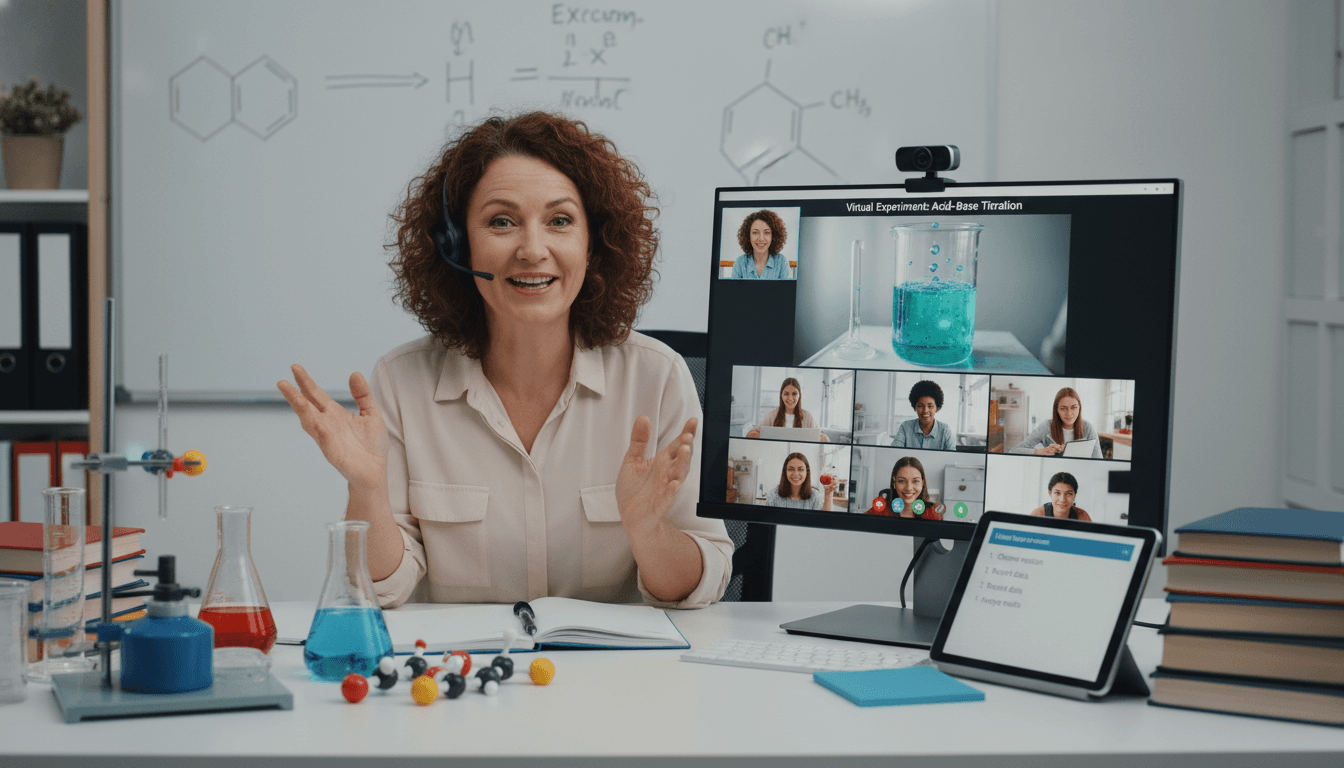
Science Teacher Newsletter: Remote and Hybrid Learning Newsletter Guide
Remote and hybrid science classes create a communication challenge that does not exist in traditional settings. Parents are suddenly adjacent to the learning in a way they were not before. They can see when a student is confused, when materials are missing, and when a virtual lab is not going the way it was supposed to. A well-written science newsletter gives families the context they need to support learning at home without turning them into reluctant teaching assistants.
This guide covers what to include in a science newsletter during remote or hybrid learning, how to communicate lab activities and safety clearly, and how to help parents understand scientific concepts without a science background.
Set expectations at the start of each week
The most useful remote learning newsletter is one that arrives before confusion does. A Monday newsletter that outlines the week ahead gives families a map: what concepts are being introduced, what the synchronous session schedule looks like, what students should complete asynchronously, and what materials need to be within reach. For science, that materials list matters more than in most subjects. A student who sits down to a virtual lab missing a key supply wastes the whole session.
Keep the structure consistent week over week. When families know exactly where to find the materials list or the week's topic summary, they spend less time hunting and more time actually reading. Consistency also signals professionalism: this teacher has a plan, and the family can trust it.
Explain the science in plain language
Unit names and vocabulary terms do not tell parents much. "We are beginning our unit on chemical reactions" is less useful than "this week students will explore how two substances can combine to form a completely new substance, like how baking soda and vinegar bubble because a gas is being released." The second version gives a parent enough understanding to ask a meaningful question at dinner.
This is not about dumbing things down. The scientific content stays accurate. The translation effort is about bridging the gap between classroom vocabulary and the language families actually use. When parents understand what their child is studying, they engage with it at home instead of feeling excluded from it.
Be explicit about lab safety every time
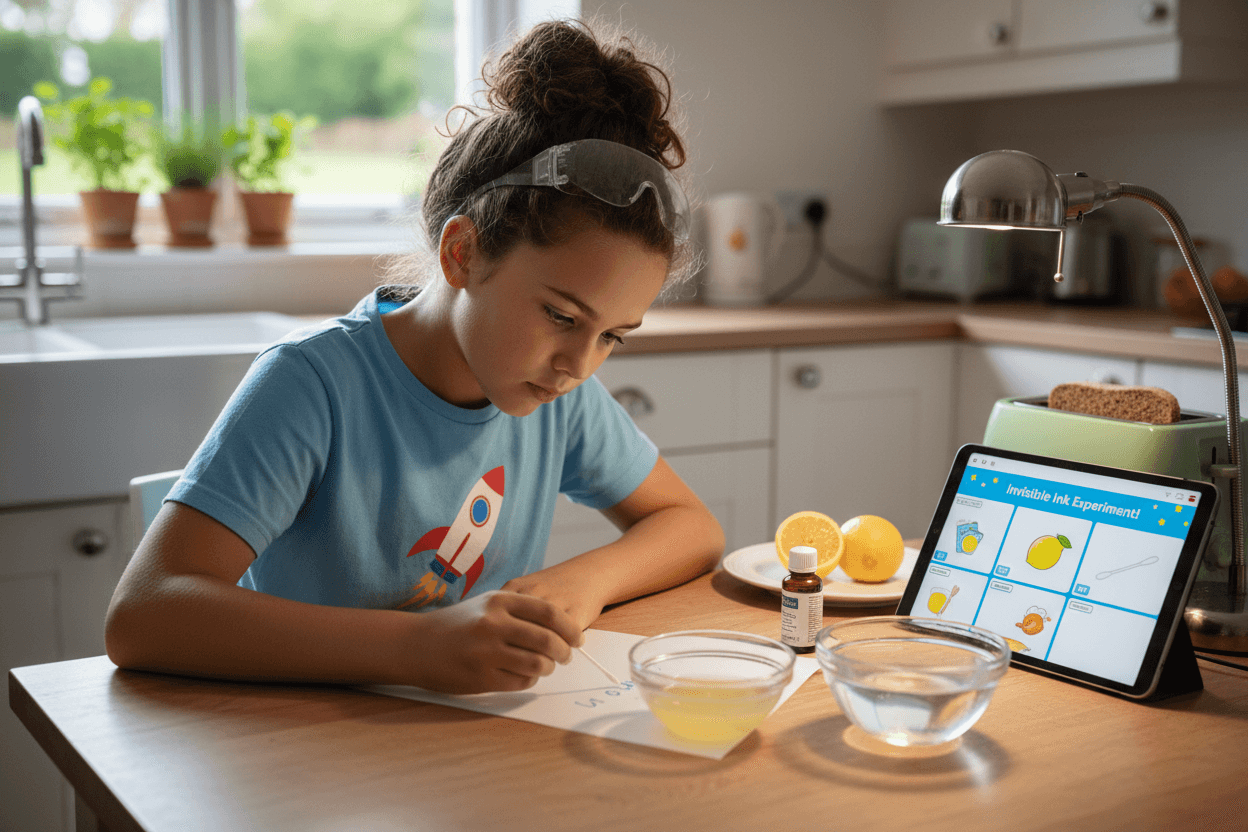
At-home experiments require parent awareness in a way that in-school labs do not. Include a brief safety note in every newsletter that involves an activity at home. Name what the activity is, what materials are involved, and whether a parent needs to be present or can simply be nearby. If the activity uses any heat source, anything that stains, anything with a strong smell, or anything that reacts chemically, say so directly.
A standing safety section in your newsletter format builds the habit for families to look for it. It also demonstrates that you have thought through the logistics carefully, which builds trust. Parents who feel informed are far more likely to support the activity than parents who feel surprised by it.
Clarify what synchronous time is for versus what is asynchronous
One of the most common sources of confusion during hybrid learning is when families do not know whether a student is supposed to be attending a live session, watching a recorded lesson, or working independently. Your newsletter should specify which activities happen during live class time and which students complete on their own schedule.
For science specifically, this distinction matters for lab work. If a virtual lab demonstration happens live and students are expected to be watching and recording observations in real time, say that. If students are watching a recorded demonstration on their own time and completing a lab report independently, say that instead. The two experiences require very different levels of parent involvement and scheduling.
Connect virtual labs to real-world observations
One advantage of remote learning in science is that students are surrounded by real-world examples. Use the newsletter to prompt families to notice science happening at home. If students are studying states of matter, suggest watching ice melt in a glass of water. If they are studying the water cycle, point outside when it rains. If they are studying plant growth, suggest starting a bean germination observation on a windowsill.
These prompts do not require any materials and do not add to anyone's workload. They extend the learning into daily life and give students something concrete to bring back to class. When parents read these suggestions in the newsletter, they become willing partners in the observation rather than passive bystanders.
Address the scientific method across all activities
Remote learning is a good time to reinforce what the scientific method actually looks like in practice, because parents can see the whole process at home. In your newsletter, explain when students are forming hypotheses versus collecting data versus drawing conclusions. This framing helps parents understand that the point of a lab is not always to get the "right" answer, but to observe, record, and reason.
A parent who understands this will not panic when their child's at-home experiment gives unexpected results. They will encourage the student to note the result, think about why it might have happened differently, and bring that observation back to class. That is good science, and families benefit from knowing it.
Close with what comes next
End the newsletter with a brief preview of the following week and any upcoming deadlines. Lab reports due, asynchronous videos to watch, or upcoming virtual assessments all belong here. This gives families a chance to schedule around science activities before the week arrives, which reduces last-minute scrambling and missed submissions.
A forward-looking close also reinforces the continuity of the curriculum. Students and families can see that each week connects to the next, which builds a sense of progress even when the class is not physically together in a room.
Get one newsletter idea every week.
Free. For teachers. No spam.
Frequently asked questions
How often should science teachers send newsletters during remote or hybrid learning?
Weekly newsletters work best during remote and hybrid stretches because families need consistent touchpoints when they cannot see the classroom directly. A short Monday newsletter sets expectations for the week ahead: what concepts are being covered, what virtual or at-home activities are planned, and what materials students need to have ready. If the week is especially complex or involves multiple synchronous sessions, a brief mid-week check-in can prevent confusion before it starts.
What science content do parents most need to know during remote learning?
Parents need three things: what the class is studying right now in plain language (not just the unit name), what students are expected to do asynchronously versus during live class time, and what materials or supplies students need at home. For science specifically, safety information matters more than in other subjects. If students are doing any activity involving water, heat, or household chemicals, that needs to be spelled out clearly so parents can supervise appropriately.
How should science teachers handle lab safety in remote learning newsletters?
Dedicate a short standing section in every newsletter to safety when at-home experiments are part of the curriculum. Name the specific activity, the materials involved, and any parent supervision that is required. If a student has an allergy or sensitivity relevant to the materials, invite parents to contact you before the activity day. Being explicit about safety builds trust with families and prevents incidents that come from a parent not realizing their child was about to mix vinegar and baking soda in a closed container.
What is the best way to explain virtual lab work to parents who are not scientists?
Translate the scientific vocabulary into plain cause-and-effect language. Instead of 'students will observe osmosis through a semi-permeable membrane,' write 'students will watch how water moves through a thin barrier when there is a concentration difference on each side, like how a raisin absorbs water when soaked overnight.' The concept is accurate, but a parent without a science background can picture it and ask their child real questions about what they observed.
How does Daystage help science teachers communicate during remote and hybrid learning?
Daystage lets science teachers send professional newsletters to every family in minutes, not hours. You can build a weekly template with standing sections for the current topic, lab or activity details, safety notes, and what to expect next, then update the content each week without rebuilding the layout. Families receive a clean, readable email rather than a long message buried in a classroom app. You can see who opened it so you know when to follow up with families who may have missed critical safety or logistics information.

Adi Ackerman
Author
Adi Ackerman is a former classroom teacher and curriculum writer with 8 years in K-8 schools. She writes about school communication, parent engagement, and what actually works in real classrooms.
More for Subject Teachers
Ready to send your first newsletter?
3 newsletters free. No credit card. First one ready in under 5 minutes.
Get started free