

Science Teacher Newsletter: Back to School Newsletter for New Students and Parents
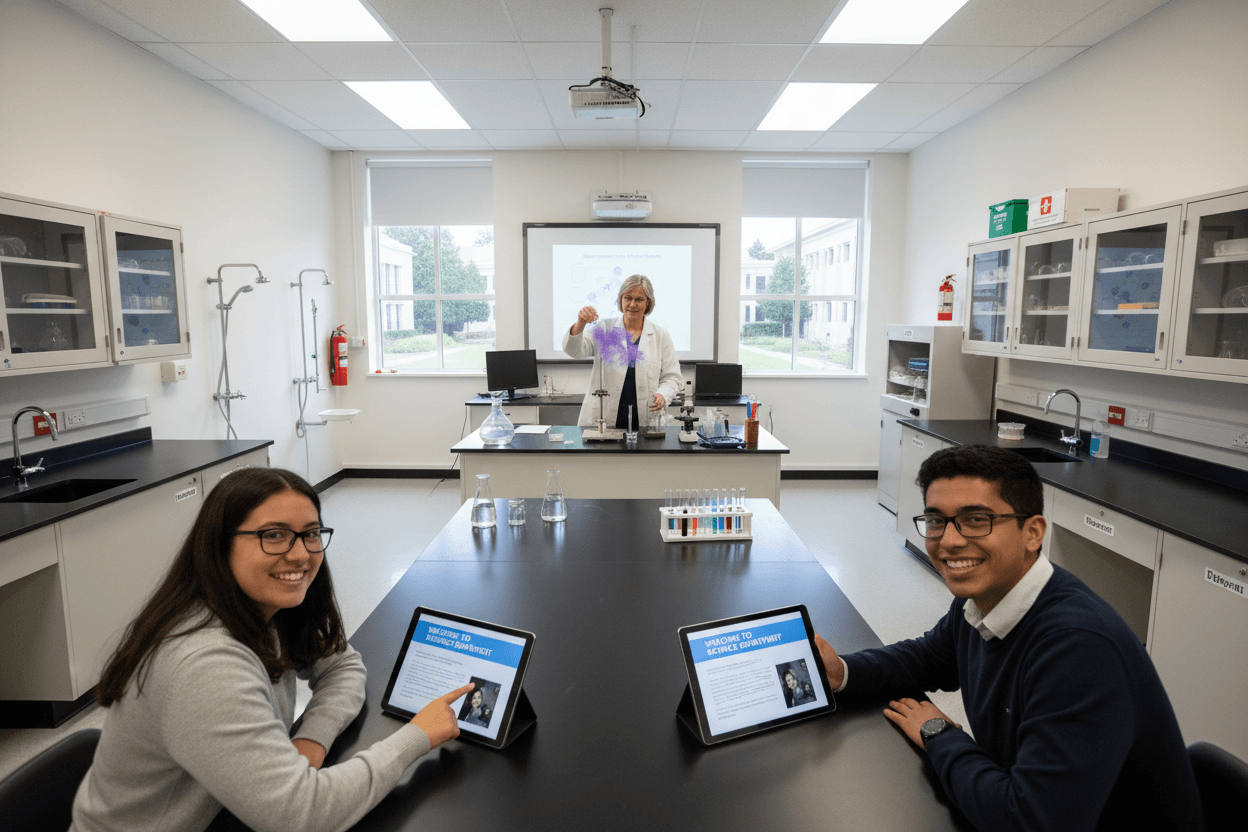
The first newsletter a science teacher sends sets the tone for every interaction that follows. It tells families who you are, what kind of classroom you run, what the year will cover, and what students need to succeed. For science specifically, that first communication also needs to address lab safety in a way that is clear without being alarming. Done well, a back-to-school science newsletter turns nervous parents into genuinely interested partners from day one.
This guide covers what to put in a back-to-school science newsletter, how to explain lab safety to families, how to introduce the curriculum without overwhelming anyone, and how to set communication expectations that carry through the whole year.
Introduce yourself as a scientist and a teacher
The opening of your newsletter is your one chance to make a first impression before families form one on their own. Be specific about your background in science, not just education. Mention what drew you to science as a subject, what you care about in the curriculum, and what kind of classroom you run. Families respond differently to "I love watching students make a hypothesis and test it themselves" than to "I am excited for a great year."
If you have a genuine interest in a particular area of science, share it briefly. A teacher who loves ecology or chemistry or astronomy and says so gives students and families something real to connect to. It also signals that science class will feel less like a requirement and more like an invitation into something your teacher actually cares about.
Explain lab safety as professional practice
Lab safety rules need to appear in the back-to-school newsletter, especially for middle and high school science where actual lab equipment and chemicals are involved. The framing matters. Present safety procedures as the things real scientists do, not as a list of restrictions created by liability concerns.
Cover the essential rules: closed-toe shoes on lab days, goggles when specified, no eating or drinking in the lab, handling equipment only as directed, and how to report an accident or spill. If your school requires a signed safety contract, mention that it is coming home and needs to be returned before students can participate in lab work. Being clear about this up front prevents the situation where a student misses a lab because the signed form never made it back.
Give a high-level overview of the year's units
Families do not need the full curriculum map in August, but they benefit from knowing what the arc of the year looks like. Name the major units by quarter or semester and add one sentence about each. This level of detail answers the question parents actually have: is there a real plan here, and is it substantive?
Organizing by season also helps families anticipate when major projects or assessments might cluster. If parents know that the ecology unit runs through March and includes a field observation project, they can flag any scheduling conflicts early rather than pulling students out of class during a critical week. That kind of advance coordination makes your life easier too.
List supplies clearly and specifically
Generic supply lists frustrate families. Instead of "notebook," specify whether you need a composition book, a spiral notebook, or a specific size. If students need colored pencils for diagrams, say that. If a graphing calculator is required or helpful, name the model that works with your curriculum. If there are any materials students will need at home for experiments throughout the year, list those separately so families can gather them once rather than scrambling each time an activity comes up.
Be direct about what is mandatory versus what is nice to have. If the school provides safety goggles, say so. If students are expected to bring their own, say that. Families appreciate clarity on what they need to purchase and what will be provided, especially at the start of the year when back-to-school costs are already significant.
Describe how your class works
Give families a sense of what a typical week in your science class looks like. How many days per week does the class meet? What is the split between instruction, discussion, and lab work? How are labs structured, and how do students document their observations and conclusions? How is homework typically assigned, and how does it connect to what happens in class?
This is not about listing every policy from your syllabus. It is about giving families a mental model of what their student's experience will be so they can ask better questions at home. A parent who knows that Thursday is usually lab day can ask "what happened in your lab today?" instead of "how was school?"
Set expectations for grades and assessments
Explain how student work is assessed in your class. If lab reports make up a significant portion of the grade, say so. If participation in class discussion or lab procedures is graded, mention that too. If you use quizzes frequently to check understanding, families benefit from knowing that now so they are not surprised when a quiz grade appears in the gradebook.
You do not need to share the full grading rubric in the first newsletter. A one-paragraph overview of how grades are structured, what types of assessments you use, and when major assignments are typically due is enough. This gives families a realistic picture of what success in your class requires.
Tell families how to reach you
Close with clear contact information and your preferred communication method. If email is the fastest way to reach you, say that. If you respond to messages during a specific window each day, say that too. For science classes with lab components, it can also be useful to tell families what situations warrant reaching out versus what a student can handle by asking you directly before or after class.
Finish by telling them how you plan to communicate throughout the year: how often you send newsletters, what you typically cover in them, and whether they should expect any other forms of communication. Families who know what to expect from you are more likely to actually read what you send.
Get one newsletter idea every week.
Free. For teachers. No spam.
Frequently asked questions
When should a science teacher send a back-to-school newsletter?
Send it before the first day if possible, or on the first day at the latest. Families who receive it before school starts arrive with fewer logistical questions and a clearer sense of what to expect. If your school sends home a general welcome packet, include your science-specific newsletter separately. A subject-specific newsletter signals that science class has its own distinct expectations, which is especially important when lab safety is involved.
What should a back-to-school science newsletter always include?
At minimum: a brief introduction to who you are and your teaching approach, the main units students will cover across the year, lab safety rules explained in plain language, what supplies students need to bring or keep at home, your preferred contact method, and how you will communicate throughout the year. For middle and high school science, include information about lab expectations specifically: whether students need closed-toe shoes, whether there is a lab safety contract to sign, and what happens if safety rules are not followed.
How do science teachers explain lab safety to parents without alarming them?
Frame safety rules as the reason science class is exciting, not a warning that something dangerous is happening. Instead of 'students must wear goggles because chemicals are hazardous,' try 'students wear safety goggles in lab just like scientists do in real research labs, and it is part of learning to work like a scientist.' The rules are the same, but the framing shifts from risk management to professional practice. Include the full safety rule list, then add one sentence explaining that following these rules is how students get to do real lab work.
How do you introduce the year's science curriculum without overwhelming families?
Give a high-level overview organized by quarter or semester, not a detailed week-by-week breakdown. Three to five unit names with a one-sentence description of each is enough. For example: 'In the fall we will study the scientific method and cell biology. In the winter we move into genetics. Spring covers ecology and environmental science.' Families want to know that there is a plan and that it is substantive. They do not need the full scope and sequence document.
How does Daystage help science teachers send back-to-school newsletters?
Daystage lets science teachers send a polished, professional welcome newsletter on day one without spending hours formatting it. You write your introduction, lab safety rules, curriculum overview, and supply list once, and it arrives in every family's inbox as a clean, readable email. You can see who opened it, which tells you immediately whether you need to follow up with families who may have missed critical safety information before the first lab day.

Adi Ackerman
Author
Adi Ackerman is a former classroom teacher and curriculum writer with 8 years in K-8 schools. She writes about school communication, parent engagement, and what actually works in real classrooms.
More for Subject Teachers
Ready to send your first newsletter?
3 newsletters free. No credit card. First one ready in under 5 minutes.
Get started free