
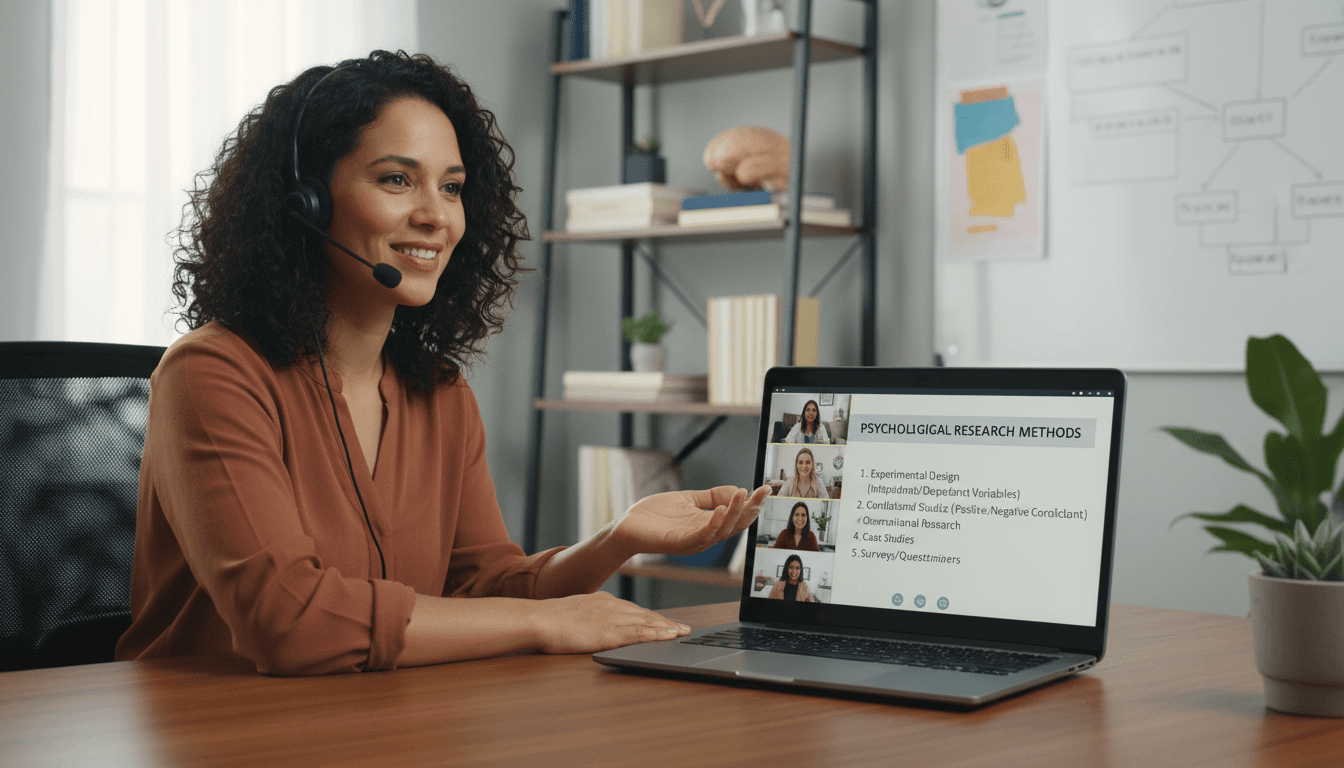
Psychology Teacher Newsletter: Remote and Hybrid Learning Newsletter Guide

Remote and hybrid learning creates a communication gap that is especially pronounced in a course like AP Psychology. Parents who might casually overhear their student discussing operant conditioning at the dinner table after a classroom day have no such touchpoint when class happens on a laptop in a bedroom. A regular psychology newsletter during remote or hybrid semesters keeps families oriented, reduces logistical confusion, and helps parents support AP exam preparation from home.
This guide covers what to include in a remote learning psychology newsletter, how to frame AP content for families without a psychology background, and how to maintain meaningful parent engagement when the classroom is virtual.
Start each unit with a clear orientation newsletter
Remote and hybrid students lose the passive orientation that happens naturally in a classroom: the teacher introducing a unit, posting materials on the board, and responding to student energy in real time. At home, a student who misses the first day of a unit may have no idea what the coming two weeks cover or why it matters.
A unit-start newsletter solves this by naming the unit, explaining the core questions it addresses, and giving families a preview of how the unit connects to AP exam content. For the social psychology unit, that might mean explaining that students will study conformity, obedience, persuasion, and group behavior, and that these topics account for a meaningful portion of the AP exam's multiple-choice section. Families who understand the scope of the unit can reinforce its relevance in everyday conversations, which matters more during remote learning than it does when a student is surrounded by peers discussing the same material in a classroom.
Give families the weekly schedule and all platform links
Logistical clarity is the foundation of effective remote learning communication. Every psychology newsletter during a remote or hybrid semester should include the week's synchronous class schedule with video call links, the platform where asynchronous assignments are posted and submitted, any office hours schedule and how to access them, and a list of deadlines for the coming week.
Parents managing multiple children across multiple remote classes and platforms cannot keep all of this in their heads. A newsletter that collects this information in one place saves families from hunting through three different apps to find when Tuesday's class starts. It also means students who forget where to submit an assignment have a clear resource to check rather than emailing the teacher the night before the deadline.

Explain how remote participation and grading work
Remote learning changes how participation is measured, and parents frequently do not understand how virtual participation grades are determined. A newsletter that explains the participation model for online psychology classes removes a common source of confusion and conflict.
If participation is graded on synchronous engagement during video lessons, explain what that looks like: responding to discussion prompts in chat, using reaction tools, or unmuting to contribute verbally. If asynchronous discussion boards count toward participation, describe what a quality post requires: a substantive contribution that references a specific psychological concept and responds meaningfully to at least one peer. Families who understand the grading model can encourage their student to engage thoughtfully rather than just showing up passively on camera.
Address AP Psychology content that may feel heavier at home
Some AP Psychology units are more emotionally complex when students encounter them alone at home rather than in a structured classroom environment. Units on psychological disorders, stress and coping, trauma, and social influence can prompt students to reflect on their own mental health, family dynamics, or personal experiences in ways that feel more intense without the buffering presence of peers and a teacher in the room.
A newsletter that acknowledges this reality and invites parents to check in with their student during these units is a meaningful gesture. You do not need to specify exactly what a student might feel. A brief note that says the current unit covers psychological disorders and some students may find connections to personal experience, and that you encourage parents to ask open questions and reach out if their student needs support, is enough. Families who are prepared for this possibility are more likely to create space for that conversation rather than assuming their student is fine without asking.
Offer specific remote study strategies for AP exam preparation
AP Psychology requires students to build fluency with a large volume of vocabulary, theorists, research studies, and application frameworks. Remote learning removes the built-in review that happens through classroom discussion, partner activities, and teacher-prompted recall. Students who rely entirely on passive reading of notes at home tend to underperform on the AP exam's application questions.
A newsletter that names specific remote study strategies gives families actionable guidance. Encourage families to support students in using active recall methods: covering their notes and attempting to reconstruct key concepts from memory, working through College Board practice questions, and timing FRQ responses to mirror exam conditions. Suggest that students review with a classmate via video call, which replicates the verbal articulation that classroom discussion naturally provides. Tell families which free online resources align with the current unit, such as Khan Academy's AP Psychology content or released College Board practice exams.
Keep hybrid schedule families informed about both modes
Hybrid learning creates a two-track family communication challenge. Families of students who attend in-person on one set of days and remotely on others need to know what is happening in both modes and how the two tracks connect. A newsletter that treats all students as fully remote misses the in-person cohort. One that focuses only on in-person activities leaves remote families without the context they need.
Structure the newsletter with brief sections for each mode if your hybrid model splits students into groups. Explain what in-person students will work on during each session and how remote students will access equivalent content. For psychology, a lab simulation or Socratic discussion that happens in person can often be approximated remotely with a structured discussion prompt or a guided case study activity. Naming the equivalent experience for both cohorts signals to families that the course is intentionally designed, not improvised.
Close with a direct invitation for family questions
Remote learning increases the distance between families and the school, and parents who might have stopped by the classroom after pickup now have no organic way to ask a quick question. The newsletter is a good place to invite that contact explicitly. Share your office hours and preferred communication method, and note whether families can schedule a brief call if a quick exchange does not resolve a concern.
For AP Psychology families specifically, tell parents when the next major assessment or AP preparation milestone is so they know when to expect the next focused newsletter. A family that understands the communication rhythm is more likely to read each newsletter carefully rather than treating it as background noise. That attention compounds over a semester and results in students who are better supported and better prepared when the AP exam arrives in May.
Get one newsletter idea every week.
Free. For teachers. No spam.
Frequently asked questions
How often should a psychology teacher send newsletters during remote learning?
Send a newsletter at the start of each new unit and before any major assessment during a remote or hybrid semester. Unit-start newsletters orient students and families to the new content area and the week's schedule. Pre-assessment newsletters explain what is being tested and how students should prepare from home. A brief weekly summary newsletter in the final days of each week can cover any logistical changes, upcoming deadlines, and resources students may have missed. Three to four newsletters per unit is typically enough to keep families informed without overwhelming inboxes.
What should a remote learning psychology newsletter cover?
Cover the week's schedule and platform links, what unit content students are working on and why it matters, how online assignments and participation are graded, and where students can get help if they are stuck. For AP Psychology, add a note about how remote learning affects AP exam preparation and what additional resources are available. Families navigating hybrid schedules need clear logistical information alongside the academic context. A newsletter that combines both reduces the number of individual parent emails and phone calls you field each week.
How do you help parents support AP Psychology during remote learning?
Tell parents what students are studying and what the most common point of confusion is for that unit. For example, during the learning unit, many students conflate negative reinforcement and punishment. A newsletter that names this specific confusion and offers a simple way to check whether students understand the distinction gives parents a concrete conversation starter. For FRQ preparation, explain that the most useful support is asking students to explain an AP practice prompt out loud and walk through their answer step by step before they write it.
How do you handle sensitive AP Psychology content in a remote learning newsletter?
Address it directly. Some AP Psychology units cover psychological disorders, research ethics, trauma, and social influence, and these topics can surface in uncontrolled home environments during video lessons. A newsletter that acknowledges the content area and explains the academic framing helps parents prepare their student and understand why certain material is being covered. If a unit involves discussion of mental health conditions or historical unethical research, a brief note about the ethical and critical-thinking lens through which the course examines these topics prevents misunderstanding.
How does Daystage support psychology teachers during remote and hybrid learning?
Daystage gives psychology teachers a streamlined newsletter tool that makes it fast to send unit-start updates, pre-assessment reminders, and weekly logistical summaries during remote semesters. You build a template once and update the schedule, platform links, and content details for each send. Families receive organized, readable emails instead of searching through a learning management system for information. Teachers can see open rates and know which families are engaged and which may need a direct outreach to stay connected during a remote learning period.

Adi Ackerman
Author
Adi Ackerman is a former classroom teacher and curriculum writer with 8 years in K-8 schools. She writes about school communication, parent engagement, and what actually works in real classrooms.
More for Subject Teachers
Ready to send your first newsletter?
3 newsletters free. No credit card. First one ready in under 5 minutes.
Get started free