

Physical Education Teacher Newsletter: Test Prep Newsletter for Parents
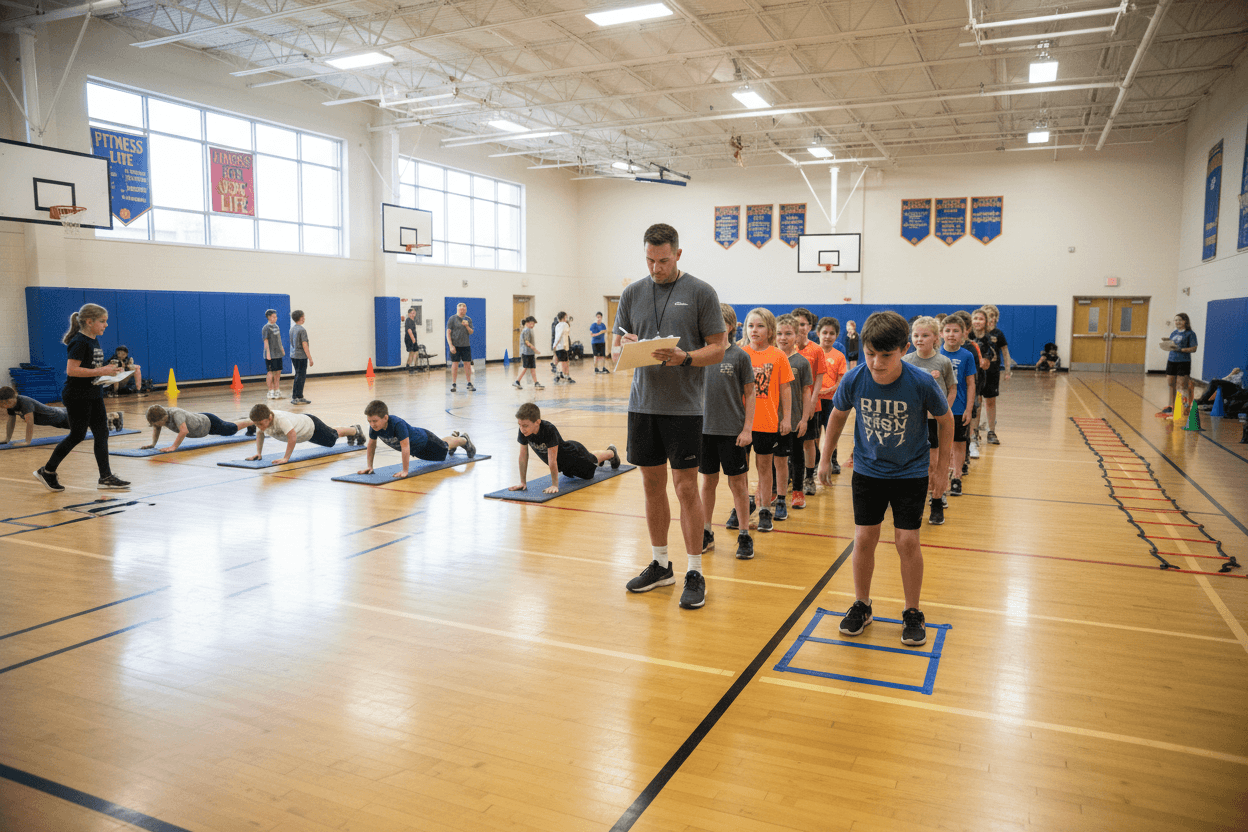
Fitness assessments in physical education are not tests students can cram for the night before, but families who receive no information about what is coming often treat them that way or, worse, send students to school anxious and underprepared in ways that undermine their performance. A PE teacher newsletter sent before the assessment window gives families the context they need to support healthy preparation and helps students arrive on test day ready to demonstrate their actual fitness level.
This guide covers what to include in a physical education fitness assessment newsletter, how to explain health-related fitness standards in plain language, and how to help families be genuine partners in student preparation.
Explain what the fitness assessment measures and why
Start by telling families what is actually being measured. Health-related physical fitness assessments like FitnessGram evaluate five distinct components: aerobic capacity, muscular strength, muscular endurance, flexibility, and body composition. Each component reflects a different dimension of a student's physical health, and each is assessed using a specific test.
Tell families which specific tests your school uses for each component. For aerobic capacity, this is typically the PACER test (Progressive Aerobic Cardiovascular Endurance Run) or the one-mile run. For muscular strength and endurance, it might be the push-up or curl-up test. For flexibility, the sit-and-reach or trunk lift. Be specific so families understand what their student will actually be doing during the assessment window, not just what category is being evaluated.
Describe the Healthy Fitness Zone framework
One of the most important things a fitness assessment newsletter can do is explain how results will be reported. FitnessGram and similar health-related assessments do not rank students against each other or assign letter grades. They report whether each student's score falls within the Healthy Fitness Zone, a range associated with health benefits based on age and sex.
This distinction matters enormously for how families interpret results. A student who falls below the Healthy Fitness Zone in aerobic capacity is not failing physical education. They are receiving useful health information that can inform lifestyle choices. A student who scores in the Healthy Fitness Zone is not necessarily a top athlete. They are demonstrating a level of health-related fitness associated with good long-term health outcomes. Families who understand this framework engage with assessment results more constructively and more calmly than those who see every score as a grade.

Give families specific preparation guidance
Fitness is not built in the days before a test, and families should not send students to school exhausted from intense exercise the night before. The most effective preparation for a health-related fitness assessment is the consistent physical activity and healthy habits students have been building across the semester. The newsletter should say this clearly.
What families can specifically do in the week before the assessment: encourage students to be active for at least 30 minutes each day through activities they enjoy, ensure students are getting eight to nine hours of sleep each night, and make sure students eat a solid breakfast on test day. Adequate hydration is critical, especially for the aerobic capacity component. Students who arrive to a PACER test dehydrated after drinking only a small amount of water that morning will not demonstrate their true aerobic capacity. Tell families this directly because it is both specific and actionable.
Describe the PACER test or aerobic component clearly
The PACER test is often the most unfamiliar component for families who did not have it in their own physical education experience. Explain it briefly: students run back and forth across a 20-meter distance at a pace set by a recorded audio signal that gradually increases in speed. The goal is to continue as long as possible while keeping up with the pace. The number of laps completed is the student's score, which is then evaluated against the Healthy Fitness Zone range for their age.
For students who experience anxiety about this test specifically, mention that pacing strategy matters. Students who start at a comfortable speed and gradually increase their effort typically outlast those who sprint at the beginning and exhaust themselves early. This is a testable strategy families can discuss with their student before assessment day. Practical information about how to approach the test helps students feel more in control of the experience.
Address body composition testing with care
If body composition is part of your assessment, address it directly in the newsletter before the testing day. Explain the method your school uses and describe how privacy is protected during the assessment. Tell families that results are shared only with the student and family and that no scores are publicly posted or compared between students.
Acknowledge that this component can feel personal and that students and families may have questions or concerns. Provide a direct way for families to contact you privately before the testing day if they have specific concerns about participation. A single sentence inviting that conversation prevents a significant amount of anxiety and demonstrates that you are a thoughtful, responsive educator.
Tell families what students should wear and bring
Physical logistics matter for fitness assessments. Tell families what students should wear on assessment days: athletic shoes with proper support, comfortable athletic clothing, and no jeans or dress shoes that limit movement. Specify whether students need to bring a water bottle (yes, always), whether the assessment will be conducted indoors or outdoors, and whether students should bring any specific documentation.
If the assessment spans multiple class periods or days, give families the full schedule. Students and families who know that aerobic capacity testing happens on Tuesday and muscular endurance testing happens on Thursday can prepare appropriately for each component rather than treating the entire week as a single undifferentiated event.
Explain how results will be shared and what comes next
Close the newsletter with a note about how and when families will receive assessment results. Will scores be shared through an online report, a take-home sheet, or a parent conference? How quickly after the assessment will results be available? What can families do with results if they want to support their student's health-related fitness between now and the next assessment window?
The most effective follow-up framing positions assessment results as useful health information rather than a performance verdict. A student who scores below the Healthy Fitness Zone in flexibility has learned something specific and actionable about their body. A family who receives that information and understands what to do with it can support real change. The newsletter is the first step in creating that understanding.
Get one newsletter idea every week.
Free. For teachers. No spam.
Frequently asked questions
What is FitnessGram and how should a PE teacher explain it to families?
FitnessGram is a health-related physical fitness assessment used in many school districts to measure five components: aerobic capacity (typically measured with the PACER test or one-mile run), muscular strength, muscular endurance, flexibility, and body composition. In a newsletter, explain each component in one sentence using plain language. Tell families that FitnessGram reports results in Healthy Fitness Zones rather than letter grades, meaning the goal is for students to reach a range associated with good health rather than compete against each other. Families who understand this framework respond to assessment results more constructively.
How can families help students prepare for a fitness assessment?
Families can support fitness assessment preparation by encouraging consistent physical activity in the days before the test, ensuring students get adequate sleep the night before, and providing a nutritious breakfast on test day. Hydration is also important: students who arrive to a fitness test dehydrated perform below their actual fitness level. Families should not push students to do intense exercise the night before a test, as rest is more beneficial than last-minute training. Simply being active and rested is the best preparation for health-related fitness testing.
How should PE teachers address body composition testing in a newsletter?
Body composition testing requires extra care in parent communication. Acknowledge in the newsletter that this component can be sensitive and explain how it is conducted at your school: whether it involves a BMI calculation, skinfold measurements, or another method. Tell families that results are private and shared only with the student and family. Emphasize that body composition is one of five fitness components and that FitnessGram Healthy Fitness Zones are based on health outcomes, not appearance. Inviting families to contact you directly with concerns before the testing day is a thoughtful practice that prevents misunderstandings.
When should a PE teacher send a fitness assessment newsletter?
Send it 7 to 10 days before the assessment begins. This gives families enough time to support healthy habits at home without so much lead time that the message is forgotten. If the fitness assessment spans multiple class periods or includes a separate day for aerobic capacity testing, send the newsletter before the first testing day and mention the full schedule so families know what their student will experience across the testing window.
How does Daystage help PE teachers communicate about fitness assessments?
Daystage lets PE teachers send a clean, complete fitness assessment newsletter to all families in one step, without posting the same information across multiple platforms or relying on students to bring home paper notices. Build a FitnessGram prep template once and update the dates and any program-specific details for each assessment window. You can see which families opened the newsletter and follow up with those who have not before test day, reducing the number of families who are surprised by the assessment or its results.

Adi Ackerman
Author
Adi Ackerman is a former classroom teacher and curriculum writer with 8 years in K-8 schools. She writes about school communication, parent engagement, and what actually works in real classrooms.
More for Subject Teachers
Ready to send your first newsletter?
3 newsletters free. No credit card. First one ready in under 5 minutes.
Get started free