
Physical Education Teacher Newsletter: Remote and Hybrid Learning Newsletter Guide
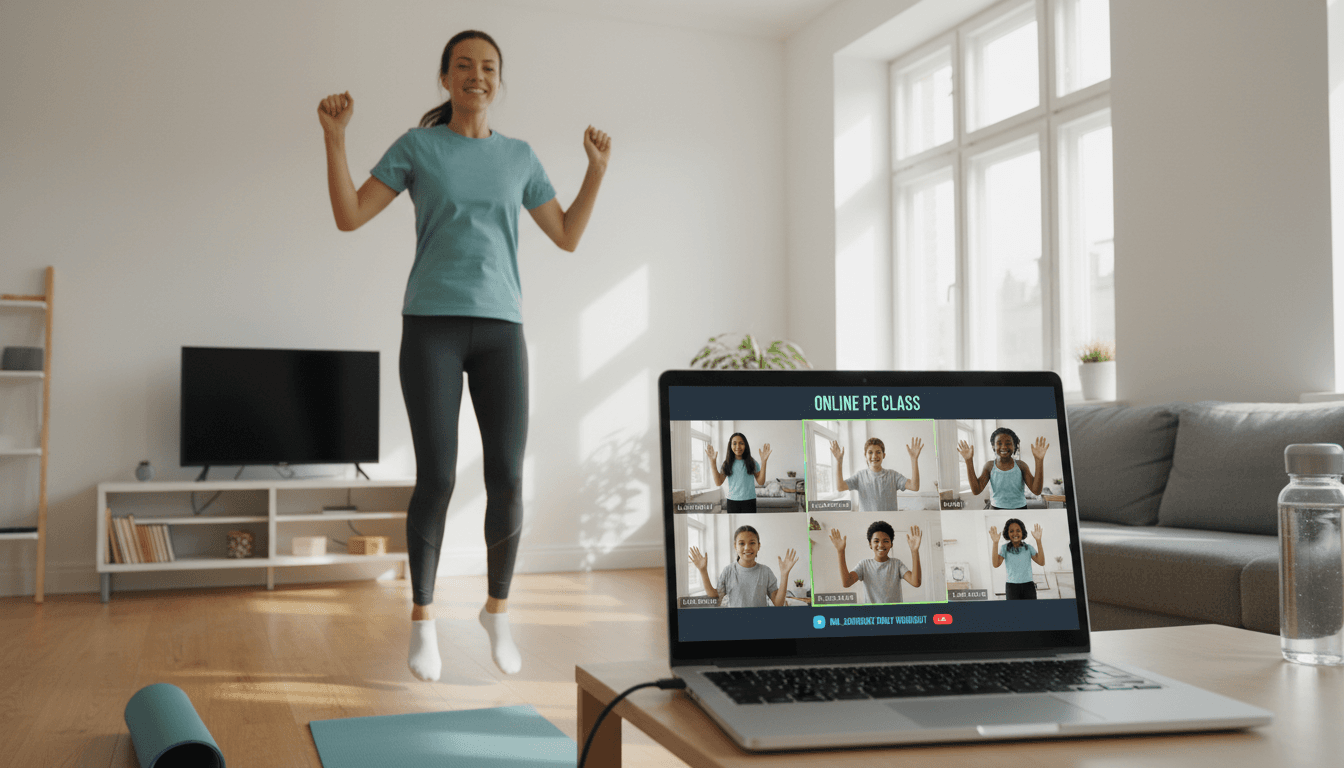
Physical education during remote learning presents a genuine challenge: how do you deliver meaningful physical activity and health instruction when students are at home, spread across dozens of different living situations, and without the gymnasium environment that structures everything? A strong PE remote learning newsletter answers this question for families, gives students clear expectations, and keeps physical health on the agenda even when school happens through a screen.
This guide covers what to include in a remote PE newsletter, how to structure home activity assignments across different student situations, and how to keep families engaged with physical activity as a genuine health priority during remote or hybrid learning.
Explain the structure of remote PE honestly
Start the newsletter by being direct about what remote physical education looks like and what it requires from students and families. Remote PE cannot replicate the gymnasium environment, and families who understand this are better partners than those who receive an optimistic description that does not match what their student is actually experiencing.
Explain whether remote PE includes live synchronous video sessions, asynchronous video lessons students watch on their own schedule, or both. Describe the weekly rhythm: how many days per week students are expected to complete physical activity, how long each session should be, and what type of activity the assignment calls for. Families who can see the full week's structure at a glance are better positioned to help their student stay on schedule than those who receive daily one-off messages.
Design activity assignments that work across different home situations
Home situations vary enormously: some students have large backyards, some have only a narrow hallway, some have access to a bike or jump rope, some have nothing but a small bedroom floor. The newsletter should explicitly address this range and describe the activity options available at each level.
A well-designed remote PE activity gives students three variations: a space-minimal option for students in small apartments or shared rooms, a standard option for students with moderate indoor or outdoor space, and an extended option for students who want a more intense challenge. Describing these variations in the newsletter tells families that the PE teacher has thought about their student's actual situation rather than assuming everyone has access to the same resources.

Cover the FITT principle as a home framework
Remote learning is an ideal time to teach health literacy concepts that students can apply independently. The FITT principle (Frequency, Intensity, Time, and Type of activity) gives students a framework for understanding physical activity that extends beyond any specific exercise. When students understand that frequency means how many days per week, intensity means how hard the body is working, time means the duration of each session, and type means the kind of movement involved, they can evaluate and adjust their own physical activity behavior.
In the newsletter, connect weekly home assignments to the FITT principle explicitly: "This week's assignment targets aerobic endurance. Frequency: 4 out of 5 school days. Intensity: moderate, meaning you should feel warm and slightly out of breath but still able to speak in short sentences. Time: 20 to 30 minutes. Type: any continuous aerobic activity including walking briskly, jogging, dancing, or cycling." This structure teaches health literacy at the same time as it delivers an activity assignment.
Explain how physical activity supports wellbeing during disruption
Remote learning periods are often stressful for students and families. Physical activity is one of the most effective, accessible, and well-documented interventions for stress, anxiety, and mood regulation, and the PE newsletter is an appropriate place to make this connection explicitly.
Tell families: students who engage in at least 30 minutes of moderate physical activity on most days during remote learning show measurably better mood, concentration, and sleep quality than those who are primarily sedentary. This is not motivational language. It is established health research, and framing physical activity as a wellbeing strategy rather than a school requirement changes how many families prioritize it during remote or hybrid periods. Families who believe that movement genuinely helps their child feel better are more effective advocates for daily physical activity than families who see it as one more school obligation.
Describe the assignment submission process clearly
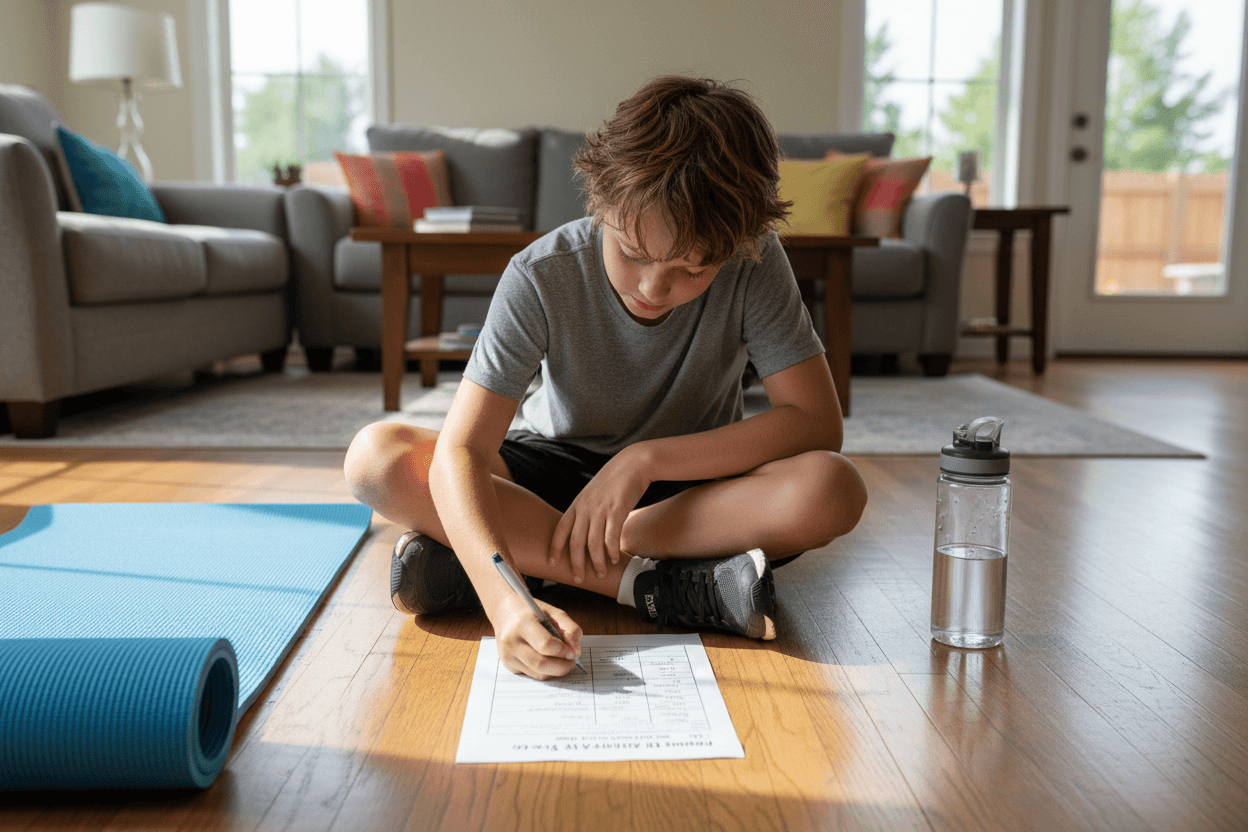
Remote PE assessment requires a submission process that replaces direct teacher observation. Tell families exactly what students need to submit, how, and when. If students submit a daily activity log, describe the format: date, activity type, duration, and a brief description of effort level or how the student felt. If students submit short video demonstrations of a specific movement skill, describe the video length, which skill is being demonstrated, and how to submit it.
For activity log submissions specifically, address the honesty expectation directly. Students who log activities they did not actually complete are depriving themselves of the health benefit and undermining the educational purpose of the assignment. Tell families that the goal of the log is self-monitoring and self-reflection, not performance on a high-stakes assessment, and that students benefit most when their log reflects what they actually did rather than what they think they should have done.
Recommend family physical activity as a genuine option
Remote PE is one of the few contexts where family participation in physical activity is not only possible but actively encouraged. A family walk, a backyard game, an active video game session, or a living room yoga routine all count as physical activity and have the additional benefit of connecting physical health with family relationships.
Tell families that participating in their student's PE assignments is welcome and that shared physical activity is one of the most effective ways to model healthy habits. Students who see their parents or guardians treating physical activity as a priority are more likely to develop their own internal motivation to be active than students who are told to go exercise while adults remain sedentary. This is a genuine invitation, not a platitude, and framing it that way in the newsletter gives families a concrete opportunity to be part of their student's health education.
Look ahead to the return to in-person PE
Close the newsletter with a forward-looking note about what students who stay physically active during remote learning will be ready for when in-person PE resumes. Students who maintain aerobic fitness during remote periods return to the gymnasium without the significant deconditioning that affects students who were primarily sedentary. Students who used remote time to develop flexibility, practice movement skills, or build strength have a foundation to build on.
Frame remote PE not as a diminished version of the real thing but as an opportunity to develop the self-directed physical activity habits that are the ultimate goal of any PE program. A student who can identify a physical activity goal, plan a week of home exercise, execute it consistently, and reflect on the results has learned something more durable than any specific skill assessment score.
Get one newsletter idea every week.
Free. For teachers. No spam.
Frequently asked questions
What are the biggest challenges for PE teachers during remote learning?
The three biggest challenges are verifying student physical activity when direct observation is not possible, accommodating the wide range of available home space and equipment, and keeping students motivated to engage in physical activity without the social energy of a gymnasium. A strong remote learning newsletter addresses each of these by explaining the home activity structure honestly, describing the range of activities available to students with different levels of space and equipment, and framing physical activity as genuinely important for health and wellbeing during periods of disruption, not as a box to check for a grade.
What kinds of physical activity assignments work for remote PE?
Remote PE assignments that work across the widest range of home situations are bodyweight exercises requiring no equipment, yoga and flexibility routines that can be done in a small space, dance and rhythmic movement activities, walking or jogging in outdoor spaces when available, family fitness challenges that can be done with younger siblings or parents, and active video games or dance apps that count as structured movement. Describe the full range of options in the newsletter so families understand that remote PE is genuinely accessible to their student regardless of whether they have a backyard, gym equipment, or ample indoor space.
How do PE teachers assess students during remote learning?
Remote PE assessment typically shifts toward self-reporting, documentation, and health literacy work. Students may submit activity logs with the type and duration of activity completed each day, short video demonstrations of specific exercises or movement skills, written reflections on their physical activity habits and how they connect to health concepts covered in class, or completed health literacy assignments about topics like FITT principles, goal setting, or nutritional choices. Tell families in the newsletter exactly what evidence of learning you will collect and how it will be evaluated, so students know what to submit and families understand how the grade is determined.
How should PE teachers handle students with health conditions during remote learning?
Remote learning removes the direct observation that helps PE teachers monitor students with health conditions like asthma, cardiac issues, or musculoskeletal injuries. In the newsletter, ask families of students with known health conditions to review the assigned activities with their student and contact you directly if any modification is needed. Provide a modified activity option in every assignment description so that students with physical limitations have an alternative without having to request one individually. Tell families that the goal is for every student to engage in some form of physical activity appropriate to their health status, not to complete a specific activity regardless of fit.
How does Daystage help PE teachers stay connected with families during remote PE?
Daystage gives PE teachers a clear, consistent way to communicate weekly or bi-weekly during remote learning without expecting families to check multiple apps or portals for updates. Send one newsletter with the week's physical activity assignments, a brief health concept, links to demonstration videos, and the submission instructions, and families have everything they need in one readable email. Seeing which families opened the newsletter helps you identify students who may be disengaged early, so you can follow up through the school's communication system before a student falls significantly behind in physical activity logging.

Adi Ackerman
Author
Adi Ackerman is a former classroom teacher and curriculum writer with 8 years in K-8 schools. She writes about school communication, parent engagement, and what actually works in real classrooms.
More for Subject Teachers
Ready to send your first newsletter?
3 newsletters free. No credit card. First one ready in under 5 minutes.
Get started free