
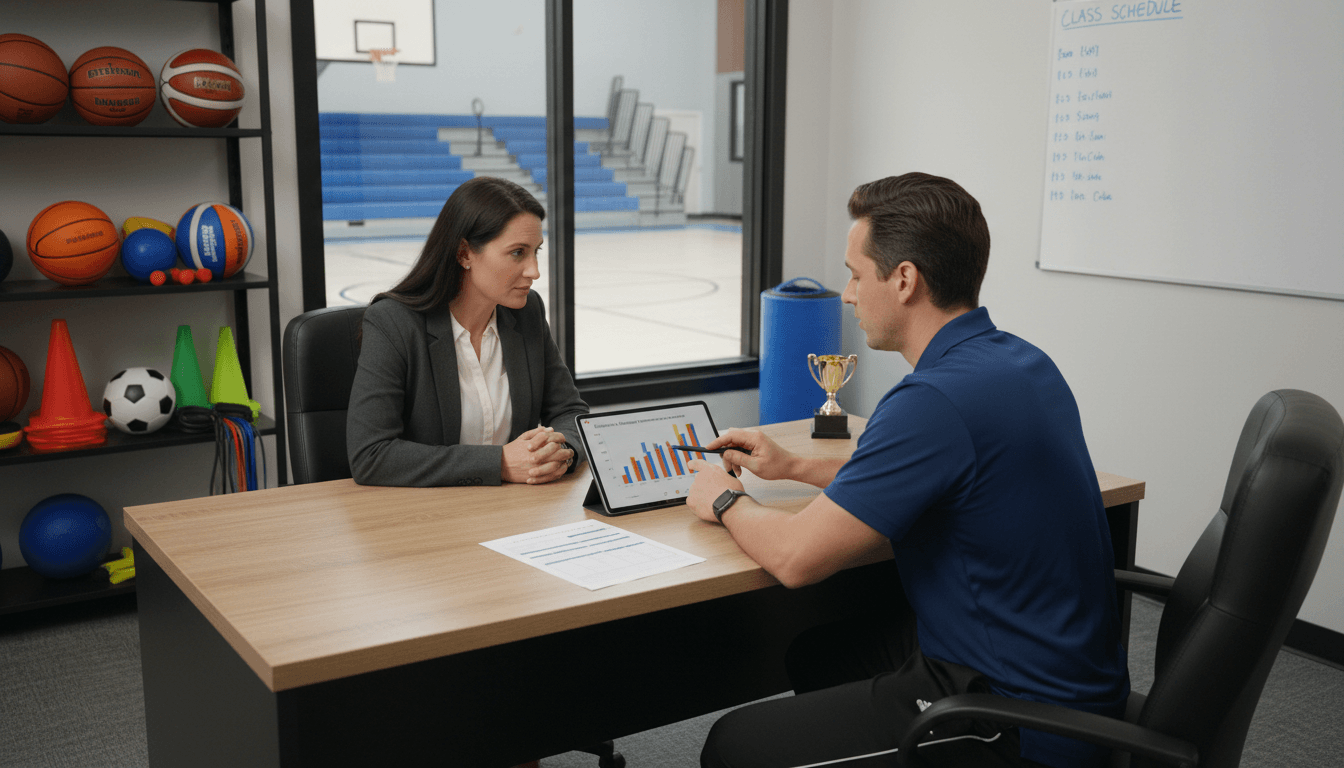
Physical Education Teacher Newsletter: Parent Conference Newsletter Template
Parent conferences in physical education are underutilized. Many families arrive at a PE conference without a clear picture of what progress in the class looks like, what the teacher wants to discuss, or what information they can contribute. A pre-conference newsletter changes this by arriving before the meeting, framing the conversation, and giving families specific things to think about before they sit down with the PE teacher.
This guide covers what a physical education parent conference newsletter should include, how to communicate about fitness progress and participation, and how to make the most of a short conference slot.
Explain how physical education progress is measured in your class
Many parents do not know how PE is graded. The newsletter should explain your assessment framework before the conference so families understand the categories being discussed. Most PE programs assess some combination of health-related fitness (FitnessGram scores), movement skill performance, health and fitness knowledge, and participation or effort.
Describe how each category is weighted and what evidence you collect. If you assess movement skills through skill rubrics, explain what that means. If participation is evaluated based on engagement and effort rather than athletic ability, say so. Families who understand that PE grades reward consistent effort and skill development rather than raw athletic talent engage with the conference very differently than those who assume physical education grades reflect how "athletic" a student is.
Share fitness assessment results in advance of the conference
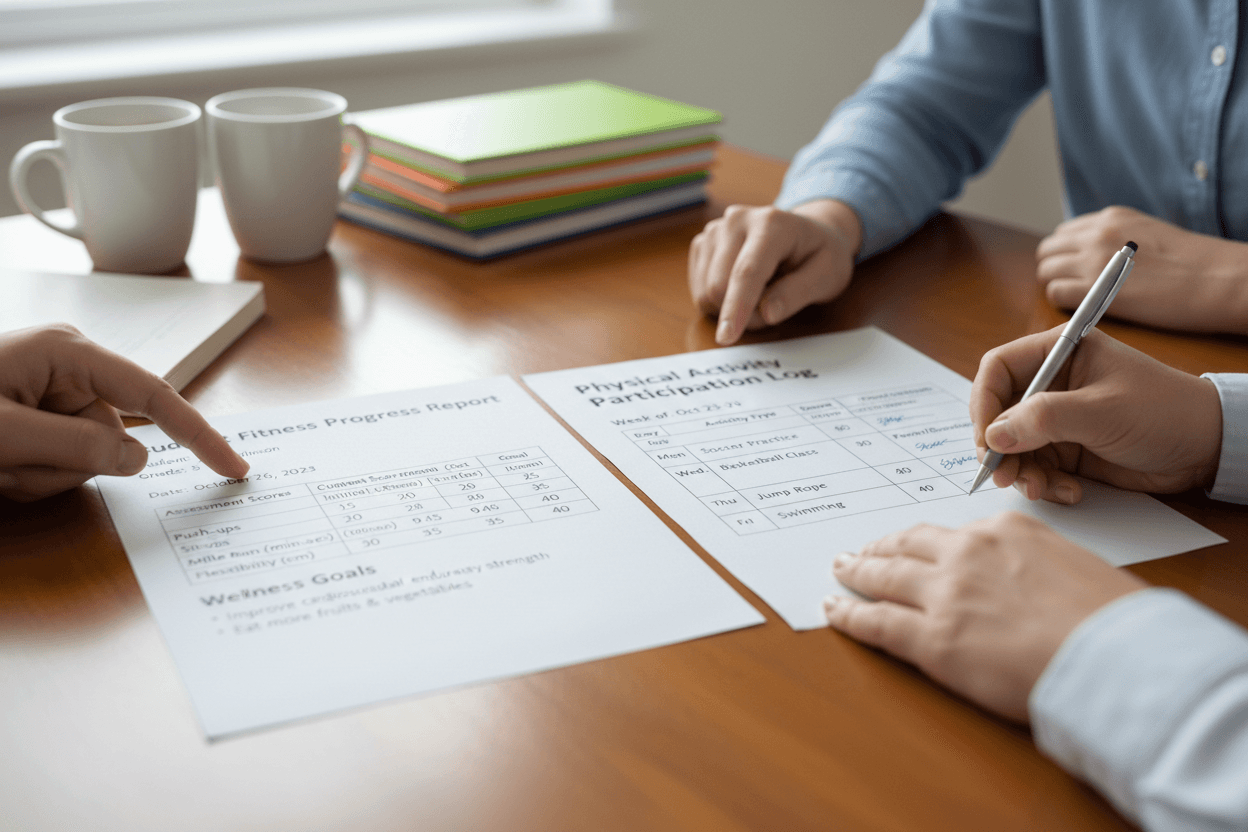
If your school uses FitnessGram or a similar health-related fitness battery, consider including a student's most recent results in the pre-conference newsletter or directing families to where they can access them. When families come to the conference already knowing their student's aerobic capacity, flexibility, and muscular endurance scores, the conversation can focus on what the results mean and what to do with them rather than spending conference time delivering numbers.
Frame the scores using Healthy Fitness Zone language and explain what each zone means in terms of health outcomes. A student in the Healthy Fitness Zone for aerobic capacity has a level of cardiovascular fitness associated with reduced health risk. A student below the zone is not failing. They have a specific area where increased physical activity would produce measurable health benefits. This distinction matters for how families receive and act on the information.

Describe the student's participation and effort specifically
Participation in PE looks different from participation in a classroom setting. A student who is technically present but consistently avoids challenge, quits activities before others, or finds reasons to sit out is showing a different engagement pattern than a student who gives full effort even in activities they find difficult. The newsletter should tell families what participation means in your PE class and prepare them to hear specific feedback about their student's engagement.
Use observable, specific language when describing participation. "Your student consistently engages at full effort in cardiovascular activities but frequently asks to sit out during strength training units" is more useful and more actionable than "participation could improve." Specific descriptions give families a concrete topic to address at home and a starting point for a real conversation with their student about their PE experience.
Address movement skill development across different units
Physical education covers a wide range of movement skills across the school year: locomotor skills, manipulative skills, balance and body control, sports-specific skills, and rhythmic or dance movement. A student's skill level varies across these categories, and the newsletter should help families understand what has been covered and what the conference will address.
Tell families what units the class has completed this semester and what skills were assessed in each. If a student has particular strengths or growth areas in specific movement categories, mention them in general terms before the conference so families arrive with some context rather than hearing everything for the first time when the meeting begins. Families who arrive prepared ask better questions and have more productive conversations.
Invite families to share health and activity information
Physical education teachers often have limited visibility into factors that significantly affect a student's performance and participation: chronic health conditions, recent injuries, participation in competitive sports or dance outside of school, family activity patterns, and social dynamics that affect willingness to participate in group activities. The conference is a good moment to gather this information, and the newsletter is the right place to ask for it in advance.
Include a brief prompt in the newsletter: "If there are any health conditions, injuries, or activity patterns outside of school that would help me understand your student's PE experience better, I welcome that conversation." This simple invitation signals that you are a thoughtful educator who sees students as whole people and creates space for families to share information they might not otherwise think to bring up.
Discuss physical activity outside of school honestly
Health-related fitness is built primarily through physical activity outside of school, not through PE class alone. Most PE programs offer students 60 to 150 minutes of physical activity per week, which is well below the 60 minutes per day recommended by major public health guidelines. Families who understand this are more likely to prioritize daily physical activity at home.
Ask families in the newsletter to think about their student's typical physical activity outside of school before the conference: how many days per week is the student active for at least 30 to 60 minutes? What activities does the student enjoy? Are there barriers to physical activity at home, such as access to safe outdoor space, transportation to sports programs, or cost? This information shapes the recommendations a PE teacher can make during the conference and helps frame physical activity as a shared responsibility between school and family.
Close with specific recommendations and follow-up steps
The most productive PE parent conference ends with one to three specific, actionable recommendations that both the teacher and the family can act on. The pre-conference newsletter should signal that this is what families should expect to leave with: not just a summary of where the student stands, but a clear next step.
Tell families in advance that you will come to the conference with a recommendation based on what you have observed in class and in assessment results. Encourage them to come prepared with their own questions about how they can support their student's physical health and fitness at home. The conference is more valuable when both parties have thought about it in advance, and the newsletter is what makes that possible.
Get one newsletter idea every week.
Free. For teachers. No spam.
Frequently asked questions
What do PE teachers discuss at parent conferences?
Physical education parent conferences typically cover three areas: fitness assessment results and what they indicate about a student's health-related fitness, participation and effort in class across different activity units, and movement skill development in areas like locomotor skills, sports-specific skills, and health literacy. PE teachers also frequently discuss students who may have chronic health conditions, physical limitations, or activity avoidance patterns that affect their engagement in class. The pre-conference newsletter sets the stage for all of these conversations by giving families specific information and questions to consider before they arrive.
How should PE teachers explain fitness assessment results to parents?
Use the Healthy Fitness Zone language from FitnessGram rather than comparative language. Instead of saying a student scored in the bottom 25 percent, say the student's aerobic capacity score is currently below the Healthy Fitness Zone for their age, which means increasing regular aerobic activity would be beneficial. For each component where a student is below the zone, offer one specific, practical recommendation: increasing the daily walking or biking time by 15 minutes, adding a flexibility routine of 5 to 10 minutes before bed, or joining an after-school sports program. Health-based language with actionable suggestions is far more constructive than score-based language that puts families on the defensive.
How do PE teachers address health conditions or physical limitations in the conference newsletter?
The pre-conference newsletter can include a brief note inviting families to share any health conditions, injuries, or physical limitations that affect their student's participation in class. Frame this as information that helps the PE teacher provide appropriate modifications and support rather than as a problem-identification exercise. Many families do not realize that PE teachers can adapt activities for students with chronic conditions, exercise-induced asthma, joint issues, or other health factors, and the conference is a good moment to open that conversation. The newsletter creates a safe, private opening for families to bring up sensitive health topics.
Should PE teachers discuss physical activity outside of school at parent conferences?
Yes, and the conference newsletter is a good place to ask about it in advance. Physical activity outside of school is the primary driver of long-term health-related fitness, and students who are active in sports, outdoor play, or family recreational activities bring a different fitness baseline to class than students who are primarily sedentary outside of school. Asking families to think about their student's typical activity level at home before the conference gives the teacher useful context and frames physical activity as a family responsibility, not just a school one.
How does Daystage help PE teachers prepare parent conference communication?
Daystage gives PE teachers a fast, clean way to send a pre-conference newsletter that sets the agenda for the meeting and gives families specific topics to consider beforehand. Instead of parents arriving with no context for what a physical education conference involves, they come in understanding how PE progress is measured, what areas will be discussed, and what information they can contribute. You can send the newsletter a few days before conferences open and see which families opened it, so you know who may need an extra heads-up about what to expect.

Adi Ackerman
Author
Adi Ackerman is a former classroom teacher and curriculum writer with 8 years in K-8 schools. She writes about school communication, parent engagement, and what actually works in real classrooms.
More for Subject Teachers
Ready to send your first newsletter?
3 newsletters free. No credit card. First one ready in under 5 minutes.
Get started free