
Physical Education Teacher Newsletter: Field Trip Newsletter to Parents
A physical education field trip to an outdoor education center, ropes course, or adventure facility is one of the most memorable and educationally rich experiences a PE program can offer. Students who navigate a high ropes element for the first time, work through a team initiative challenge with their classmates, or complete an orienteering course in an unfamiliar outdoor environment are developing physical, social, and problem-solving skills that a gymnasium simply cannot replicate. A well-written field trip newsletter ensures that families understand what the experience involves, what students need to prepare, and why the trip is worth the planning investment.
This guide covers what to include in a PE field trip newsletter, how to communicate about safety without generating alarm, and how to help families support their student's preparation for an outdoor education experience.
Connect the trip clearly to your PE curriculum
Open the newsletter by explaining what the trip is, where it is happening, and how it connects to what students have been working on in PE class. A ropes course or outdoor education visit is not a reward or a break from learning. It is a specific learning experience that develops skills the gymnasium cannot fully replicate: trust under pressure, physical problem-solving, goal-setting in a novel environment, cooperative movement, and mental resilience when confronting a challenge that is genuinely uncertain.
Name the specific PE standards or learning goals the trip addresses. If your state framework includes cooperative movement, adventure activities, or personal and social responsibility standards, mention them. Families who understand that outdoor education is a legitimate part of the PE curriculum respond to it with more seriousness and support than those who assume it is simply a fun day away from class.
Describe what students will actually do
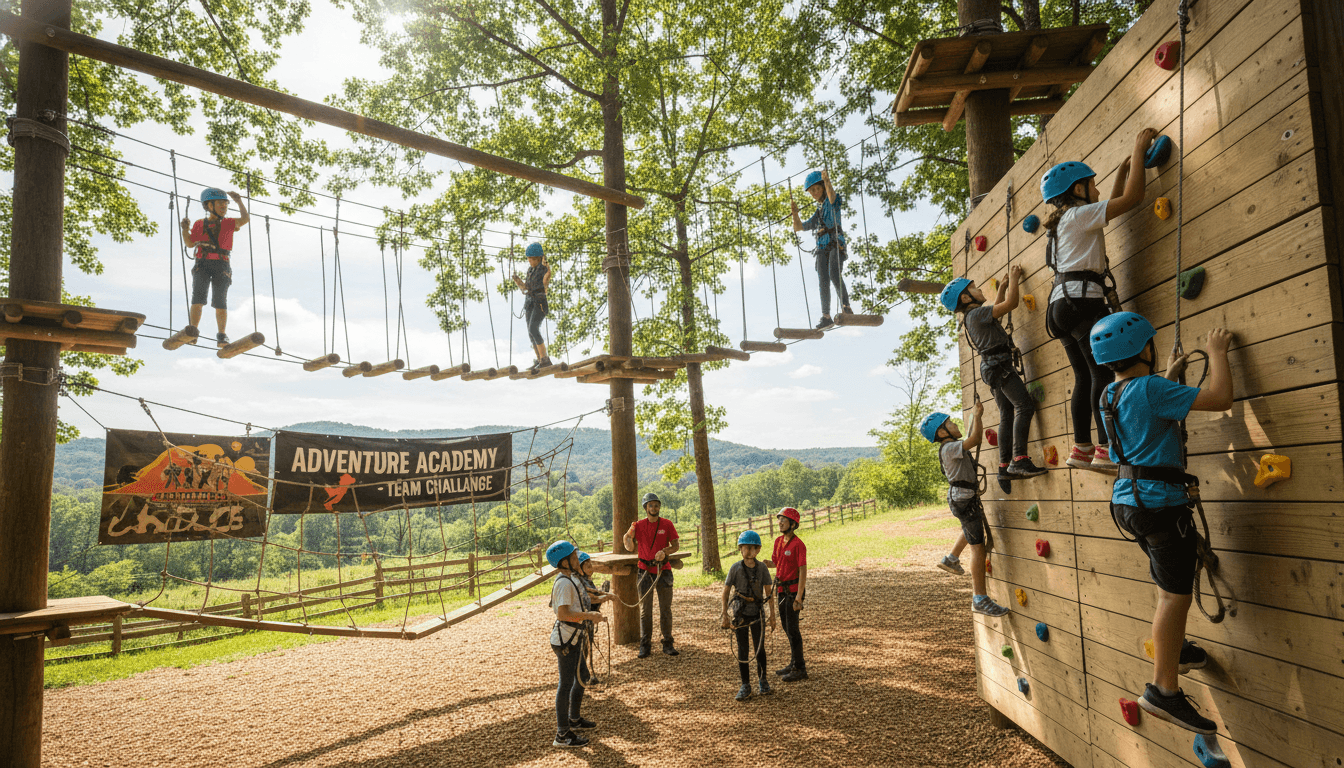
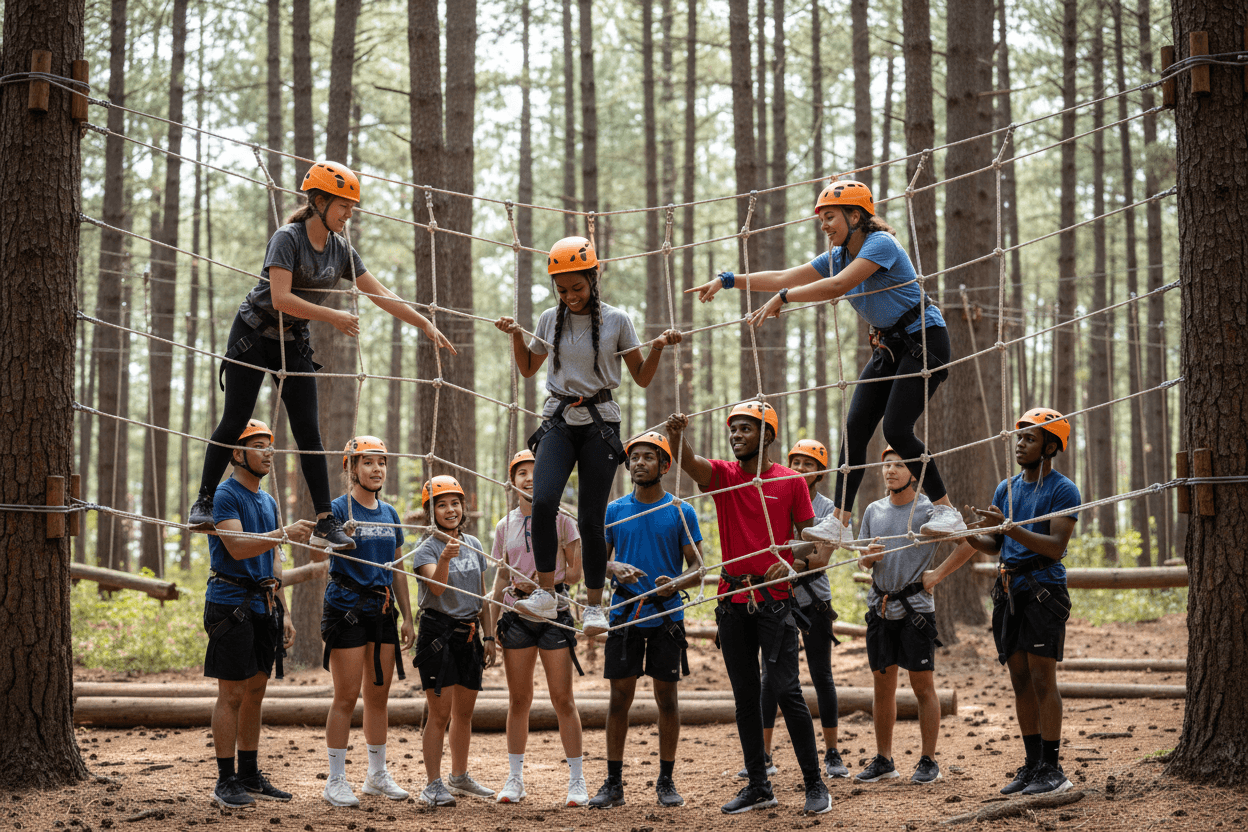
Tell families specifically what the schedule looks like and what activities students will participate in. Will the day include low ropes elements like the trust fall or group balance challenges, high ropes elements like a climbing wall or zip line, or ground-based team initiatives? Will there be an orienteering or navigation component? Is there time for unstructured outdoor exploration?
For families who have never been to an outdoor education center, these descriptions are genuinely useful. Knowing that the high ropes element is an individual challenge at 30 feet with a full harness and a certified belayer is different from knowing that the low ropes element is a group balance activity three feet off the ground. These distinctions affect how families prepare their student and what questions they might want to ask before the trip.

Address safety protocols specifically and directly
Safety is the first question most families have about a ropes course or adventure activity trip, and the newsletter should answer it before families have to ask. Name the safety infrastructure that will be in place: certified outdoor education facilitators, inspected and rated climbing equipment, established weight and age limits for each element, and a clear participant opt-out process for any student who is not comfortable with a specific activity.
Explain the challenge-by-choice principle that governs most outdoor education programs: students are always encouraged to challenge themselves, but participation in any specific element is voluntary. A student who completes the ground-based team initiatives but does not attempt the high ropes has still participated fully in the outdoor education experience. This framing is reassuring to families of students who may have anxiety about heights or unfamiliar physical challenges.
Request health and physical information clearly
Physical education field trips require health information that other field trips typically do not. Ask families to disclose any medical conditions, recent injuries, or physical limitations that could affect their student's participation in vigorous outdoor physical activity. Be specific: heart conditions, exercise-induced asthma, vertigo, fear of heights, recent surgeries or fractures, and any musculoskeletal issues that limit climbing, lifting, or sustained physical effort.
Ask families to list any medications the student takes and whether they need to be administered during the school day. Outdoor education staff who are informed about student health conditions in advance can plan appropriate activity modifications that allow every student to participate meaningfully. Students whose conditions are not disclosed until the morning of the trip create challenges that are harder to address well.
Be specific about what students should wear and bring
Outdoor education clothing requirements are different from typical PE class clothing and families need clear guidance. Tell students to wear close-toed athletic shoes with ankle support, not sandals or flat-soled canvas shoes. Clothing should allow full range of motion in the hips, shoulders, and arms. Long pants are preferable in outdoor settings where ground-level activities may involve contact with grass, soil, or low wooden structures. Loose jewelry, including necklaces and dangling earrings, should not be worn on a ropes course.
List what students should bring: a water bottle, a bag or small backpack, a sack lunch if meals are not provided, sunscreen for outdoor elements, and any personal medications. List what students should not bring: phones if they will interfere with the activity, large bags that cannot be secured while climbing, or expensive items that could be damaged during physical activity.
Explain the physical preparation families can support
Unlike a museum or concert hall trip, outdoor education experiences involve sustained physical activity that benefits from some baseline fitness. Tell families what the physical demands of the day look like: how long students will be on their feet, whether there is significant walking or hiking involved, and what the intensity level of team activities typically is.
Families can support preparation by ensuring students are well-rested and well-hydrated before the trip day and that they eat a solid breakfast with protein and complex carbohydrates rather than a quick sugary option. Students who arrive to a full day of outdoor physical activity rested and fueled perform better and enjoy the experience more than those who arrive depleted.
Cover all logistics with no gaps
Field trip logistics require completeness. Include the departure time and meeting location, the return time, the name and address of the facility, the name of the outdoor education program or company, the cost and payment deadline, the permission slip deadline and submission method, and the consequence for late or missing permission: students who do not have permission on file cannot attend.
Close the newsletter with a genuine note about the value of this type of experience. Students who challenge themselves physically and emotionally in a novel outdoor setting leave with more than a skill assessment score. They leave with a specific memory of pushing past a point of uncertainty and succeeding, and that memory has a longer half-life than most classroom learning. Families who understand the purpose of the trip become advocates for continuing it.
Get one newsletter idea every week.
Free. For teachers. No spam.
Frequently asked questions
What should a PE field trip newsletter cover for a ropes course or outdoor education trip?
A PE field trip newsletter for a ropes course or outdoor education experience should cover the educational purpose of the trip, what students will physically be doing (low ropes, high ropes, climbing wall, team initiative activities), safety protocols and certified staff who will be supervising, what students should wear and bring, health and fitness considerations including any physical restrictions or health conditions that should be disclosed, permission and payment details, and what the learning connection is to the PE curriculum. The more specific the newsletter, the fewer questions families have to ask and the fewer last-minute preparation problems arise.
How should PE teachers address safety in the field trip newsletter?
Address safety directly and specifically rather than with reassuring generalities. Name the safety protocols that will be in place: certified belayers or facilitators, weight limits on equipment, harness fitting procedures, and the option to participate at a modified level for any student who is uncomfortable with a specific element. Explain that professional outdoor education staff are trained in risk management and that all equipment is inspected and rated for student use. Families who receive specific safety information are more reassured than those who read 'safety is our top priority,' which is meaningless without context.
What health information should families disclose before a PE outdoor education trip?
Ask families to disclose any medical conditions that could affect participation in physical activity: heart conditions, asthma, epilepsy, vertigo, recent surgeries, or any musculoskeletal injuries. For high-ropes or climbing elements, note that acrophobia (fear of heights) is common and that all elements have ground-level alternatives. Request that families list any medications the student is taking that might affect physical performance or require administration during the school day. This information allows the teacher and outdoor education staff to plan appropriate accommodations in advance rather than making decisions on the day of the trip.
How do PE teachers connect outdoor education to the classroom curriculum?
Connect the field trip to specific PE standards and learning goals in the newsletter. Team initiative activities on a ropes course develop cooperative movement, problem-solving under physical pressure, and leadership skills that are part of most state PE frameworks. Outdoor activities like orienteering or hiking develop spatial awareness, cardiovascular endurance, and environmental literacy. When families understand that the field trip reinforces skills and concepts from the PE curriculum rather than simply being a recreational outing, they are more likely to support the experience and discuss it with their student afterward.
How does Daystage help PE teachers manage field trip communication?
Daystage lets PE teachers send one complete field trip newsletter that covers all the information families need: educational purpose, logistics, safety protocols, health disclosure requests, and permission details. Instead of sending information in pieces across different platforms, everything goes in one email that families can save and reference. You can track who opened the newsletter and send a reminder to families who have not responded by the permission deadline, reducing the last-minute scramble that comes with incomplete permission returns before a major school trip.

Adi Ackerman
Author
Adi Ackerman is a former classroom teacher and curriculum writer with 8 years in K-8 schools. She writes about school communication, parent engagement, and what actually works in real classrooms.
More for Subject Teachers
Ready to send your first newsletter?
3 newsletters free. No credit card. First one ready in under 5 minutes.
Get started free