
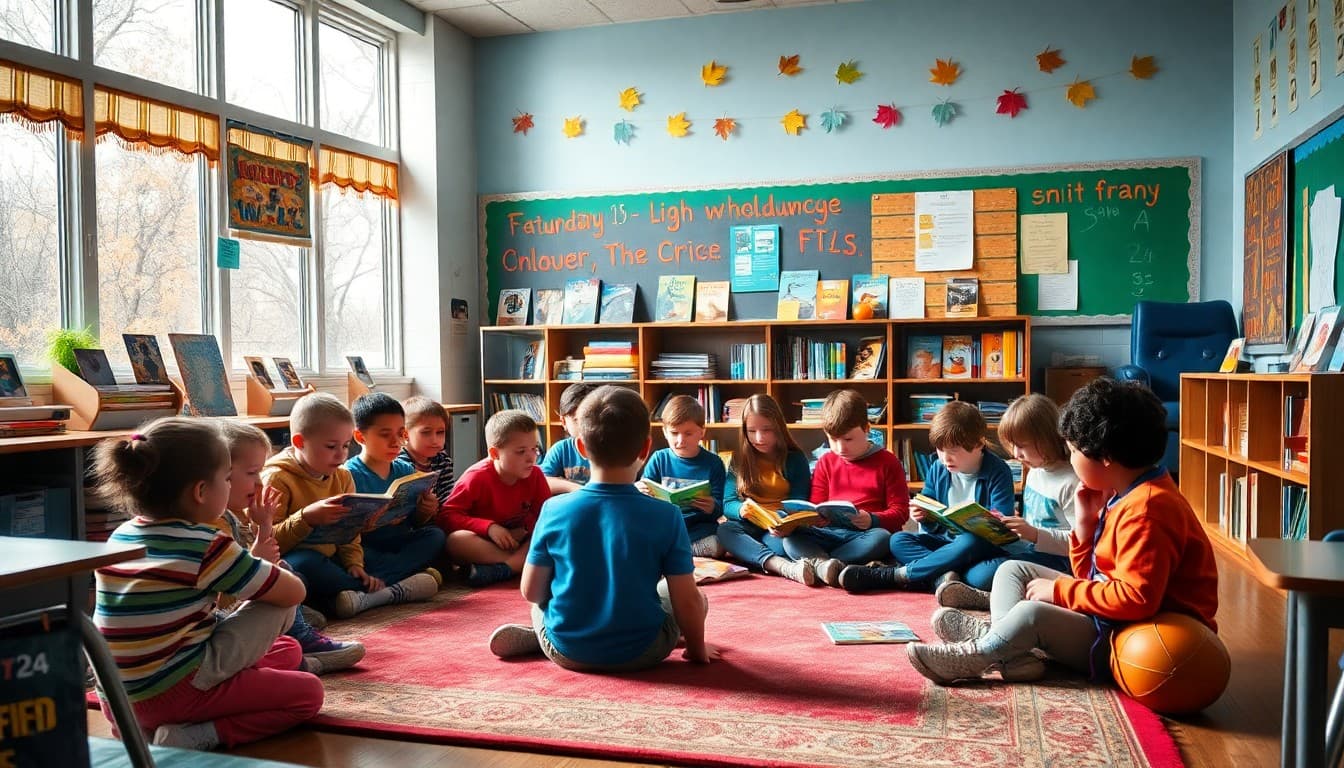
October Reading Class Newsletter: What We Are Learning

By October, your reading class has a rhythm. Students know your routines, you have a clearer sense of each reader, and the content is starting to demand more. Your October newsletter is the right moment to tell parents exactly where the class is, what skill is at the center of your instruction, and how they can stay connected to their child's reading life at home.
Show Progress From September
One sentence connecting September's skill to October's instruction is worth writing. It tells parents that you are building a connected curriculum, not just working through a list. "Last month we focused on making inferences. This month we are extending that work into understanding theme, asking what the text is really saying beneath the surface events." That kind of continuity communicates expertise.
Name the October Comprehension Skill
State clearly what you are teaching. Theme, text structure, author's purpose, point of view, comparing two texts, whatever it is, name it and briefly explain what it means. "We are working on identifying theme" is less useful than "students are learning to state the theme of a story in a sentence, not a single word, and to use two or three moments from the text as evidence." That second version tells parents exactly what success looks like.
Describe the Current Texts
Tell parents what their children are reading. If there is a class read-aloud, name the title and why you chose it. If students are in book clubs or independent reading, describe the genre range or level. When parents know the titles, they can ask their child about the book at dinner, which is one of the most effective reading support strategies that costs nothing.
A Template Excerpt for October
Here is a section to adapt:
"This month's reading focus is theme. We are reading two short stories in class and asking the same question after both: what is this story really about, underneath the plot? Students are learning to state theme as a sentence, not just a topic word like friendship or courage, and to cite specific moments from the text as evidence. At home, after any book or movie, you can ask your child: what do you think the author or filmmaker was trying to say? That one question does a lot of work."
Note Any Upcoming Reading Assessments
If you conduct individual reading assessments in October, tell parents. Explain what you measure, how long it takes, and when results will be shared. If parent-teacher conferences are coming, tell families that reading conference notes will be part of that conversation. Advanced notice makes conferences more productive.
Address the Home Reading Routine
Check in on the reading log if you have one. Remind families how it works, how many minutes are expected, and what to do if their child is resistant about nightly reading. A concrete strategy for resistant readers, like choosing books together at the library, reading the first chapter aloud to them, or using audiobooks alongside text, is genuinely useful content for many parents.
Highlight One Student Success
Without naming a specific student, you can share a class success moment. "This week a student said something so sharp about the theme of our story that the whole class stopped to listen" signals that meaningful learning is happening. Parents want to know their child is in a class where reading is taken seriously.
Close With Your Contact Information
End with an invitation to reach out, your preferred contact method, and a brief note about parent-teacher conferences if they are on the horizon. Parents who feel welcome to ask questions are more likely to bring concerns forward before they become problems.
Get one newsletter idea every week.
Free. For teachers. No spam.
Frequently asked questions
What reading skills are typically taught in October?
October reading instruction often moves into more complex comprehension skills like identifying theme, analyzing character development, comparing texts, and understanding text structure in nonfiction. Decoding instruction in early grades may shift to multisyllabic word strategies. Your newsletter should name the specific skill you are focusing on so parents can reinforce it at home.
How do I address a book students dislike in my October newsletter?
Be honest. Acknowledge that some students have found the current text challenging or less engaging, and explain why you chose it and what skills it builds. Parents appreciate teachers who treat them as adults. Framing difficulty as purposeful rather than accidental earns more trust than pretending everyone loves every book.
Should I mention reading conferences or assessments in October?
Yes, especially if you are completing individual reading assessments in October. Tell parents that you are pulling students for brief one-on-one reading conferences to assess fluency and comprehension, and that you will share results before or during parent-teacher conferences. That preview reduces parent anxiety about assessment season.
How do I write a newsletter that serves both strong and struggling readers?
Write for the whole class but acknowledge the range. You might note that students are reading at a variety of levels and that you differentiate instruction to meet each reader where they are. Avoid framing the class as a single homogeneous group, because parents of struggling readers know their child is not in that group.
What newsletter tool do reading teachers prefer?
Daystage is used by many subject teachers for exactly this workflow. You write the newsletter, select your class parent list, and send it in one place. There is no formatting or email management required. The newsletter looks clean on every device and you can save each month's template for next year.

Adi Ackerman
Author
Adi Ackerman is a former classroom teacher and curriculum writer with 8 years in K-8 schools. She writes about school communication, parent engagement, and what actually works in real classrooms.
More for Subject Teachers
Ready to send your first newsletter?
3 newsletters free. No credit card. First one ready in under 5 minutes.
Get started free