
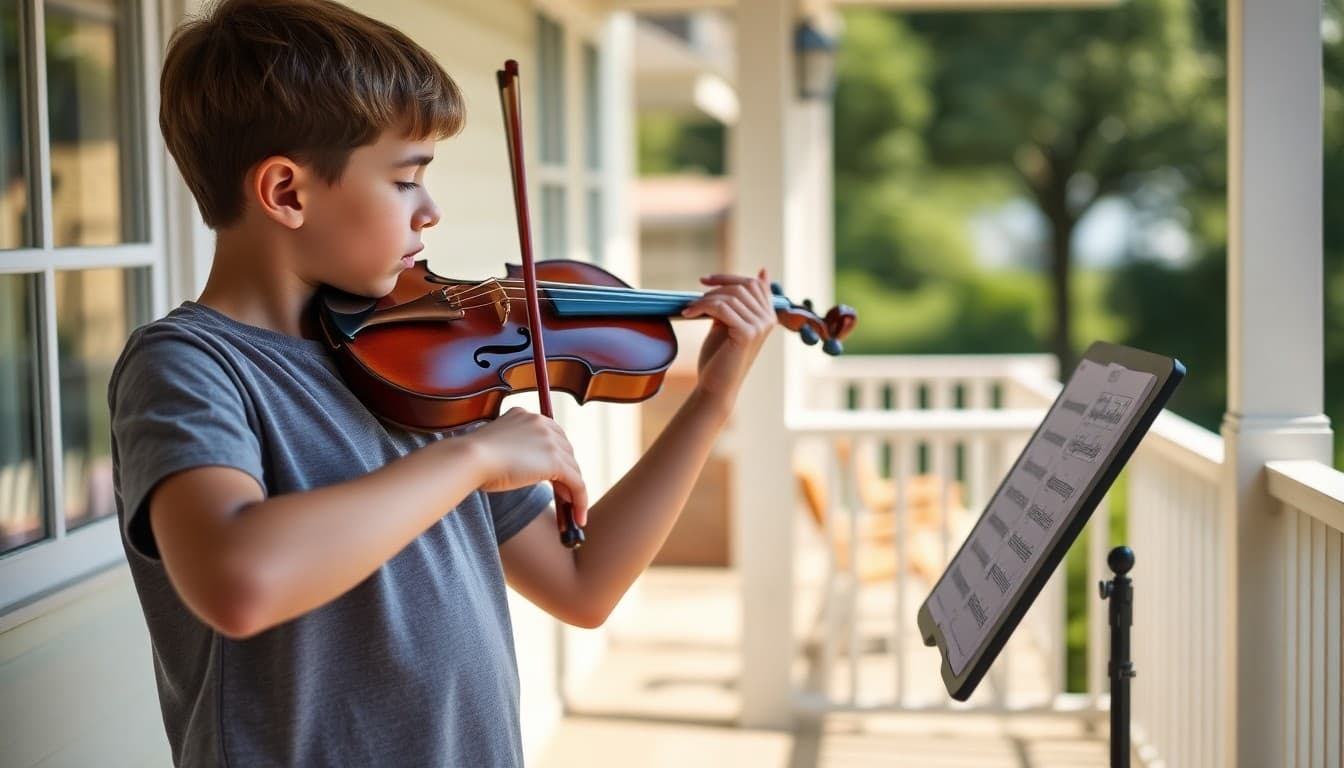
Music Teacher Newsletter: Summer Work Newsletter
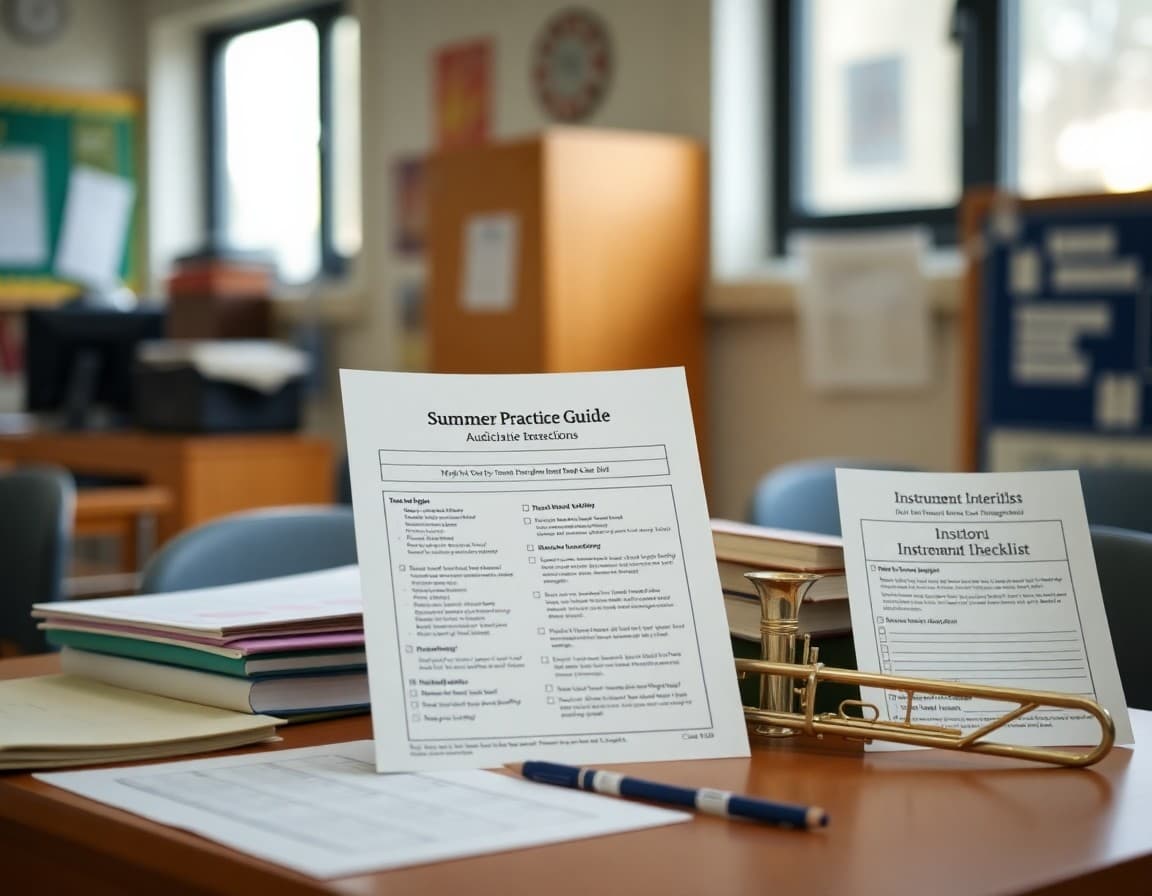
Instrument skills decay without practice. A student who was playing confidently in May and does not touch their instrument until August may regress enough to affect their chair placement in September and spend the first month of the fall semester catching up rather than advancing. A clear summer work newsletter with specific, manageable expectations prevents that regression for students who follow through, and gives families the context to support the practice habit.
Start with the consequence of not practicing
"Students who practice three or more times per week over the summer arrive in September at the level they left in June. Students who practice once a week arrive a few weeks behind. Students who do not practice at all typically regress by four to six weeks of development, meaning they start September playing music they were comfortable with in April. That regression affects chair placements, learning curve on new repertoire, and confidence in the first weeks of school." Naming the consequence concretely is more motivating than "keep up your skills."
Set specific, measurable practice expectations
Vague summer practice expectations produce vague results. Be specific. "For students in the concert ensemble: practice 20 to 30 minutes, three to four days per week. Focus: long tone exercises, major scales in all keys at a comfortable tempo, and the last two pieces from our spring concert. For students in the honors or advanced ensemble: practice 30 to 45 minutes, five to six days per week. Focus: scales, technical etudes from the book we use in class, and the audition materials if applicable."
Give a summer practice structure students can follow
Here is a newsletter excerpt that provides a concrete weekly practice structure:
"Suggested 25-minute summer practice session: Minutes 1 to 5: Long tones. Play each note in the lower register of your instrument, holding for four counts at a full, resonant sound. This is not boring. This is building the foundation of your tone. Minutes 6 to 10: Scales. Two major scales per session, slowly and evenly. Set a metronome to 60 and do not go faster until every note speaks clearly. Minutes 10 to 20: Repertoire. One or two pieces from our spring concert, or the audition material if you are auditioning in September. Identify the hardest passage and work on that specifically, not the whole piece. Minutes 20 to 25: Something you enjoy. A piece you already know well, or something you found that you want to learn. This is your reward for the work before it."
For audition-specific preparation, give a complete timeline
"Students auditioning for the Honors Wind Ensemble in September: Audition date is September 18. Required materials: three major scales (concert pitch, written pitch varies by instrument) at quarter-note equals 120 minimum, one etude from the attached list, and a prepared piece of your choice. Suggested timeline: June: Learn the scales and begin the etude. July: Refine the etude and begin the prepared piece. August: Record a test take and identify what needs work. First week of September: Two final clean takes. Submit the best one by September 14. I am available by email all summer for questions and can listen to a recording if you send one."
Address instrument storage and care over the summer
"If your student is taking a school instrument home for the summer: keep it in its case when not in use, store it away from direct sunlight and heat, and do not store it in a car or garage where temperatures fluctuate. For brass players, clean the instrument before storing it for any period longer than two weeks. String players should loosen the bow after each practice session. If the instrument needs a repair, contact me before the end of the school year so it can go to the repair shop and return before September."
Suggest summer listening alongside the practice
"One of the best things you can do for your musicianship over the summer is listen to great players in your section. Trumpet players: listen to Miles Davis Kind of Blue and Clifford Brown with Max Roach. Clarinet: listen to Benny Goodman at Carnegie Hall. Violin: listen to Hilary Hahn's Bach partitas. Just listen while you are in the car, doing dishes, or going to sleep. Students who have a wide listening diet develop taste and expressive vocabulary that pure technical practice does not build." Listening recommendations cost families nothing and produce students who arrive in September with a richer musical understanding.
Send the newsletter two weeks before school ends and include your email for summer questions. Students and families who know they can reach you in July tend to stay more engaged in the practice than those who feel disconnected from the program until September.
Get one newsletter idea every week.
Free. For teachers. No spam.
Frequently asked questions
How much practice should music teachers assign over the summer?
For regular ensemble students: three to four days per week at 20 to 30 minutes per session. For students auditioning for honors ensembles, summer band, or advanced placement: five to six days per week at 30 to 45 minutes. The goal for the summer is skill maintenance and habit reinforcement, not major technical advancement. Students who practice three to four times per week over the summer arrive in September at the same level they left in June. Students who do not practice at all typically regress by four to six weeks of skill development.
How do I explain summer audition preparation to families?
Give them the exact materials needed and the specific skills that will be assessed. 'Students auditioning for the Honor Band in September should prepare: two major scales at a minimum tempo of quarter-note equals 120, one piece from the standard audition repertoire list (attached), and one sight-reading exercise at each audition session. The audition committee evaluates tone quality, intonation, rhythmic accuracy, and musical expression. Technical accuracy is baseline. Expression is what separates comparable candidates.' Then attach the repertoire list and the scale requirements so families have everything in one place.
Should students take the school's instrument home for summer practice?
Address this clearly in the newsletter. 'Instruments may be taken home for summer practice by students who are enrolled in the fall ensemble. You are responsible for the instrument's safety and condition. Do not leave it in a hot car or any environment with extreme temperature changes. Return it in the same condition it left in. If damage occurs, contact me before attempting any repair. Unauthorized repairs often create more problems than the original damage.' A clear statement of responsibility reduces both damage and the parent dispute when damage occurs.
My ensemble is auditioning for state band in the fall. How do I prepare families?
Name the audition date, location, required materials, and the preparation timeline families should plan for. 'State Band auditions are September 20. Students must prepare three scales (major, natural minor, and chromatic), the assigned etude from the Illinois State Band etude list, and one chromatic scale at quarter-note equals 120 or above. Auditions are recorded and submitted online. Students should record a clean take by September 15 to allow time for retakes if needed. I will hold weekly summer check-in sessions on Thursdays in July for students who want feedback on their audition preparation.'
What platform makes summer music newsletters easy to send and reference?
Daystage lets you send the summer practice newsletter before school ends and schedule a reminder send for mid-July when students who planned to start and did not need a nudge. For audition-specific sends, you can reach only the students in the relevant ensemble without sending the full audition details to families whose students are not auditioning. Having both sends in one platform means you can look back at what you sent if a family asks about audition requirements in August.

Adi Ackerman
Author
Adi Ackerman is a former classroom teacher and curriculum writer with 8 years in K-8 schools. She writes about school communication, parent engagement, and what actually works in real classrooms.
More for Subject Teachers
Music Teacher Newsletter Guide: Keeping Families Connected to the Music Program
Subject Teachers · 7 min read
Music Teacher Newsletter: Setting Up the Year for Students and Families
Subject Teachers · 6 min read
AP Teacher Newsletter Guide: Communicating Expectations, Exam Prep, and Support to Families
Subject Teachers · 6 min read
Ready to send your first newsletter?
3 newsletters free. No credit card. First one ready in under 5 minutes.
Get started free