

Music Teacher Newsletter: Parent Conference Newsletter Template
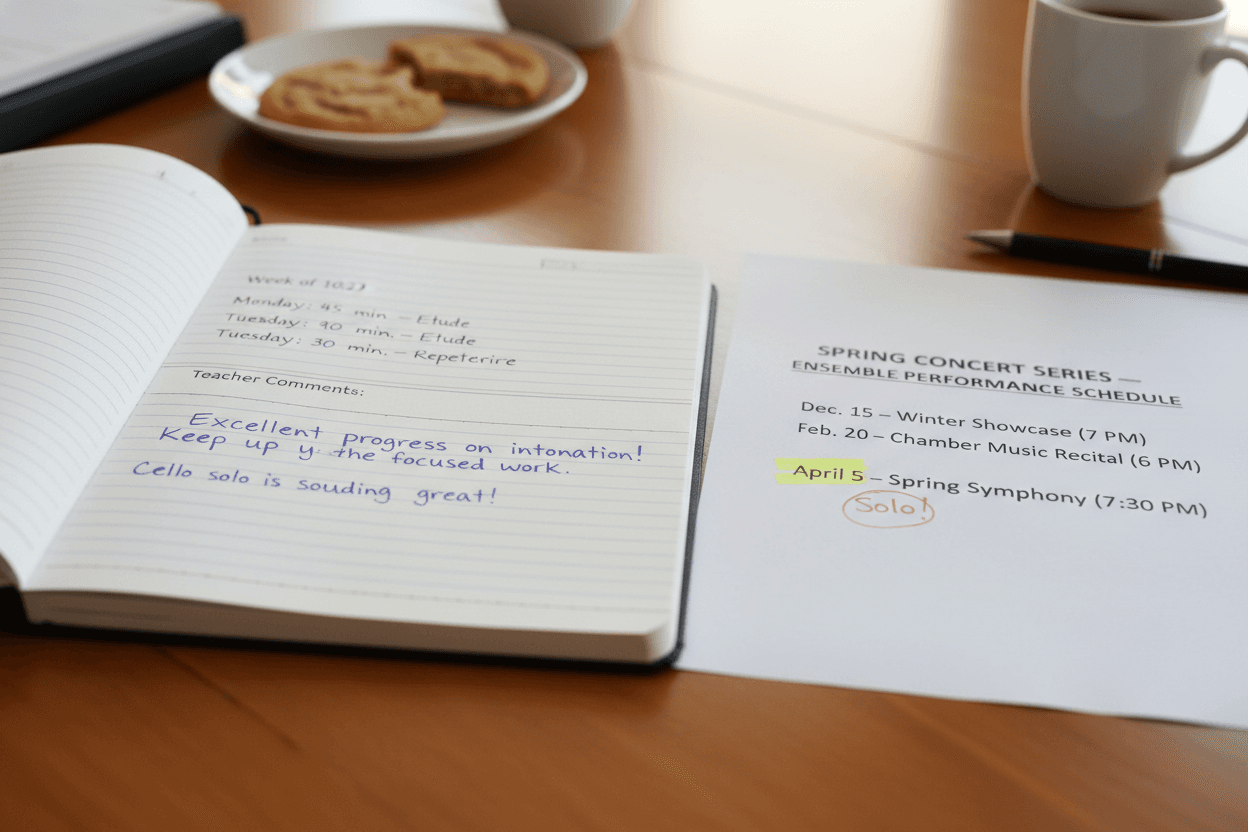
Parent-teacher conferences in a music program cover different ground than conferences in a core academic class. Progress in music is not always reflected in letter grades, and families who have never been in a band, orchestra, or choir may not know what questions to ask or what to make of the feedback they receive. A pre-conference newsletter changes that dynamic by arriving in families' inboxes before the meeting, setting context, and making the conversation more productive from the first minute.
This guide covers what to include in a music parent conference newsletter, how to communicate student progress in accessible language, and how to use the newsletter to build family investment in the music program year-round.
Explain how music progress is measured in your program
Many families do not know how music teachers assess student performance. Before diving into any individual student's progress, use one paragraph in the newsletter to explain your assessment framework. Do you use playing tests, practice logs, participation grades, ensemble chair placements, or written theory evaluations?
This framing helps families interpret the feedback that follows. A parent who understands that 40 percent of the grade comes from playing tests and 30 percent from practice log completion will engage very differently with a conversation about a student who plays well but rarely completes their practice log. Transparency about the assessment structure is the foundation of a productive conference conversation.
Describe the student's strengths in specific, observable terms
Start the student-progress section with strengths. For music, this means naming specific skills the student is demonstrating well: steady rhythmic pulse in fast passages, consistent tone quality across the full range of their instrument, accurate pitch matching in ensemble settings, strong sight-reading ability for their level, or reliable memorization of concert repertoire.
Specific language builds credibility and helps families understand what musical growth actually looks like. "Your student has excellent musicianship" says nothing useful. "Your student consistently listens across the ensemble and adjusts their tuning when the group is out of balance" tells a parent something real about what their child is capable of.

Name the specific areas the student is working to improve
Frame growth areas as the next stage of development, not as failures. For a band student working on articulation, say: "The next skill we are developing is clean tongue technique in fast passages. Right now the notes run together when the tempo increases, which is common at this stage. We are working on it systematically in rehearsal." For a choir student working on blend, say: "Your student has a strong individual voice. The current focus is learning to balance that voice within the section, which is a skill that takes active listening and practice."
Avoid vague phrases like "needs improvement" without specifying what that improvement looks like. Growth areas described with a next step are empowering. Growth areas described without direction are discouraging.
Address home practice directly and honestly
Practice at home is the single variable that most differentiates students who progress quickly from students who plateau. In the conference newsletter, be direct about what your expectations are and how the student's current habits compare to those expectations.
If your expectation is 30 minutes of practice four to five days per week and a student is consistently practicing 10 minutes twice a week, say so in plain language before the conference so families arrive ready to address it rather than surprised by it. If a student is meeting or exceeding practice expectations, name that explicitly as a strength. Families who help their student build a consistent practice habit are contributing directly to the student's musical development, and they deserve to know when that investment is showing up in the student's progress.
Share the upcoming performance schedule
Concert season requires coordination from families on multiple fronts: transportation, schedule adjustments, dress code compliance, instrument transport, and sometimes ticket purchases. The conference newsletter is an ideal moment to share the full performance calendar for the remainder of the semester or year.
Include concert dates, call times, dress code expectations, and any adjudicated events like festival or solo-and-ensemble competitions. Families who see the full picture early can plan childcare, request time off work, and build the performance dates into their family calendar before conflicts arise. Last-minute reminders about concerts that conflict with other commitments are a leading source of frustration in music programs, and early communication prevents most of them.
Invite families to share what they observe at home
The conference is a two-way conversation, and the newsletter should make that clear. Ask families to think about what they have noticed at home: Does their student practice independently or need prompting? Do they seem engaged and enthusiastic about the music program or resistant and frustrated? Have they mentioned anything specific about rehearsal, the repertoire, or their relationship with the ensemble?
Information from home fills in gaps that classroom observation alone cannot provide. A student who seems engaged in rehearsal but is resistant to practicing at home is showing a different pattern than a student who practices enthusiastically at home but struggles to concentrate in the ensemble setting. Both patterns have different causes and different interventions, and families hold context that helps music teachers understand what is actually happening.
Close with a genuine invitation to stay connected
Music parents who stay connected throughout the year, not just at conference time, are more likely to support home practice, attend concerts, and advocate for the music program when budget conversations arise. Close the conference newsletter with a direct, sincere invitation: share your preferred contact method, tell families how quickly you typically respond, and mention one or two things you would love to hear from them about as the year progresses.
A music program that communicates proactively builds a parent community over time. That community shows up to concerts, drives fundraising, supports program expansion, and gives students an audience that cares about their development. The conference newsletter is one moment in a longer relationship, and treating it that way changes what it can accomplish.
Get one newsletter idea every week.
Free. For teachers. No spam.
Frequently asked questions
What should a music teacher send before a parent conference?
Send a pre-conference newsletter two to three days before the scheduled meeting. Include the student's current progress in each assessed area, the specific skills being evaluated this semester, what parents should expect to discuss during the meeting, and any questions you would like families to think about beforehand. A newsletter that prepares parents leads to more focused and productive conversations, especially for families who are new to music programs and unfamiliar with how ensemble performance is assessed.
How do music teachers explain progress without using jargon?
Replace technical terms with observable descriptions. Instead of 'embouchure development is progressing,' say 'your student is producing a clearer, fuller tone than they were at the start of the semester.' Instead of 'intonation needs work,' say 'your student sometimes plays sharp or flat compared to the ensemble and is working on adjusting by ear.' Families who hear specific, observable language leave the conference with a clearer picture of where their student stands and what growth looks like.
Should music teachers discuss home practice in the conference newsletter?
Yes. Practice habits are one of the most direct predictors of student progress in a music program, and parents often do not know how much or how effectively their student is practicing at home. The pre-conference newsletter is a good place to share your general expectations for home practice and to flag whether the student's current practice habits are aligned with those expectations. This gives families a concrete topic to discuss during the conference and frames practice as a partnership between home and school.
What should music teachers share about upcoming performances in the conference?
Mention any upcoming concerts, adjudicated festivals, or ensemble performances in the conference newsletter and explain what preparation is required between now and those events. Families who understand the performance calendar can plan accordingly, arrange transportation, request schedule adjustments, and commit to supporting consistent practice between now and the performance dates. Concert logistics, dress code expectations, and call times are details families appreciate having early.
How does Daystage help music teachers prepare parent conference newsletters?
Daystage gives music teachers a fast, clean way to send pre-conference newsletters that look professional and are easy for families to read. Build a conference template once, then update the student-specific sections for each meeting period. You can send it a few days before conferences open without managing a complex distribution list, and you can see which families opened the newsletter so you know who may need a reminder before their scheduled slot.

Adi Ackerman
Author
Adi Ackerman is a former classroom teacher and curriculum writer with 8 years in K-8 schools. She writes about school communication, parent engagement, and what actually works in real classrooms.
More for Subject Teachers
Ready to send your first newsletter?
3 newsletters free. No credit card. First one ready in under 5 minutes.
Get started free