
Music Teacher Newsletter: Club and Activity Newsletter
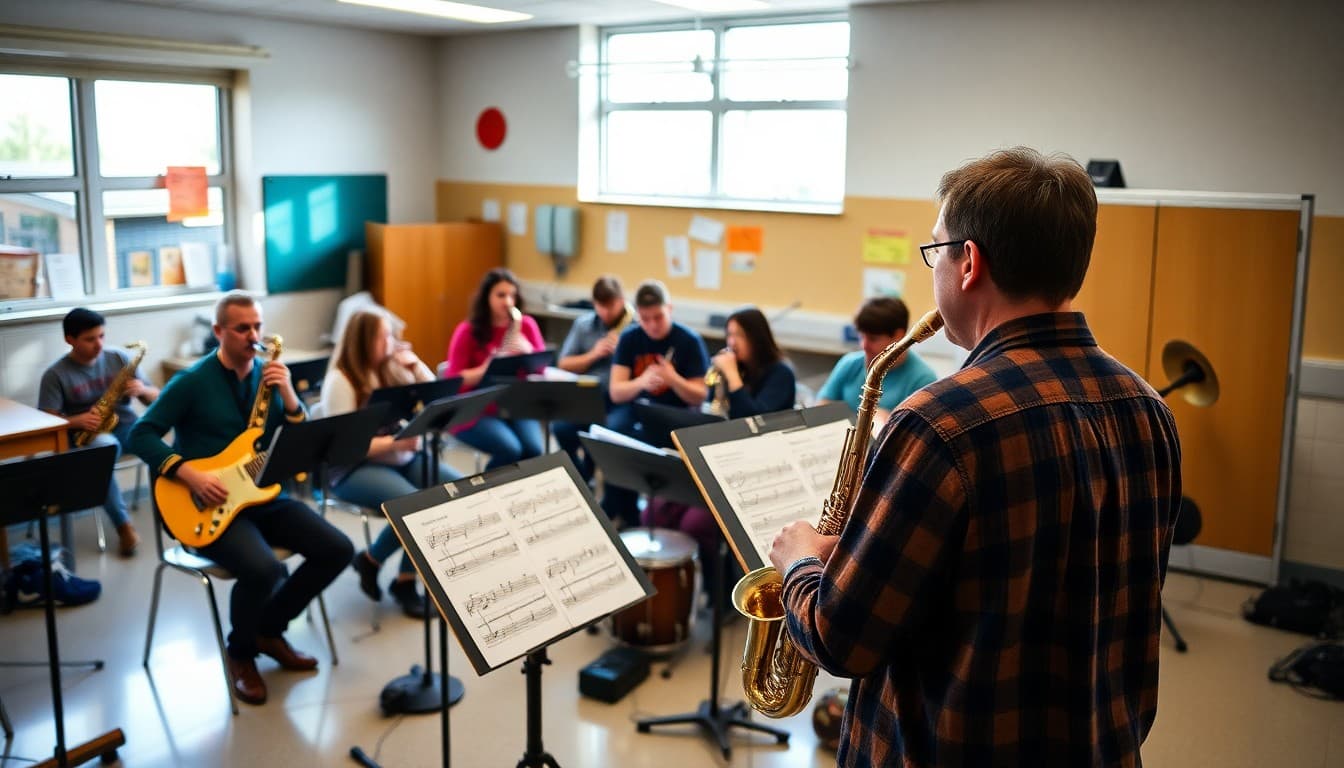
Music extracurriculars, whether jazz band, chamber ensemble, pit orchestra, or a chamber choir, run on a tighter schedule and higher stakes than the regular ensemble. A missed rehearsal matters more. A student who arrives unprepared slows the whole group. And performances often happen in public venues with real audiences. A newsletter that keeps families informed about what is expected and when things are happening is the difference between a smooth production week and a frantic one.
Open with the current repertoire and performance focus
"Jazz band is midway through our fall semester. We are learning three charts for the November showcase: Duke Ellington's Take the A Train (swing, classic big-band style), Herbie Hancock's Watermelon Man (funk, requires tight rhythmic locking from the rhythm section), and a student-arranged version of Bill Withers' Lovely Day (groove, with a featured improvisation from the tenor sax). The showcase is November 21 at 7:00 PM in the black box theater." That opener gives families the repertoire, the styles, and the performance date in a single paragraph.
Explain what students should prepare before the next rehearsal
Extracurricular ensemble rehearsals are most productive when every student arrives prepared. Name the specific work. "Before Thursday's rehearsal, each student should have: measures 1 through 64 of Take the A Train at swing feel, and the eight-bar solo section of Watermelon Man learned from the recording (not from the chart, from the recording). Listen to the Quincy Jones version at 1:47 to hear how the piano plays the solo section. Do not write it out. Learn it by ear and then find it on your instrument. This is how jazz musicians learn." Specific preparation instructions produce prepared students.
Build toward the performance from the first newsletter
If the group is building toward a performance, keep the goal visible in every newsletter. Here is a newsletter excerpt that does this:
"We are six weeks from the November showcase. Here is where each piece stands: Take the A Train is in good shape. The ensemble needs to work on settling into the groove at the top of the chart before it locks. Watermelon Man is rougher. The rhythm section is not yet consistent on the locked groove in the B section. Lovely Day is in early stages. Students who know their part can carry the ensemble through the next two rehearsals while we build the arrangement. If you are in the rhythm section for Watermelon Man, please spend extra time this week on the B section groove. Record yourself and listen back. If it does not groove when you listen back, it does not groove."
Pit orchestra logistics newsletter template
For a pit orchestra, the logistics are more involved than a standard performance. Give families a full picture. "Pit Orchestra Families: Here is the full schedule for the spring musical (Wicked). Technical rehearsals (orchestra not called): March 3 to 8. Sitzprobe (orchestra and singers, no staging): March 10, 6:00 to 9:00 PM. Piano tech week (orchestra not called): March 12 to 14. Full tech with orchestra: March 15 to 18, 6:00 to 10:00 PM (may run late). Opening night: March 19 at 7:30 PM. Performances through March 23. Your student is expected at every event listed here, from the Sitzprobe through closing night. There are no individual nights off. If a conflict exists, contact me immediately. Call time is 45 minutes before curtain. Pit musicians wear all black. No contact with the audience before the performance."
Celebrate individual student achievement in club newsletters
Jazz band and chamber ensemble newsletters have more latitude than class newsletters to name students publicly. "Congratulations to Marcus Chen, who performed his first jazz improvisation solo in front of an audience at Thursday's run-through and landed every chord change. That is the result of six weeks of deliberate practice on the blues scale and he knows it." Named recognition in a family newsletter produces students who practice harder the next week.
Give families a way to prepare for the performance
"Before the November 21 showcase, listen to the studio recordings of all three pieces with your student. Ask them to identify their part in the recording. Students who have done this arrive at the performance knowing how their part contributes to the whole rather than just what notes they play. It is a 20-minute activity that completely changes how an audience member experiences the performance." The family who does this preparation becomes the most engaged person in the room.
Get one newsletter idea every week.
Free. For teachers. No spam.
Frequently asked questions
What should a jazz band or chamber ensemble newsletter cover?
Cover the current repertoire and what makes it technically interesting for the ensemble, upcoming gig or performance logistics, what students should practice before the next rehearsal, and any special materials or equipment needed. For jazz band specifically, naming the style of each piece (swing, bossa nova, funk, ballad) gives families context for the sonic world their student is working in. Families who understand that their student is learning to improvise in a 12-bar blues format are more engaged in the program than families who just know 'they play jazz.'
How do I explain jazz improvisation to families who are not jazz musicians?
Use a parallel that is accessible. 'Jazz improvisation is like a conversation. When your student improvises over a chord progression, they are responding to the harmonic context the rhythm section provides, the same way you respond to what someone says in a conversation. We practice improvisation using scales called modes that match each chord, and eventually students learn to move intuitively between the chords the way a fluent speaker moves between ideas. It takes time and it sounds rough at first. By spring, most students have found their voice in at least one style.'
My ensemble is performing in the pit for the school musical. What logistics do families need to know?
Be thorough: rehearsal schedule from pickup rehearsals through opening night, where the pit is located, call times for each performance night, whether students need to dress in a specific way, how to get tickets for the show, and what the policy is on students attending the show as audience members on non-performance nights. Pit orchestra families often do not realize their student is attending every performance night, not just their own instrument's section. Give them the full calendar early.
How do I communicate about auditions for a select jazz ensemble or chamber group?
Describe exactly what the audition requires: the scales or material students need to prepare, the format (live, recorded, or both), the date, and the criteria for selection. 'Auditions for the Select Jazz Combo are November 14 and 15. Students should prepare: one major scale and one blues scale of their choice at a minimum tempo of quarter-note equals 100, and a one-chorus improvisation over a 12-bar Bb blues (backing track provided). I am looking for rhythmic feel, awareness of the chord changes, and musical character. Technique is secondary to feel at this level.'
What platform works for music extracurricular newsletters?
Daystage is a good choice because it lets you include audio links, setlist details, and performance logistics in one organized email sent directly to family and student inboxes. For jazz ensembles where the repertoire includes well-known recordings, linking to the Spotify or YouTube version of the piece students are learning gives families a way to listen alongside the rehearsal process. That kind of access builds family investment in the program in a way that text alone cannot.

Adi Ackerman
Author
Adi Ackerman is a former classroom teacher and curriculum writer with 8 years in K-8 schools. She writes about school communication, parent engagement, and what actually works in real classrooms.
More for Subject Teachers
Music Teacher Newsletter Guide: Keeping Families Connected to the Music Program
Subject Teachers · 7 min read
After-School Program Newsletter Guide: Keeping Families Engaged Beyond the School Day
Subject Teachers · 6 min read
Drama Teacher Newsletter Guide: Communicating About Theater Productions
Arts & Music · 6 min read
Ready to send your first newsletter?
3 newsletters free. No credit card. First one ready in under 5 minutes.
Get started free