

Music Teacher Newsletter: Communicating Differentiation to Parents
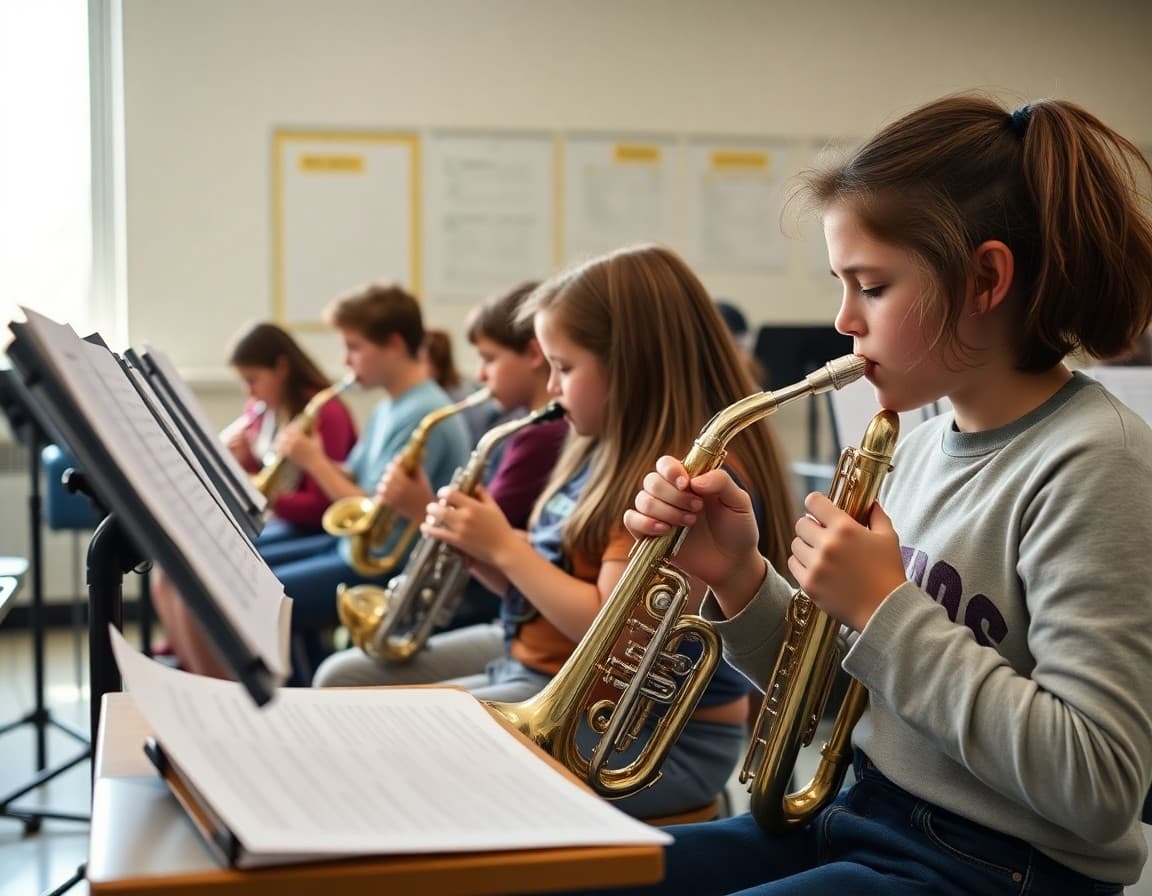
Differentiation in music is inherently visible in a way that academic subject differentiation is not. In a band or orchestra, students can see and hear that some classmates are playing different parts, sitting in different chairs, and practicing different material. Families notice it at concerts. If you have not explained how differentiation works in your ensemble before those observations happen, the questions you receive are harder to answer than they would have been with a proactive newsletter.
Explain the ensemble structure before chair placements happen
Send a brief explanation of how parts and chairs work before the first chair placement round. "In concert band, each instrument section has multiple parts. The first part typically carries the primary melody and the highest technical demands. The second part carries countermelodies, harmonies, and requires specific ensemble listening skills. Third parts are often structurally foundational, carrying the harmonic rhythm. All parts are necessary for the ensemble to sound complete. No part is a consolation. Chair placement determines which part each student plays, and it changes every semester."
Describe chair placement as a skill snapshot, not a permanent ranking
Families who understand that chair placement reflects current skill development, not permanent musical status, react very differently to a placement result than families who think it is a fixed verdict. "Chair placement auditions happen twice a year. The audition is a snapshot of where each student is on specific technical skills: scale fluency, sight-reading speed, and excerpt performance at tempo. A student who places fifth chair in September but practices consistently and addresses the specific gaps from the audition can place second chair in February. Chair placement is a target, not a verdict."
Differentiated practice expectations in the newsletter
Here is a newsletter section that sets tiered practice goals clearly:
"Home practice expectations by level: Students in their first year with the ensemble should practice 20 minutes a day, four days per week. Focus: assigned scales, the main melody of the current piece, and the technical exercise from class. Students in their second or third year should practice 30 minutes, five days per week. Focus: all assigned scales in the target tempo range, the full part, and any passages marked in rehearsal. Students in honors or advanced ensemble should practice 45 to 60 minutes, five days per week. If your student is not sure which category applies to them, ask them to show you their practice sheet, which lists their individual goals for the week."
Give families a way to understand what their student's individual goals are
Families who want to support home practice benefit from knowing specifically what their student is working on. "Each week I give every student a practice goal card that identifies two specific things they are working on. For some students that might be 'play the chromatic scale from low C to high C at 80 beats per minute.' For others it might be 'play measures 34 to 42 with the correct dynamics marked in the score.' Ask your student to show you their goal card and play the specific thing they are working on. You do not need to know whether it sounds right. Ask them: is this the hardest part of the piece right now? If they say no, ask them to show you the hardest part."
Explain how accommodations work in a music setting
For students with IEPs or 504 plans that include music accommodations: "Some students in the ensemble have specific accommodations that affect how I assess their work. This might include extended time on playing tests, alternative seating arrangements, or modified parts. These accommodations do not affect other students' grades or parts. They are private between the student, their family, and me. If you have questions about your student's specific accommodations in this class, please contact me directly rather than asking through a general channel."
Address the parent who is comparing their student to another student
The most delicate conversation in music differentiation is when a family compares their student's chair or part to another student's. Handle it before it becomes an issue. "The most meaningful comparison for any musician is their own growth over time: are they playing more accurately now than they were in September? Are they more confident in the middle register? Can they sight-read faster than they could in January? These are the comparisons that predict long-term musical development. Chair placement relative to a classmate is a less useful measure of growth and says very little about where either student will be in a year."
Close with an invitation for families who want to understand specifically where their student is and what the path forward looks like. "If you want to talk through your student's current level and what I am seeing as their primary area for growth, I am happy to have that conversation. Email me to schedule five to ten minutes before or after school." That offer, made explicitly, converts most potential complaints into productive conversations.
Get one newsletter idea every week.
Free. For teachers. No spam.
Frequently asked questions
How do I explain chair placement to families without creating a hierarchy?
Name what chair placement determines and what it does not. 'Chair placement determines who plays which part in pieces that have multiple parts for the same instrument, and who gets featured solos. It does not affect the ensemble grade. It does not mean one student is a better musician than another in any permanent sense. Chair placement changes every semester. A student who is third chair in the fall can be first chair in the spring. The most reliable path to a better chair placement is consistent daily practice.'
How do I explain that some students are playing different parts in the same piece?
Name the reason directly. 'Concert band repertoire is written in multiple parts for each instrument section. The first part is typically the most technically demanding and carries the primary melody. The second and third parts are equally important for the ensemble sound and are played by students who are building toward the first part skill level. Playing a second or third part does not mean a student is not progressing. It means we have found the part that challenges them appropriately right now.'
A parent wants to know why their student is not playing the first part. What do I say?
Be specific about what the first part currently requires and where the student is relative to that. 'The first trumpet part in this piece has three extended passages above high C. Your student is not yet playing comfortably above the G above the staff. Assigning them the first part right now would mean they spend rehearsal anxious and unsuccessful on those passages rather than building the skill with the second part. Once they can play cleanly to high C, we move them to first. The second part is not a demotion. It is the appropriate challenge level for where they are.'
How do I communicate different home practice expectations for different skill levels?
Be clear about what you are asking of different students without labeling them publicly. In the whole-class newsletter, give a tiered practice recommendation with clear language. 'Beginning ensemble students: 20 minutes daily, four days per week. Students in their second or third year of the ensemble: 30 minutes daily, five days per week. Students in the advanced or auditioned ensemble: 45 minutes daily, five to six days per week. These are not arbitrary recommendations. They reflect what research and experience show is necessary to develop at each level. Students who practice less than the minimum for their level progress more slowly than students who meet it.'
What platform works for music differentiation newsletters?
Daystage is a good choice because it lets you send one whole-class newsletter explaining your general approach to differentiation in the music program and separate individual messages to families whose students have specific questions or concerns about their placement or part assignment. Keeping both in one platform means you have a clear record when a parent conversation escalates to a conference or administrator conversation.

Adi Ackerman
Author
Adi Ackerman is a former classroom teacher and curriculum writer with 8 years in K-8 schools. She writes about school communication, parent engagement, and what actually works in real classrooms.
More for Subject Teachers
Music Teacher Newsletter Guide: Keeping Families Connected to the Music Program
Subject Teachers · 7 min read
Music Teacher Newsletter: Communicating Grades to Parents: Newsletter Guide
Subject Teachers · 6 min read
Special Education Newsletter for Parents: IEPs, Services, and Family Communication
Subject Teachers · 7 min read
Ready to send your first newsletter?
3 newsletters free. No credit card. First one ready in under 5 minutes.
Get started free