

Library Teacher Newsletter: Summer Work Newsletter
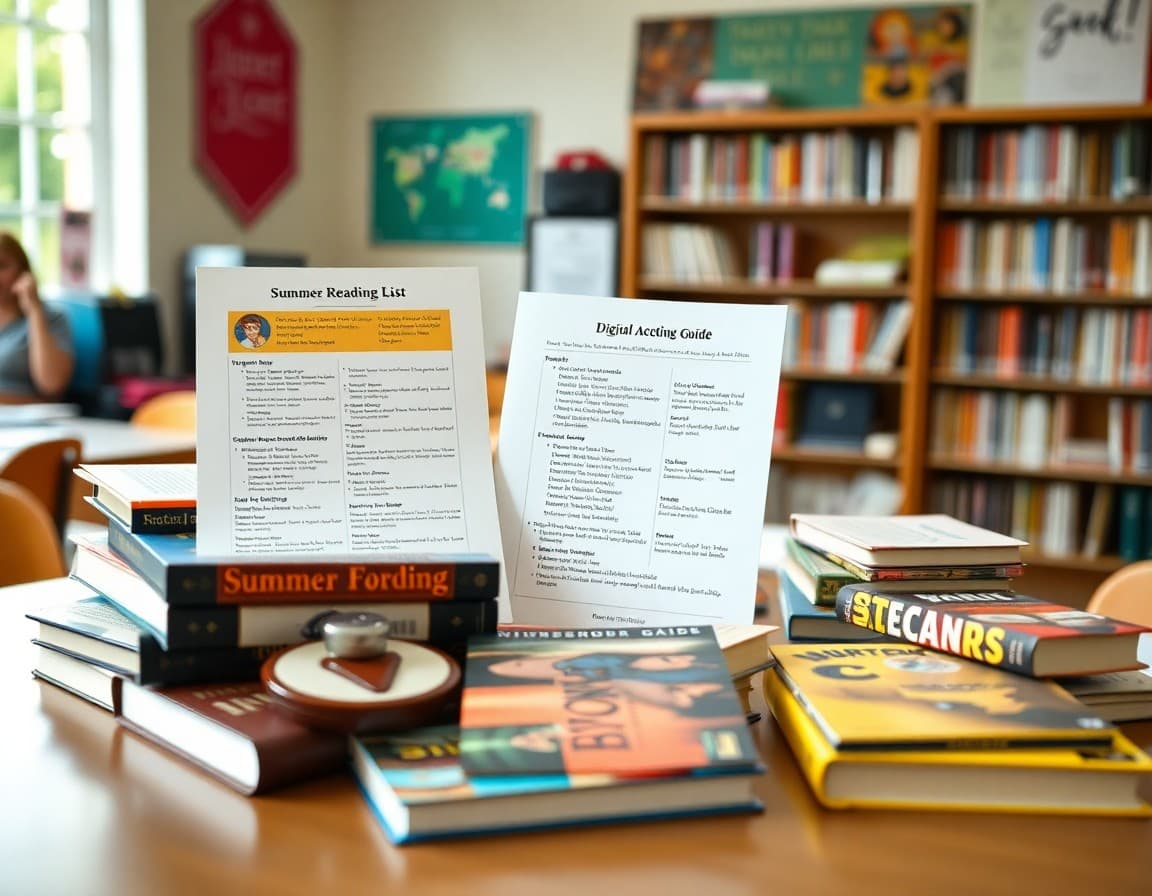
The library summer work newsletter is the one school communication most likely to be opened in August when a student suddenly remembers they have a required summer reading assignment. Making it clear, searchable, and full of the specific information families need in that moment, login credentials, book availability, due dates, is worth doing carefully.
Lead with any required reading assignments and their due dates
If the library is supporting a required reading assignment from another teacher, name it first. "The following teachers have assigned summer reading that is due September 8, the first week of school: Ms. Thompson's AP Language and Composition: The Immortal Life of Henrietta Lacks. Mr. Garcia's 8th grade Social Studies: One required nonfiction book from the attached list. All other grades: no required reading, but the library's recommended reading list is below." Required assignments go first, with due dates in the first paragraph. Families who skim newsletters find this information.
Give the full recommended reading list with honest descriptions
"Library Summer Reading Recommendations: We have organized the list by mood, not grade level, because good readers read across levels. For students who want to be transported: The Night Circus by Erin Morgenstern. Immersive, atmospheric, light on plot but rich in world. For students who want to understand how something works: The Sixth Extinction by Elizabeth Kolbert. Pulitzer Prize nonfiction, reads like a thriller about the natural world. For students ready for a big challenge: Middlemarch by George Eliot. 900 pages, worth every one. Best for 10th grade and above who love language. For students who have never read a graphic novel: Persepolis by Marjane Satrapi. The memoir of a girl who grew up during the Iranian Revolution, in graphic novel format. Takes about two hours to read. Completely unforgettable."
Explain summer digital resource access in full detail
Here is a newsletter excerpt that covers summer digital access completely:
"Summer digital library access: School databases remain active through the summer using your student's school Google account. JSTOR: go to jstor.org and click 'access through institution.' Sign in with your school Google account. Gale In Context: go to [district link], log in with school Google account. Destiny (catalog and digital checkout): go to [link]. Available all summer. Ebooks through Libby: download the Libby app, connect with your public library card. If you do not have a public library card, you can get one at any branch or sign up digitally at [link]. All free. All available from anywhere with internet access. If a login is not working, email me. I check email on weekdays through August 15."
Promote the public library's summer program with specific local information
"The [City] Public Library summer reading program runs June 18 through August 10. Teens who complete the reading log earn prizes and are entered into a grand prize drawing. Events this summer include an author Q&A with Jason Reynolds on July 12 (free, registration required at [link]) and a teen writing workshop in August. Sign up at any branch or at [link]. The summer program is free, open to any teen regardless of reading level, and requires only that you read whatever you want to read and log it." Specific local information converts a generic announcement into something students actually go to.
Give families language to encourage reading at home
"The most effective thing a family can do to support summer reading is make books visible and available. Keep a stack of five or six different books in a place where your student can reach for one without making a separate trip. Drive past the library regularly enough that stopping is normal rather than an event. Read alongside your student occasionally, even for five minutes. Ask what they are reading and what is happening, not what it means or what the theme is. Students who know their parents are curious about what they are reading are more likely to finish books and to want to talk about them."
Explain what happens with overdue books over the summer
"Books can be returned to the school library during summer office hours (Monday and Wednesday, 9:00 AM to 12:00 PM, June 15 through July 31) or to the main office any weekday. Books can also be returned to any public library branch if you drop them in the return slot, but please label them clearly with the school's name so they find their way back. Fines continue to accrue on overdue items over the summer. Students who return books before the end of July avoid the largest fine accumulation. If a book has been lost, email me before purchasing a replacement."
Close with an open door for summer questions
"I check email on weekdays through August 15 and respond within 48 hours. Questions about the reading list, help finding a book on Libby or in the Destiny catalog, or help with a research assignment that is due in September are all welcome. The library does not close for the summer in any meaningful sense. The resources are there. The door is open. Use them." That is the close that converts a summer reading newsletter from a compliance document into an active invitation.
Get one newsletter idea every week.
Free. For teachers. No spam.
Frequently asked questions
What summer work do library teachers typically assign or recommend?
Library teachers more often recommend than require: summer reading lists with a range of genres and levels, participation in the public library's summer reading program, a reading log for tracking titles and brief reflections, and reminders about digital resources students can access at home. If the library is partnering with classroom teachers on a required summer reading assignment, the library's role is usually to provide access to the books (checkout, digital versions) and research skills for any written component. Required library summer work is less common than recommended reading programs.
How do I write a summer reading list recommendation that students will actually use?
Make the list specific to your students and honest about what each book is. 'For students who want something fast-paced and plot-driven: Ender's Game by Orson Scott Card (science fiction, 226 pages, recommended for 7th and 8th grade). For students who liked the memoir unit in ELA: I Am Malala by Malala Yousafzai (140 pages, reads in 2 to 3 hours per session). For students who want to be challenged: A Little Life by Hanya Yanagihara (requires parent preview for 9th grade, 720 pages).' Specific descriptions convert passive list members into active readers.
How do I communicate about summer access to school digital resources?
Name which resources stay active over summer and which do not. 'Your school JSTOR and Gale subscriptions remain active through the summer. Your school Google account login works for both. Britannica School is active through August 31. Destiny (book checkout) is available for renewing items through the summer portal at [link]. For ebook checkout, the Libby app with a public library card gives you access to a large collection for free. Your school library card does not work in Libby, but you can get a public library card at any branch.' Clear access instructions prevent students from hitting a wall when they try to use summer resources.
How do I promote the public library's summer reading program without it feeling like extra work?
Frame it as access to prizes and community events, not homework. 'The [City] Public Library runs a summer reading program from June 18 through August 10. Students who complete the reading log earn prizes at their local branch. The program includes free author events, craft workshops, and teen reading groups. It does not require any specific books. Any reading counts. Sign up at any branch or at [link]. This is the library's summer version of the reading challenge, and it is free, fun, and requires nothing except reading.'
What platform makes library summer work newsletters easy to send?
Daystage lets you send the summer reading newsletter to all families before school ends, with links to the reading list, the digital resource logins, and the public library's summer program signup all in one clean email. For families who return to the newsletter in August to look up a login, having the information in a searchable email is much more reliable than a paper flyer. You can schedule a reminder send for mid-July to nudge families whose students have not started their summer reading yet.

Adi Ackerman
Author
Adi Ackerman is a former classroom teacher and curriculum writer with 8 years in K-8 schools. She writes about school communication, parent engagement, and what actually works in real classrooms.
More for Subject Teachers
Ready to send your first newsletter?
3 newsletters free. No credit card. First one ready in under 5 minutes.
Get started free