
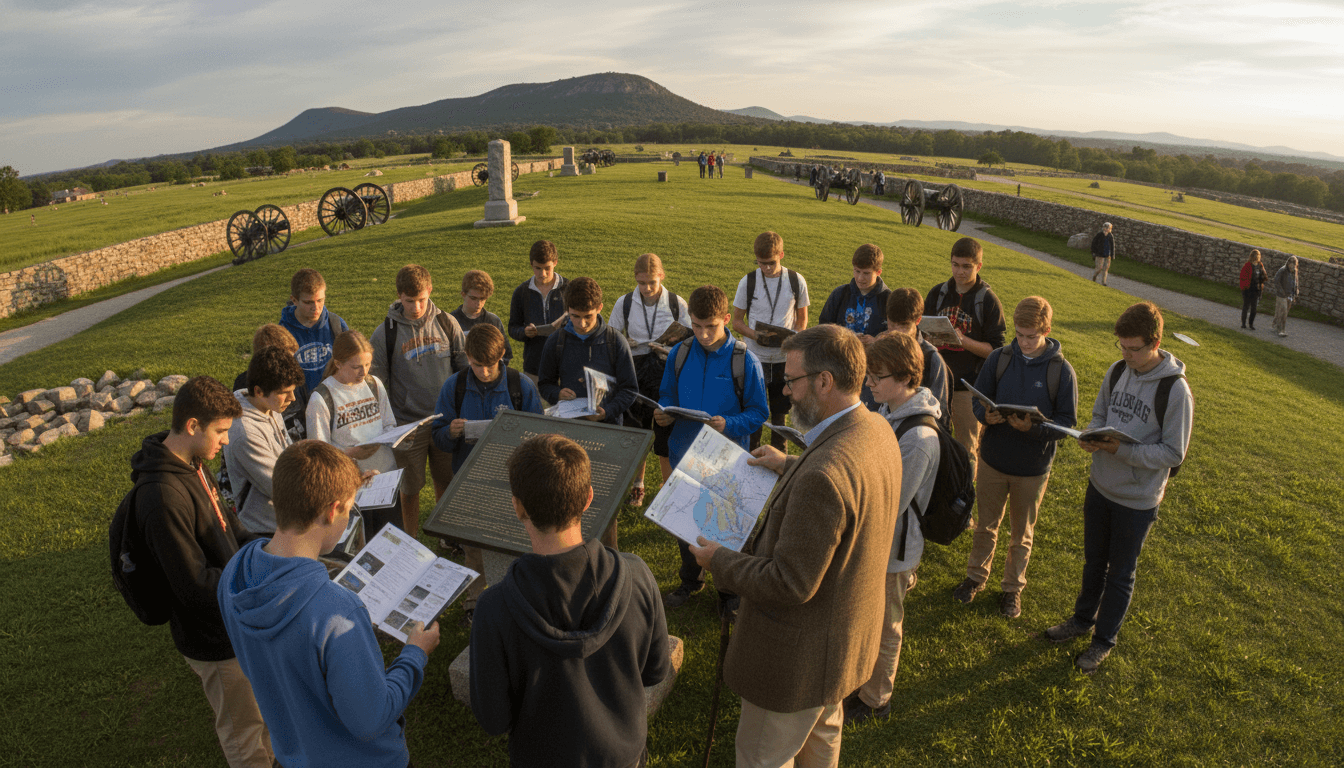
History Teacher Newsletter: Field Trip Newsletter to Parents

A history field trip to a museum, historical site, battlefield, or archive is one of the most powerful learning experiences a history teacher can offer. It is also one that requires thoughtful parent communication to make the most of. Families who understand what the trip is for, what students will observe, and how the visit connects to specific course content are better positioned to prepare their student and reinforce the learning afterward.
This guide covers what to include in a history field trip newsletter, how to frame the educational purpose of site visits clearly, and how to set expectations that make the trip a genuine academic experience rather than a day away from class.
Name the destination and describe what it actually is
Begin by naming the site and giving families a clear description of what it is and what it contains. A history museum with a Civil War primary source collection, a national battlefield with interpretive exhibits, a regional archive with original colonial documents, and a historic courthouse are all meaningfully different destinations with different educational value and different logistical requirements. Parents should not have to guess.
Tell families what the site includes: permanent collections, special exhibits relevant to your current unit, primary source materials students will interact with, interpretive guides or docent programs, or outdoor historical spaces. A specific description removes the uncertainty that leads to vague parental questions and helps families understand why this particular site is the right destination for what students are studying right now.
Connect the trip explicitly to course content and AP skills
The most important thing a history field trip newsletter can communicate is why this trip matters for the student's learning right now. That connection should be explicit, not implied. A newsletter that says "We are visiting the National Civil War Museum as part of our Reconstruction unit" is less useful than one that explains which aspects of the museum collection connect to the unit's specific learning objectives and how the visit reinforces the historical thinking skills students are developing in class.
For AP history students, name the AP exam skills the trip is designed to practice. If the museum visit involves reading original letters, photographs, and government documents from the Reconstruction era, students are practicing the source analysis skills that the DBQ requires: identifying authorship, audience, purpose, and historical context. If the battlefield visit includes examining geographic terrain and strategic decisions, students are building the causation and historical contextualization skills that AP essay rubrics reward. These connections make the trip feel academically necessary rather than supplementary.

Prepare students and families for primary sources in context
One of the most distinctive educational opportunities a history field trip offers is the chance to encounter primary sources outside of a textbook. Students who read an original letter from a Civil War soldier in a museum archive engage with history differently than students who read a reproduction on a worksheet. The physical presence of an original document, artifact, or site changes the relationship to the past in ways that can be difficult to describe but are consistently reported by students as formative.
Prepare families for this experience in the newsletter by explaining how students are trained to read primary sources: identifying who created the source, for what purpose, for which audience, and how the creator's position affects what they said and what they left out. Ask families to talk with their student before the trip about one question they hope the site visit will help them answer about the period being studied. Students who go in with a question engage more actively with what they observe.
Explain conduct expectations specific to the site
History field trip sites have conduct norms that differ from school hallways, and a newsletter that names them specifically helps families prepare their student. A battlefield memorial expects silence and respectful attention at monument areas. An archive or special collections library has strict handling procedures for original materials. A museum with period artifacts expects careful attention around display cases and exhibits. A civic or government site may have specific dress code requirements.
Tell families exactly what is expected at the particular site you are visiting. Explain that these norms are not arbitrary restrictions but are designed to preserve access and show respect for the historical significance of the materials and spaces. Students who understand the reason behind the expectations tend to follow them more consistently than students who receive a list of rules without explanation.
Give families complete logistics information
Logistical clarity prevents the last-minute parent calls and student unpreparedness that disrupt the morning of a field trip. The newsletter should include departure time and meeting location, estimated return time, transportation arrangements, what to bring and what to leave at home, lunch and meal arrangements, dress code if applicable, and permission form deadline. For historical site visits in variable weather, note appropriate clothing for the conditions, especially for outdoor battlefields or heritage sites where students may be walking for extended periods.
A family that receives complete logistics information in one newsletter is less likely to call the school office the morning of the trip with basic questions. That operational clarity is its own form of respect for families' time and trust.
Describe the reflection assignment students will complete
A field trip without a structured post-trip assignment is an incomplete learning experience. Tell parents what students will be asked to reflect on after the visit and when the assignment is due. A history field trip reflection might ask students to identify one primary source they examined during the visit and analyze it using the HAPP framework: Historical context, Audience, Purpose, and Perspective. It might ask students to describe how the physical or geographic reality of a site changed their understanding of an event they had previously studied only through text. Or it might ask students to identify one question the visit raised that they want to investigate further.
Families who know the reflection assignment in advance can encourage their student to take mental notes during the visit and begin thinking about their response while the experience is fresh. Students who start the reflection before leaving the site produce richer written responses than those who wait until the night before the deadline to reconstruct what they observed.
Tell families how to engage with the experience afterward
Close the newsletter with a suggestion for how families can extend the field trip experience at home. Ask parents to invite their student to show them one photograph they took at the site and explain its historical significance. Ask families to look up one aspect of the historical event or period they encountered during the visit that they want to know more about. These are small actions, but they signal to students that what they experienced is worth continuing to think about beyond the classroom.
Also tell families how to reach you if their student found the visit particularly engaging and wants additional reading or resources on the topics encountered. History teachers who respond to student curiosity sparked by a field trip with specific recommendations build the kind of intellectual relationship with students that extends beyond any single unit or assessment cycle.
Get one newsletter idea every week.
Free. For teachers. No spam.
Frequently asked questions
When should a history teacher send a field trip newsletter?
Send it at least 10 days before the trip. History field trips to museums, historical sites, battlegrounds, or archives often require permission forms, transportation coordination, and specific attire or materials. Ten days gives families enough time to complete permission paperwork, prepare their student with relevant context, and ask logistical questions before the trip date. For overnight or extended historical site trips, send the newsletter two weeks in advance and follow up with a shorter logistics confirmation 3 to 4 days before departure.
What should a history field trip newsletter tell parents?
Tell parents the destination and what it is, the connection to current course content, what students will observe or do there, what they should bring and wear, any behavioral or conduct expectations specific to the site, the departure and return times, and the reflection or post-trip assignment. History field trip sites vary significantly: a Civil War battlefield, a local historical archive, a national museum, or a courthouse all offer distinct educational experiences with different logistics and conduct norms. The newsletter should give families an accurate, specific picture of all of them.
How do you explain the educational purpose of a history museum trip to families?
Connect the visit explicitly to what students are currently studying in class and to the AP exam skills the trip is designed to reinforce. A visit to a museum with a primary source collection lets students practice reading artifacts and original documents rather than reproductions, which builds the close-reading and source analysis skills that AP history essay questions require. A visit to a historical site lets students encounter the physical scale and geographic context of events they have studied abstractly, which often deepens their ability to explain causation and contextualization. Naming these connections makes the trip feel academically necessary rather than recreational.
How do you set behavioral expectations for a history site visit in the newsletter?
Be specific about what professional conduct looks like at the particular site. At a battlefield or memorial, this means respectful silence at monument areas, no climbing on structures, and attentive engagement with interpretive materials. At an archive or special collections library, this means following the handling procedures for original documents, not photographing restricted materials, and asking for guidance before touching artifacts. At a working courthouse or civic site, this means formal dress code compliance and quiet observation. Name the specific expectations for the site rather than using generic language about behaving well.
How does Daystage help history teachers send field trip newsletters?
Daystage gives history teachers a reusable field trip newsletter template that can be updated for each site visit with destination details, educational connections, logistics, and conduct expectations. You write the structure once and update the specifics for each trip, which saves time and maintains the professional, consistent format that families learn to trust. Teachers can see which families have opened the newsletter and returned their permission forms before the trip, so they know who may need a direct follow-up in the days before departure.

Adi Ackerman
Author
Adi Ackerman is a former classroom teacher and curriculum writer with 8 years in K-8 schools. She writes about school communication, parent engagement, and what actually works in real classrooms.
More for Subject Teachers
Ready to send your first newsletter?
3 newsletters free. No credit card. First one ready in under 5 minutes.
Get started free