
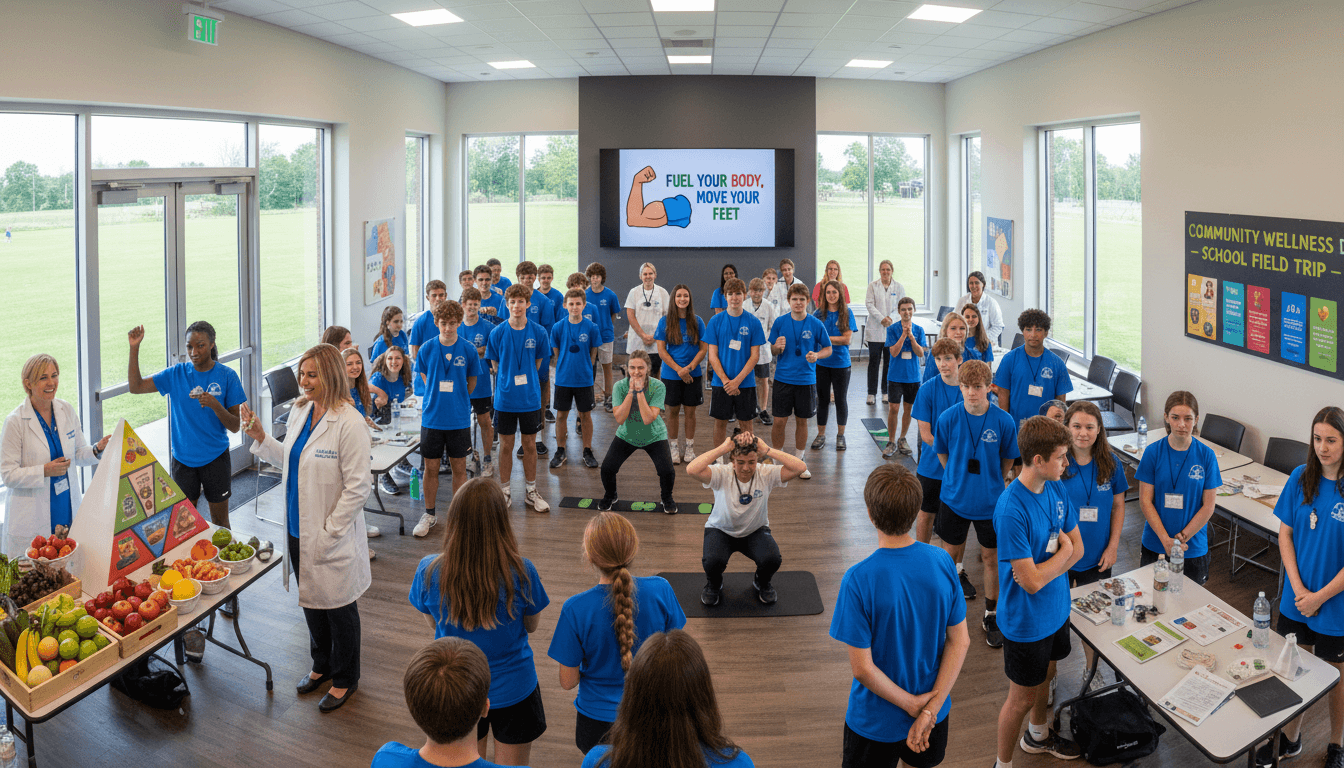
Health Teacher Newsletter: Field Trip Newsletter to Parents

A health class field trip to a wellness center, hospital, or community health organization is one of the most powerful experiential learning opportunities a health teacher can offer. It also generates more parent questions than almost any other school event. A well-written field trip newsletter answers those questions before families have to ask them, and it builds the kind of trust that makes future sensitive health topics easier to introduce.
This guide covers what to include in a health teacher field trip newsletter, how to address the specific sensitivities that come with health education sites, and how to frame the learning purpose in a way that earns parent confidence.
Start with the destination and the educational purpose
Name the site you are visiting and explain in two to three sentences why this particular location supports your current unit. "Students will visit the Riverside Community Wellness Center on May 22 as part of our nutrition and physical activity unit. They will meet with a registered dietitian, tour the fitness facilities, and participate in a guided cooking demonstration using low-cost, high-nutrition ingredients" is more useful than a generic announcement that the class is going on a field trip.
Connecting the destination to a specific unit and learning goal signals to parents that this is a purposeful academic experience, not an optional enrichment activity. It also gives families something concrete to discuss with their student before and after the trip.
Give complete logistics with no ambiguity
Families plan their mornings and afternoons around school schedules. A field trip that changes the pickup time or requires students to bring a sack lunch disrupts those plans. List the departure time from school, the expected return time, the cost and payment method, what students should wear and bring, and whether students will eat lunch at school or on the trip.
For health-related sites, add any relevant physical environment details. If students will be walking through a hospital, note that they should wear closed-toe shoes. If the wellness center involves exercise participation, note appropriate attire. Families who receive incomplete logistics are more likely to keep students home on field trip day or send them unprepared.

Address sensitive content directly and with confidence
Health field trips sometimes connect to units that carry more parental sensitivity than a typical science museum visit. A visit to a reproductive health clinic, a mental health treatment facility, or a substance use recovery organization deserves clear, direct communication in the newsletter.
Name the topic plainly and explain the educational framing. "This visit connects to our mental health unit, where students have been learning about the difference between stress management strategies and clinical mental health support. They will hear from a licensed counselor about how to recognize when professional help is appropriate and how to access those resources." This kind of transparency reduces anxiety, not increases it, because parents know exactly what their student will encounter and why.
Explain what students have already learned
The field trip does not happen in isolation from your classroom instruction. Tell parents where the trip falls in the unit sequence and what foundational concepts students already have before the visit. This context helps families understand that students will be prepared to process what they see and hear at the site, not encountering it cold.
A brief summary like "Students have spent the past two weeks studying the body's stress response, healthy coping strategies, and the role of community health organizations in supporting mental wellbeing" lets parents see the academic scaffolding behind the experience and reinforces that the trip is an extension of classroom learning, not a departure from it.
Outline the privacy and professional behavior expectations
Health education sites operate in professional and often confidential environments. A hospital, a counseling center, or a reproductive health clinic may have patients or clients on-site who have not consented to be observed by a school group. Your newsletter should name this reality and explain how you have prepared students to behave appropriately.
Tell families that students have been briefed on confidentiality expectations, that photography is not permitted, and that the school will review professional behavior standards before departure. This demonstrates that you have thought through the visit more carefully than the average field trip and gives parents confidence that their student will be in a respectful, supervised learning environment.
Include the permission form deadline prominently
Health field trips to clinical or community health settings sometimes require additional paperwork beyond a standard permission slip. If the site has its own waiver, photo policy, or health intake form, note that in the newsletter alongside the school's permission slip. Give the deadline in bold or in a separate line so it is impossible to miss.
Tell families what happens if the permission form is not returned by the deadline. Will students stay at school with an alternate assignment? Is there a late submission option? Clarity about consequences for missing the deadline motivates timely returns without requiring repeated reminder messages.
Tell families what comes next after the trip
Close the newsletter by telling parents how the field trip experience will connect back to classroom work. Will students complete a reflection assignment? Is there a discussion or a project that builds on what they observed? Naming the follow-up work communicates that the field trip is integrated into the unit, not a standalone event, and gives families a natural conversation starter for when their student gets home.
A sentence as simple as "When students return, they will complete a written reflection on one health resource they learned about and how they might use or share that information" closes the loop for families and reinforces the academic value of the experience. It also signals that the day was worth the permission form, the logistics coordination, and the parental planning it required.
Get one newsletter idea every week.
Free. For teachers. No spam.
Frequently asked questions
How far in advance should a health teacher send a field trip newsletter?
Send the newsletter at least two weeks before the trip. Health field trips often require signed permission forms, dress code awareness, and dietary accommodations if food demonstrations are part of the program. Two weeks gives families enough time to return paperwork, arrange any schedule adjustments, and ask questions before the deadline. If the trip involves a hospital or clinical setting, three weeks is better because additional permission steps may apply.
What information must a health field trip newsletter include?
The newsletter needs the destination name and address, the date and departure and return times, the cost and payment deadline, the learning objectives tied to your current unit, any dress code requirements, what students should bring, and contact information for questions. For health-specific sites like wellness centers or hospitals, add a brief note about the professional environment students will be entering and how you have prepared them to behave respectfully.
How should health teachers explain sensitive content connected to a field trip?
Be direct and matter-of-fact. If the trip connects to a reproductive health unit, a mental health facility visit, or a substance use prevention program, name the topic in the newsletter and explain how it fits the curriculum. Parents who receive vague or overly cautious language tend to fill in the blanks in the least favorable way. A clear two-sentence explanation of the educational purpose is more reassuring than a euphemism that raises more questions than it answers.
What should health teachers say about privacy during a field trip to a clinical setting?
Remind families that students will be in a professional healthcare environment where other patients and clients may be present. Explain that the school will review confidentiality expectations with students before the trip, including not photographing any people, not discussing what they observe with peers outside the educational context, and following any site-specific policies. This reassures parents that you have thought through the professional context, not just the academic one.
How does Daystage help health teachers send field trip newsletters efficiently?
Daystage lets health teachers build a field trip newsletter template with placeholders for destination, date, learning objectives, and permission form details. When the next trip is scheduled, you update the variables and send in minutes rather than starting from a blank document. Families receive a clean, consistent email, and you can track who has opened the newsletter so you know which families still need a follow-up reminder before the permission deadline.

Adi Ackerman
Author
Adi Ackerman is a former classroom teacher and curriculum writer with 8 years in K-8 schools. She writes about school communication, parent engagement, and what actually works in real classrooms.
More for Subject Teachers
Ready to send your first newsletter?
3 newsletters free. No credit card. First one ready in under 5 minutes.
Get started free