
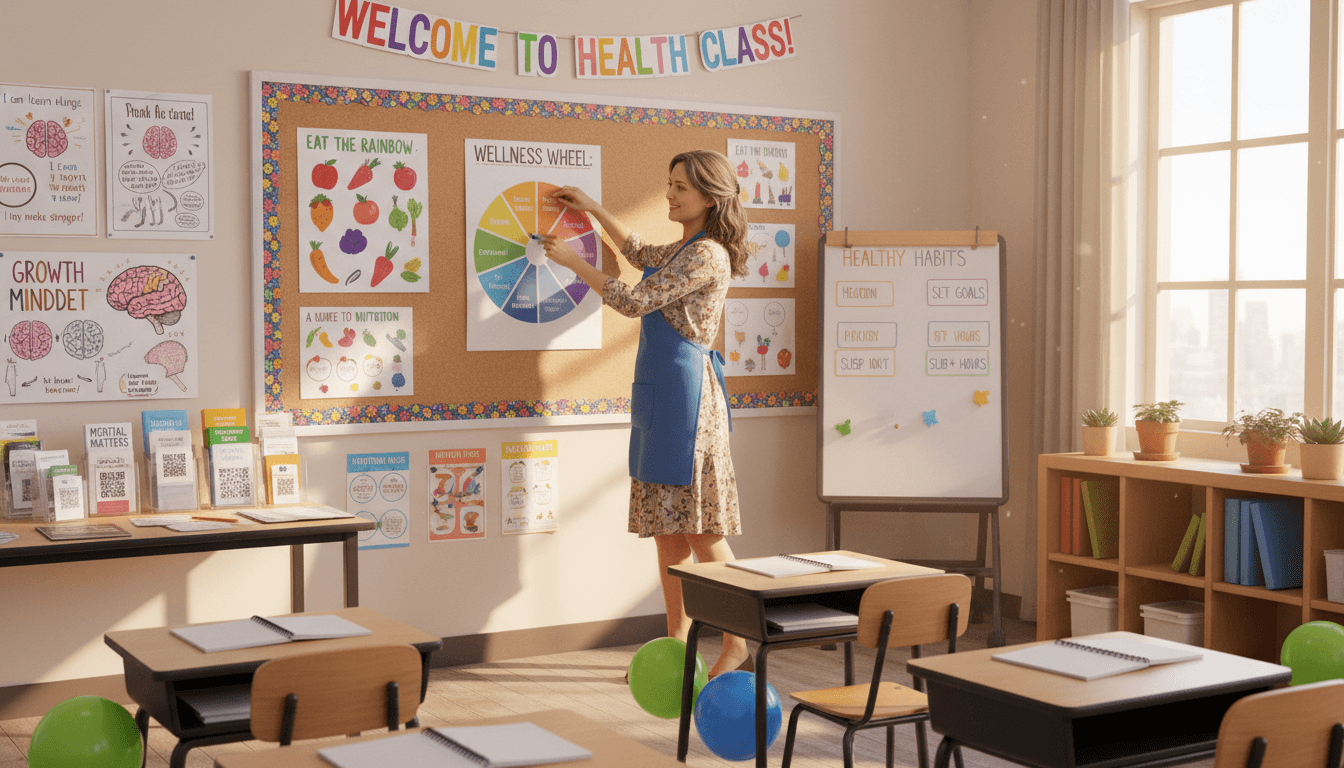
Health Teacher Newsletter: Back to School Newsletter for New Students and Parents

The health teacher's back-to-school newsletter does more heavy lifting than any other newsletter you will send all year. It introduces you as a professional, establishes the tone and expectations for the entire course, and gives families their first signal about how you will handle the sensitive topics that make health class different from every other subject on the schedule.
Getting this newsletter right in the first week pays dividends every time you send a mental health unit preview or a reproductive health advance notice later in the year. Families who trust you from September are far more likely to read those newsletters carefully and respond constructively.
Introduce yourself with professional confidence
The introduction section of your back-to-school newsletter should be brief and professionally focused. Name your teaching background, your experience in health education, and one sentence that captures your teaching philosophy. "I have been teaching health education for eight years and believe that students who understand how their bodies, minds, and relationships work are better equipped to make healthy decisions throughout their lives" is a strong opening sentence. It is confident, purposeful, and signals that you take the subject seriously.
Avoid lengthy personal introductions that are not relevant to the course. Families do not need to know your hobbies unless they directly connect to the wellness philosophy you bring to your teaching. What they need to know is that you are qualified, experienced, and committed to teaching health content in a way that is both rigorous and developmentally appropriate.
Provide an honest annual curriculum overview
The most important structural decision in the back-to-school health newsletter is whether to name sensitive curriculum topics upfront or to give a vague overview and address them later. The answer is always to name them upfront.
A clear annual overview might look like: "This year's health curriculum covers six major units: nutrition and physical wellness, mental and emotional health, puberty and reproductive health, substance use prevention, personal safety and healthy relationships, and consumer health literacy. Each unit is taught at a grade-appropriate level using our district-approved curriculum." This single paragraph answers the most common parent question about health class, prevents mid-year surprises, and positions you as a professional who is transparent about the work you do.

Explain your approach to sensitive topics
Families who have had a child in health class before may have their own expectations about how sensitive topics are handled. Families who are new to the curriculum may have questions they are not sure how to ask. Your back-to-school newsletter is the best place to address this directly.
Describe your approach in two to three sentences: "I approach sensitive topics using factual, age-appropriate language and evidence-based information. Before each unit that covers mental health, reproductive health, or substance use, I send a preview newsletter so families have time to prepare and ask questions. If you have concerns about specific content or would like to review materials before a unit begins, I am happy to set up a time to talk." This language is both reassuring and practical. It signals process, not avoidance.
Set clear class participation and grading expectations
Health class participation looks different from participation in a math or English class. Students are sometimes asked to share personal experiences, complete wellness self-assessments, or reflect on their own health behaviors. Families should understand from the start how these activities are graded and what student privacy protections are in place.
Explain in the newsletter whether participation is graded and how, whether reflective writing is read only by the teacher or shared in class, and how the teacher handles personal disclosures that may indicate a student needs support. Families who understand these norms before the year begins are less likely to be concerned when their student mentions that health class asked them to keep a stress log or write about a personal challenge.
Communicate your newsletter and contact schedule
Tell families when and how you will communicate with them throughout the year. If you send a newsletter at the start of each new unit, say that. If you send a brief weekly update, say that. Name your preferred contact channel and your typical response time for questions.
For health specifically, note your policy on sensitive parent requests. Some parents will want to review curriculum materials before certain units. Some will have questions about the opt-out process if your district has one. Setting expectations for how you handle those requests in the back-to-school newsletter prevents awkward one-off conversations later and signals that you have thought through these scenarios in advance, which is exactly what families want to know about a health teacher.
Connect health class to the broader school wellness community
Health class does not operate in isolation from the rest of the school. The school counselor, the nurse, the social worker, and any student wellness programs all connect to what students learn in health education. Use the back-to-school newsletter to point families toward these resources and to explain how they connect to the curriculum.
A brief paragraph like "Health class is one part of a broader school wellness community. Our school counselor is available for individual support, our school nurse offers health screenings, and our student wellness club meets biweekly. Throughout the year I will occasionally reference these resources in newsletters so families know what support systems are available beyond the classroom" positions health education as part of a system rather than a standalone subject, which broadens family engagement and strengthens the overall wellness culture.
Close with an invitation for questions before the year begins
End the newsletter with a genuine, specific invitation for families to reach out before the year is fully underway. "If you have questions about the curriculum, my teaching approach, or any of the topics we will cover this year, please email me at the address below or stop by during back-to-school night. I am happy to talk through any concerns before we begin." This closing signals confidence and openness without being defensive.
The families most likely to become difficult mid-year are the ones who had questions at the start but never got a clear invitation to ask them. A simple, direct closing invitation in the back-to-school newsletter resolves the most common concerns before they have time to grow into complaints, and it sets a tone of professional partnership that makes every future newsletter easier to write and easier for families to receive.
Get one newsletter idea every week.
Free. For teachers. No spam.
Frequently asked questions
What should a health teacher include in a back-to-school newsletter?
The back-to-school newsletter should introduce you as the teacher, outline the major units planned for the year, explain the grading philosophy, describe how the class handles sensitive topics, and tell families how to contact you with questions. For health specifically, give families a high-level view of the curriculum topics including any units that carry extra parental sensitivity, such as reproductive health, mental health, or substance use prevention. Giving families this overview in the first newsletter prevents surprise and demonstrates professional transparency.
How should a health teacher introduce themselves in a first newsletter?
Keep the introduction brief and focused on your professional background as it relates to the course. Name your teaching experience, any specialization in health education, and your teaching philosophy in two to three sentences. Avoid over-personalizing with details that are not relevant to the curriculum. Families want to know you are qualified to teach this subject and that you will handle sensitive content professionally. That reassurance matters more in health than in most other subjects.
How should a health teacher address sensitive curriculum topics in a back-to-school newsletter?
Name the sensitive units upfront in the annual overview without excessive hedging. Something like: 'Our curriculum includes units on nutrition, physical fitness, mental health, puberty and reproductive health, substance use prevention, and personal safety. Each unit is taught at a grade-appropriate level following district-approved standards.' This approach is more effective than avoiding the topic and letting families discover the content mid-year, which almost always generates more concern than the content itself.
What contact and communication expectations should a health teacher set in the first newsletter?
Tell families your preferred contact method, your typical response time, and when you send regular newsletters. Specify whether you send newsletters weekly, biweekly, or at the start of each new unit. For health class, also note your policy on sensitive disclosures: if a student shares something in class or in writing that triggers a mandatory reporting obligation, families should understand from the start that you take those obligations seriously and follow the school's protocol. This transparency builds professional trust from the first week.
How does Daystage help health teachers start the year with a strong newsletter?
Daystage lets health teachers build a back-to-school newsletter template that includes all the structural sections families need: teacher introduction, annual curriculum overview, grading and participation expectations, sensitive topic communication policy, and contact information. Because the health curriculum follows a predictable annual sequence, the same newsletter structure works year after year with updates to dates and unit details. Daystage tracks which families open the newsletter so you know who received your first communication and who may need a paper follow-up or a reminder through a different channel.

Adi Ackerman
Author
Adi Ackerman is a former classroom teacher and curriculum writer with 8 years in K-8 schools. She writes about school communication, parent engagement, and what actually works in real classrooms.
More for Subject Teachers
Ready to send your first newsletter?
3 newsletters free. No credit card. First one ready in under 5 minutes.
Get started free