

Foreign Language Teacher Newsletter: Setting Up the Year Right
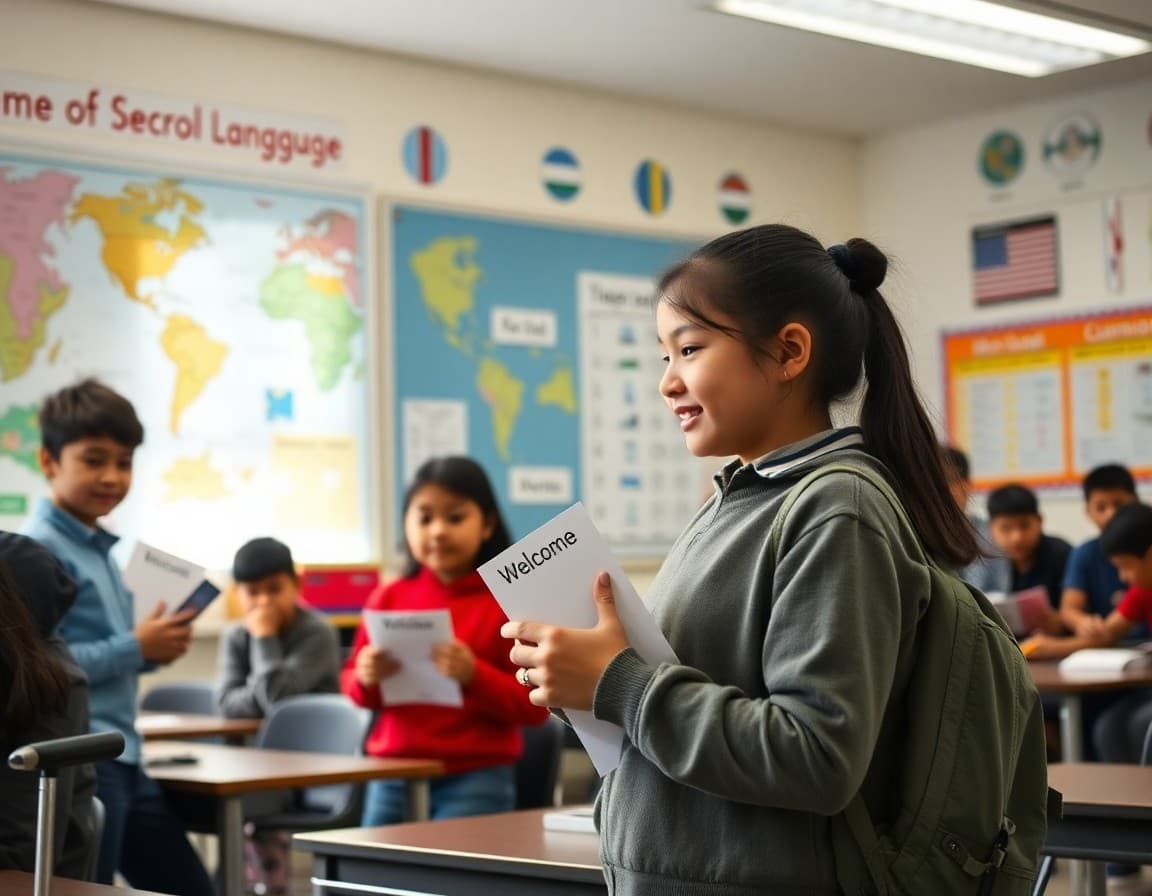
A foreign language beginning-of-year newsletter sets the stage for one of the most demanding kinds of learning students do in school. Learning to communicate in a new language requires consistent daily practice, a willingness to be imperfect, and family support even from parents who do not speak the language themselves. A strong first newsletter explains all three of those requirements in terms families can immediately act on.
This guide covers what to include in a foreign language first-of-year newsletter, how to frame proficiency goals for non-specialist families, and what a template looks like for a common scenario like launching Spanish 1 or French 3.
Introduce yourself and the course level clearly
Name the course exactly and your professional background in brief. "I am Ms. Rivera, and I will be teaching Spanish 1 and Spanish 3 this year. I grew up speaking Spanish at home and have been teaching world languages for eight years. I also spent two summers teaching in Guadalajara, which informs a lot of the cultural content we cover." One or two sentences on your background, especially your connection to the language, establish credibility and give families a sense of what the classroom culture will be like.
State what students will be able to do by June
Avoid listing grammar topics as the year's goals. Instead, describe what communicative tasks students will be able to perform. For a Spanish 1 course: "By June, students in Spanish 1 will be able to introduce themselves and their families, talk about their daily schedule, describe a past event, and understand the main points of a short spoken conversation in Spanish." For Spanish 3: "Students will be able to express opinions on current events, narrate a story using past and present tenses, and read an authentic article in Spanish with comprehension."
These outcome statements give families concrete benchmarks and give students a motivating picture of what they are working toward.
Explain the major units and cultural themes for the year
Give families a brief overview of the thematic units you will cover. "This year, we will explore five cultural units: family and community, food and regional cuisine, music and the arts, historical events, and current social issues in Spanish-speaking countries. Each unit integrates language practice with cultural understanding so students develop both communication skills and global awareness." Families who see the cultural scope of the course understand why it is more than vocabulary memorization.

Describe the grading structure honestly
Foreign language grading often includes speaking assessments, which can surprise families used to written tests. Explain the major grade categories: written assessments, speaking assessments, daily participation or preparation, and project work. State what percentage of the grade each represents and describe briefly what a speaking assessment involves. "Speaking assessments are short, structured tasks where students demonstrate a specific skill, such as describing a photo or responding to three questions. They are graded on communication effectiveness, not grammatical perfection."
Tell families how to support learning at home
Most families of language learners do not speak the target language. That is not a barrier to supporting their student. Give concrete actions: ask your student to teach you five new words each week; listen to a short podcast in the target language together once a week (suggest a specific one by name); help your student practice the vocabulary for an upcoming quiz by asking them to quiz you instead of studying alone. These activities help language acquisition without requiring the parent to know the language.
List practice tools and platforms students will use
If students will use Duolingo for Schools, Quizlet, Conjuguemos, or another platform for homework or practice, list each one with the URL, whether it is free, and whether parents need to set up an account. "Quizlet is a free flashcard platform at quizlet.com. Students will use class sets I create, so no account setup is needed, but students may optionally create a free account to access the sets on a personal device at home."
Address the homework and daily practice expectation
Language acquisition requires daily contact with the language, even in small amounts. State your homework expectations clearly: 15 to 20 minutes per day of vocabulary review, practice exercises, or platform-based practice. Explain why frequency matters more than duration. "Ten minutes of Spanish practice every day builds retention much faster than one hour-long session once a week. Consistent small practice is how language learning works."
Close with your contact and an invitation to reach out
End with your email address, your preferred contact method, and your response time expectation. Foreign language teachers often get questions about course level placement in the first few weeks. Families who know how to reach you and what to expect when they do are far more patient when a response takes a day.
Get one newsletter idea every week.
Free. For teachers. No spam.
Frequently asked questions
What should a foreign language beginning-of-year newsletter include?
Cover the language and level being taught, the course goals for the year in practical terms such as 'students will be able to have a basic conversation about daily routines by December,' the major units or cultural themes, grading structure, and how families can support language learning at home without speaking the language themselves. Also include your contact information and any platform students will use for homework or practice, such as Duolingo for Schools or Quizlet.
When should a foreign language teacher send the first-of-year newsletter?
Send it before or on the first day of class. Families whose students are beginning Spanish 1, French 2, or AP Chinese need to know what the year involves before it starts. If students are required to set up an account on a practice platform like Conjuguemos or Quia before the first week of assignments, that setup needs to happen before school starts.
How do you explain the proficiency-based approach to families?
Explain it in terms of what students will be able to do at each stage rather than what they will study. 'By the end of Spanish 2, students will be able to read and respond to a short email in Spanish, describe past events, and discuss daily routines comfortably.' Families who understand the performance goals rather than the grammar topics have better conversations with their students about progress.
How do you communicate the speaking and oral assessment component to families?
Explain that speaking is assessed in structured ways: dialogues with a partner, short recorded responses, or one-on-one conversations with the teacher. Tell families that discomfort with speaking is normal and expected at every level, and that their student will not be expected to be perfect, only to attempt communication and improve over time. Setting this expectation early prevents students from avoiding participation out of fear of embarrassment.
How does Daystage help foreign language teachers send beginning-of-year newsletters?
Daystage lets you create a reusable beginning-of-year template that you update each fall with the new year's specific units and dates. It is easy to include images of course materials, link to practice platforms, and format the newsletter cleanly without design experience. Because Daystage tracks opens, you know which families have seen the course information and which may need a follow-up before the first assignment is due.

Adi Ackerman
Author
Adi Ackerman is a former classroom teacher and curriculum writer with 8 years in K-8 schools. She writes about school communication, parent engagement, and what actually works in real classrooms.
More for Subject Teachers
Ready to send your first newsletter?
3 newsletters free. No credit card. First one ready in under 5 minutes.
Get started free