
Foreign Language Teacher Newsletter: Back to School Newsletter for New Students and Parents
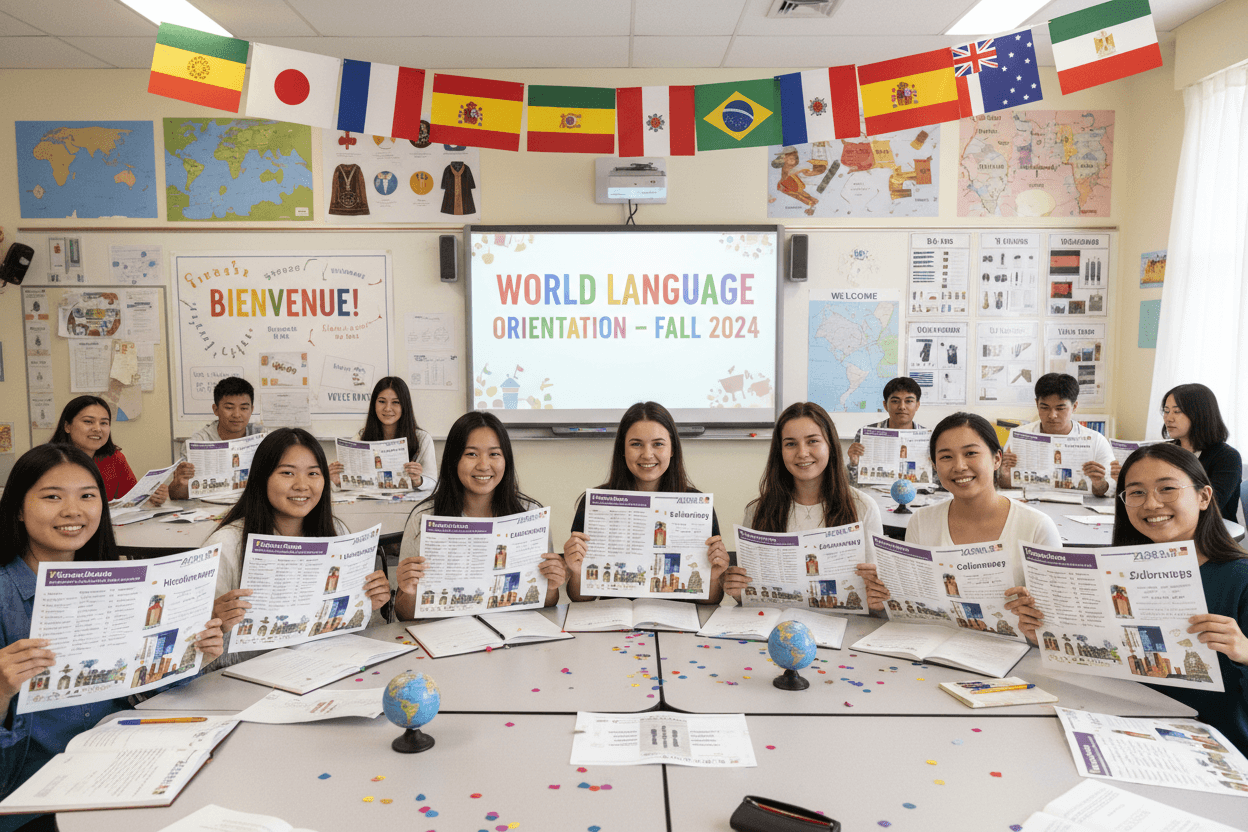
A foreign language class is unlike most subjects families have experience navigating. The learning is cumulative and nonlinear, the homework looks different from math or history, the grading involves speaking performances rather than just written tests, and the teacher often speaks in a language families do not understand during class. A strong back to school newsletter addresses all of that before it becomes a source of confusion.
The goal of the first foreign language newsletter is not to impress families with the rigor of the curriculum. It is to make them feel like partners in a learning process they can support, even without speaking the language themselves.
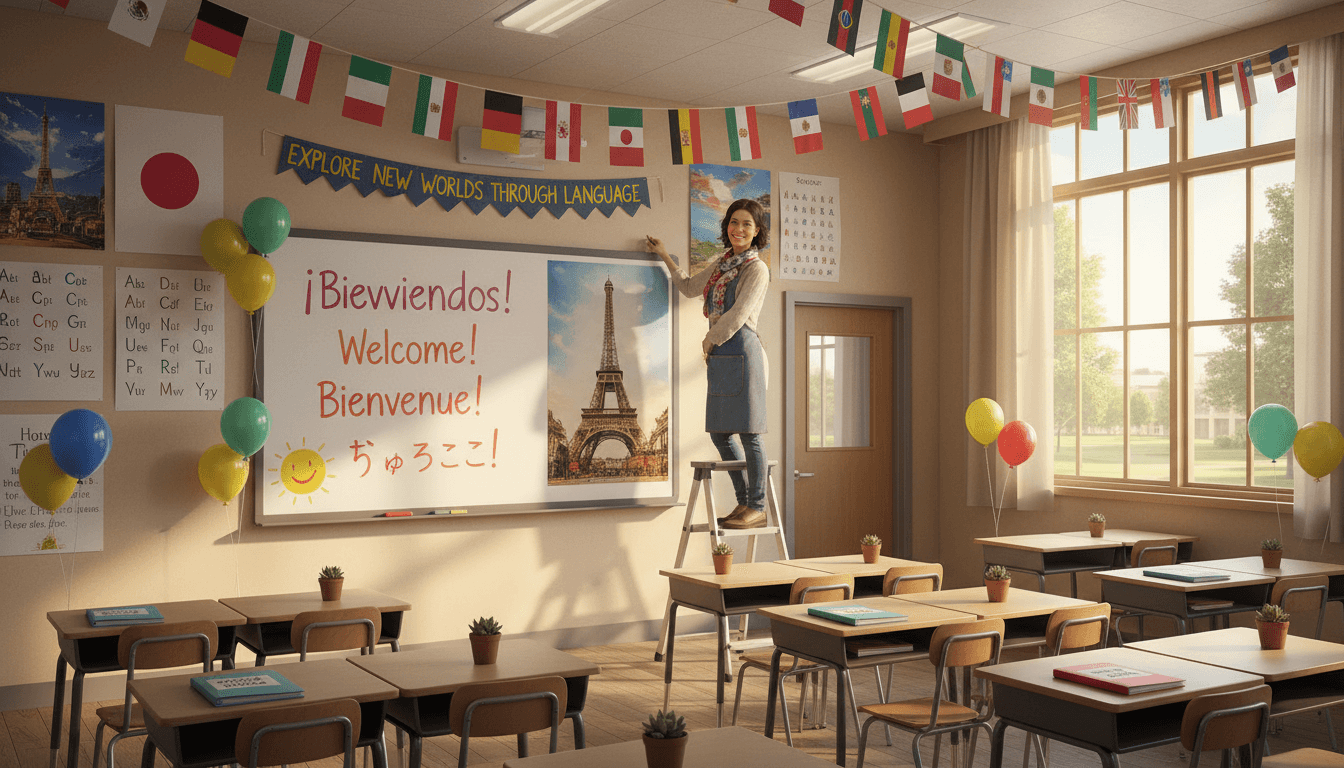
Open with a word of welcome in the target language
Start the newsletter with a brief greeting in the target language, written in large enough type to read easily, followed immediately by the English translation. "Bienvenidos a la clase de Espanol. Welcome to Spanish class." This small gesture accomplishes two things: it signals to families that the language is alive and real in this classroom, and it gives them their first moment of exposure to the language they are about to hear their child learning.
It also sets the tone that this class will be immersive rather than purely textbook-based, which is important context for families whose own language class experience may have consisted primarily of grammar drills and memorization.
Explain the course structure and proficiency framework
Describe the course's structure in plain terms. Name the textbook or curriculum if there is one, but focus more on the proficiency framework the class uses. If the course is aligned to ACTFL, explain what that means in practical terms: students will be assessed on what they can do with the language, not just what grammar rules they have memorized. If the course is part of an IB Language B sequence, describe how the two-year or four-year program builds toward the external assessment.
For new families with students in Spanish 1, French 1, or any other beginning course, describe the expected proficiency at the start and end of the year using can-do language. For families with students entering Spanish 3 or AP French, describe where students should be coming in and what the course will develop from that baseline.
Describe what a class session actually looks like
Many families imagine language class as a series of vocabulary quizzes and conjugation drills. If your class looks different, show that in the newsletter. Describe a typical class session in sequence: the warm-up activity in the target language, the vocabulary introduction using images or Total Physical Response techniques, the communicative practice where students work in pairs to complete a task using the new structures, and the brief exit reflection. This description demystifies the classroom and helps families understand why their student is sometimes doing things that do not look like traditional studying.
Explain the target language use policy
If your class operates with a significant target-language-use expectation, tell families about it clearly in the back to school newsletter. Explain that when the teacher and students communicate in the target language for most of the class period, it is not because the teacher is ignoring students who do not understand. It is because comprehensible input in the target language is the most effective driver of acquisition.
Many families whose students come home saying "I do not understand what the teacher is saying" will interpret that as a problem. The newsletter is where you explain that some level of ambiguity is normal and productive, that the teacher is adjusting input to the class's level, and that students should express confusion through specific questions rather than tuning out.
Tell families how the class is graded
Describe the grading categories and what each one looks like. A communicative language course typically grades interpretive assessments (listening and reading comprehension), interpersonal tasks (live conversation or speaking activities), and presentational work (prepared writing or speaking). Tell families the relative weight of each category. If speaking assessments are 30 percent of the grade, say so, and explain what a speaking rubric evaluates: communication, vocabulary range, grammatical accuracy, and fluency are typical categories.
Families who understand the grading categories know what to pay attention to when their student says they have a quiz or a speaking test coming up.
Describe what families can do at home to support language learning
Give families three specific suggestions for home support that do not require them to speak the language. First: ask their student to teach them five new words each week. Teaching reinforces learning. Second: enable the target language as an audio or subtitle option on a streaming service the family uses, even for 15 minutes of a show they already know. Third: encourage their student to keep a small vocabulary notebook separate from their school materials where they write words they want to remember. These suggestions are achievable, language-agnostic, and directly support the acquisition process.
End with the year ahead and what students will be able to do
Close the newsletter by describing one or two concrete things students will be able to do in the target language by the end of the year that they cannot do right now. "By June, your student will be able to hold a conversation about their daily life, read a short article in Spanish with general comprehension, and write a paragraph describing their opinion on a familiar topic" gives families a real picture of what the year is building toward. That picture is more motivating than a page of supply requirements and course policies.
Get one newsletter idea every week.
Free. For teachers. No spam.
Frequently asked questions
How should a foreign language teacher introduce the course to families who have no experience with language learning?
Describe what language learning looks like in practice rather than what the curriculum covers. Explain that students will practice all four skills, listening, speaking, reading, and writing, in every unit. Describe what a class session looks like from the student's perspective: a warm-up activity in the target language, direct instruction on a new vocabulary theme or grammar structure, communicative practice with a partner, and a brief reflection. This picture is more useful to a new family than a list of textbook chapters.
What proficiency information should a foreign language teacher include in a back to school newsletter?
Name the proficiency framework the course uses, whether ACTFL or IB Language B, and describe in plain language what the expected proficiency range is at the start and end of the year. For a Spanish 1 course, you might write: 'Students begin as true beginners and will reach Novice Mid to Novice High proficiency by June, which means they will be able to introduce themselves, ask and answer simple questions, and communicate about familiar topics using words and phrases.' Families who understand the trajectory can celebrate the right milestones.
Should a foreign language back to school newsletter address the target language use policy?
Yes. Most communicatively oriented language courses operate with a target-language-use expectation, often 90 percent or more of class time in the target language. Families who do not know this may worry when their student says the teacher speaks mostly in Spanish or French. Explaining the policy and its rationale, that immersion in the target language accelerates acquisition, prevents unnecessary concern and builds family confidence in the approach.
How should a foreign language teacher handle students who took the language in a previous school and may be misplaced in the course?
Address placement briefly in the back to school newsletter and tell families how and when placement concerns will be assessed. Let them know the first two weeks of class give you a picture of where each student actually is, and that you will reach out if a course change is warranted. This preempts anxious emails from families of students who studied Spanish in another district and are unsure whether they belong in Spanish 1 or Spanish 2.
How does Daystage help foreign language teachers start the year with a newsletter that sets the right expectations from day one?
Daystage gives world language teachers a professional, mobile-friendly newsletter format that arrives in the family's inbox looking polished and intentional. You can link to the course syllabus, the supply list, your contact information, and key resources like Duolingo for Schools all in one email. A strong first newsletter from Daystage tells families this class is organized and serious, which builds trust before the first lesson begins.

Adi Ackerman
Author
Adi Ackerman is a former classroom teacher and curriculum writer with 8 years in K-8 schools. She writes about school communication, parent engagement, and what actually works in real classrooms.
More for Subject Teachers
Ready to send your first newsletter?
3 newsletters free. No credit card. First one ready in under 5 minutes.
Get started free