
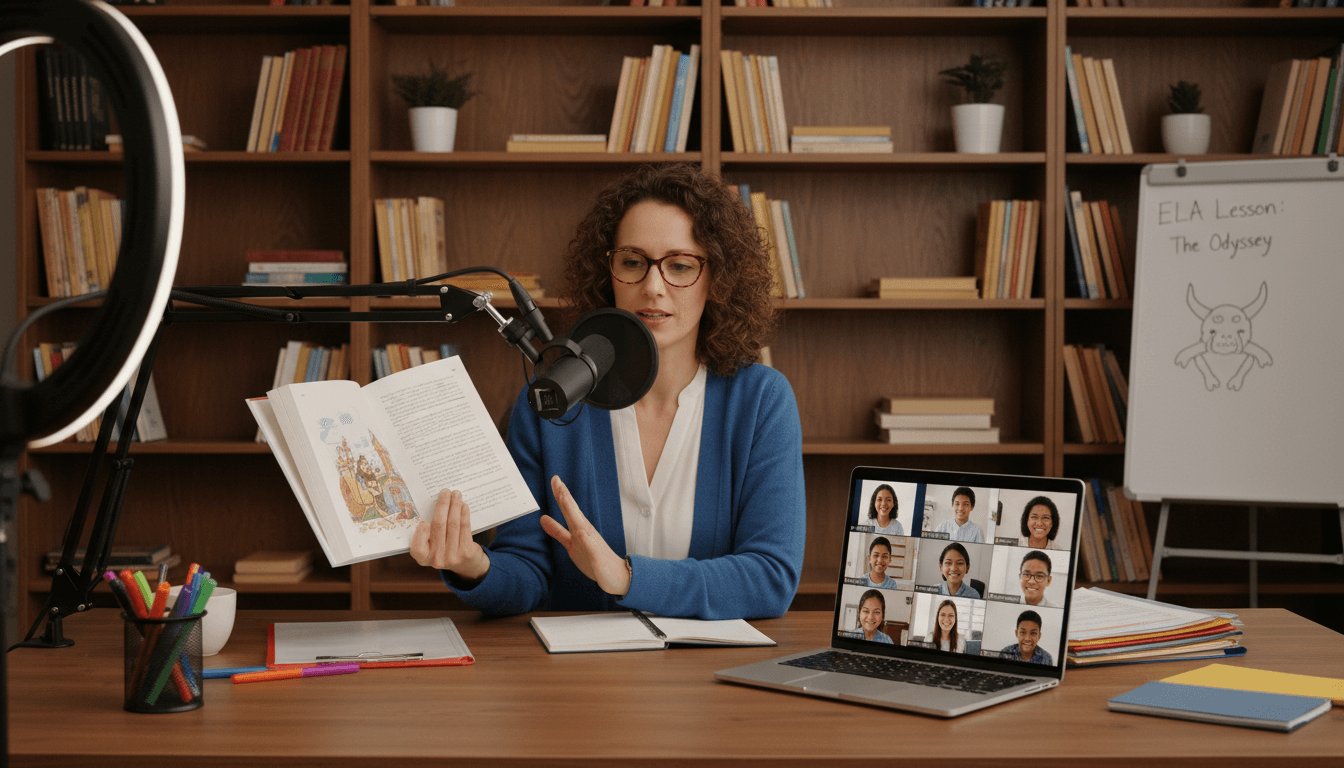
English Language Arts Teacher Newsletter: Remote and Hybrid Learning Newsletter Guide

ELA during remote and hybrid learning depends on students doing a significant portion of their reading and writing independently at home. That makes parent communication more important than in almost any other subject. A family that understands what their student is reading, why it matters, what they are writing, and how to ask the right questions at home is a genuine learning partner. A family that receives no communication is largely guessing.
This guide covers what to include in an ELA remote learning newsletter, how to explain reading and writing expectations clearly enough for families to support them, and how to keep communication consistent so families know what to expect each week.
Establish a consistent weekly newsletter structure
Consistency matters more during remote and hybrid learning than it does in a traditional classroom setting, because the classroom itself is no longer a reliable anchor for routines. A newsletter that arrives every Monday with the same sections in the same order becomes a navigation tool families actually use.
For an ELA newsletter, useful standing sections include: current reading text and access instructions, this week's writing task and requirements, vocabulary focus words, the synchronous class schedule, asynchronous assignment deadlines, and one suggested conversation starter for home. Build those sections once and update the content each week. Families will stop reading newsletters that feel random. They will open and use newsletters that deliver the same reliable structure every time.
Explain the current reading text and how to access it
During remote learning, access to texts is never guaranteed without explicit communication. Every newsletter should name the text students are reading this week, what pages or chapters are assigned, and how students access the text: physical book, class shared Google Doc, digital platform, or teacher-provided PDF.
If your school provides digital book access through a platform, include the login steps in the newsletter until you are confident every family knows how to use it. A student who cannot access the text falls behind faster in ELA than in any other subject because reading is the foundation every other task depends on. Removing the access barrier is your responsibility, not the family's.
Make writing assignments unambiguous
Writing assignments during remote learning need more detail than they do in the classroom. Include the prompt, the required length, the type of writing (narrative, argument, informational, literary response), the specific text students must reference, and the submission method with the exact deadline including time.
If the writing will be graded on a rubric, share the rubric or a simplified summary of it. Students who know what the reader is looking for write with more intention than students who guess. Families who can see the rubric can ask targeted questions: "Did you include a strong claim in the first paragraph?" is more useful than "Did you finish your writing?"
Be explicit about comprehension expectations
Reading a text and comprehending it are different activities. Use the newsletter to name the comprehension skills students are working on and describe what demonstrating those skills looks like. If students are practicing inference, explain: "Your student should be able to read a passage and identify something the author implied but did not state directly, then explain which clues in the text led to that inference."
Give families one check-in question they can ask their student that assesses comprehension without requiring teaching knowledge: "What does the main character want, and what is stopping them from getting it?" or "What happened in the chapter you read today, and what do you predict will happen next?" These questions mirror real comprehension skills and cost families almost nothing in time or effort.
Distinguish synchronous from asynchronous expectations
One of the most common points of confusion during hybrid and remote learning is when students and families do not know what requires live attendance versus what can be completed on the student's own schedule. List the week's synchronous sessions with date and time, and label each asynchronous assignment with its deadline. Make it impossible to confuse the two.
For ELA specifically, this distinction matters for activities like read-alouds, Socratic seminars, writing workshops, and peer feedback sessions. If a student misses a live read-aloud because they thought it was optional, they miss both the comprehension experience and the literary discussion that follows. Clear labeling in the newsletter prevents that.
Support at-home reading without creating pressure
Independent reading is one of the most important activities in ELA, and one of the easiest to fall apart during remote learning when no one is monitoring it. Use the newsletter to remind families about the daily reading expectation and give them a low-effort way to support it: sit near their student while they read, ask what they are reading about, or listen to their student read one page aloud.
Avoid language that makes parents feel responsible for enforcing reading. A parent who is already managing work and remote school logistics cannot also become a reading coach. The goal is awareness and light accountability: knowing the expectation exists and having a simple way to check in.
Close with what the class is moving toward
End each newsletter with a brief look ahead. What does the class finish this week, and what begins next week? Is there an upcoming writing deadline, a reading assessment, or a virtual book discussion that families should know about? This forward-looking close helps families plan the week without being surprised by deadlines and helps students understand that each week's reading and writing moves toward something larger.
A newsletter that ends with "Next week we finish the novel and begin our culminating essay" gives students a clear horizon to work toward. That kind of clarity, delivered consistently, is one of the most underrated tools in remote ELA teaching.
Get one newsletter idea every week.
Free. For teachers. No spam.
Frequently asked questions
What do parents most need from an ELA newsletter during remote learning?
Parents need to know what texts students are reading and where to access them, what writing assignments are due and what the expectations are, how synchronous and asynchronous time is structured in a typical week, and how reading comprehension and writing progress will be assessed. For ELA specifically, parents also benefit from knowing how to support reading at home without turning into a tutor: ask questions, listen to their student read aloud, discuss the text together. These are high-value activities that do not require a teaching background.
How do ELA teachers handle independent reading during remote learning?
Explain clearly in the newsletter what the independent reading expectation is: how many minutes or pages per day, what genre or level requirements apply, and how students document their reading (log, journal entry, short response, or reading conference with the teacher). If your school provides digital book access through a platform like Epic, Sora, or ReadWorks, include the login instructions directly in the newsletter. Families should never have to hunt for how their child is supposed to access books remotely.
How should ELA teachers explain writing assignments in a remote learning newsletter?
Be more specific in writing assignment descriptions during remote learning than you would be in person. When you can walk around the room and answer questions, a brief prompt is enough. When students are working at home, they need clear instructions: the type of writing, the length, the required elements, the due date, and how to submit. If the assignment requires evidence from a text, specify which text. If grammar and conventions are graded, say that. Families who can see these details in the newsletter are better positioned to check in with their students without stepping over into doing the work for them.
How do ELA teachers support vocabulary development during remote learning?
Use your newsletter to share five to seven vocabulary words connected to the current reading and give families a simple way to use them at home. Suggest a quick conversation: 'Ask your student to use the word in a sentence about something that happened today.' You can also explain the word's structure: roots, prefixes, and suffixes that reveal meaning. Students who see vocabulary as a living system rather than a weekly list learn words more durably, and families can support that shift with very little effort.
How does Daystage help ELA teachers communicate during remote and hybrid learning?
Daystage lets ELA teachers build a consistent weekly newsletter template with sections for the current reading, writing assignments, vocabulary focus, synchronous schedule, and asynchronous tasks. You update the content each week without rebuilding anything. Families receive a clean email they can reference all week rather than searching through classroom app notifications. You can see who opened the newsletter so you know which families may have missed important reading or assignment information before a due date arrives.

Adi Ackerman
Author
Adi Ackerman is a former classroom teacher and curriculum writer with 8 years in K-8 schools. She writes about school communication, parent engagement, and what actually works in real classrooms.
More for Subject Teachers
Ready to send your first newsletter?
3 newsletters free. No credit card. First one ready in under 5 minutes.
Get started free