

English Language Arts Teacher Newsletter: Parent Conference Newsletter Template
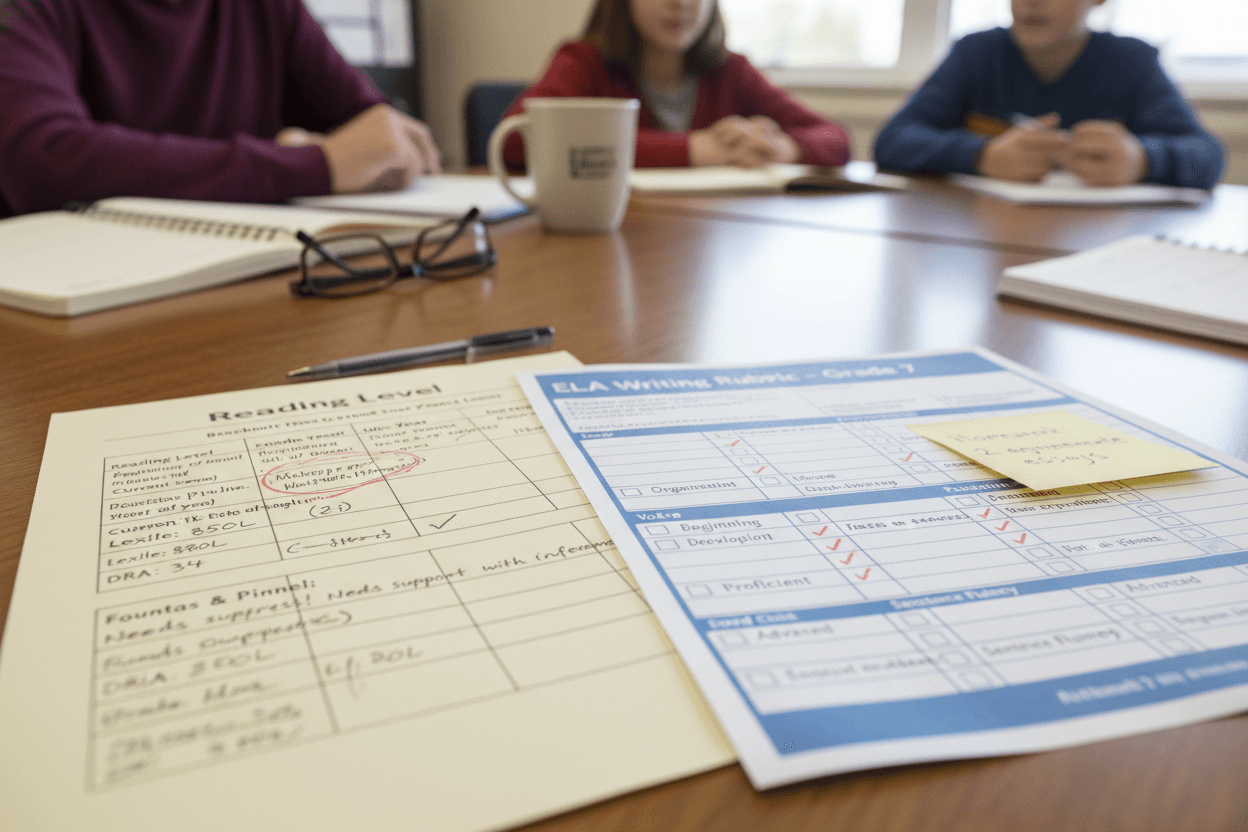
ELA parent conferences are some of the most information-dense conversations a teacher has. Reading levels, writing rubrics, vocabulary benchmarks, comprehension assessments, and growth data all belong in a 15-minute meeting. A pre-conference newsletter gives families the background they need to make that meeting genuinely productive rather than spending half of it explaining what a Lexile score is.
This guide covers what to put in an ELA pre-conference newsletter, how to explain reading levels and writing rubrics in plain language, and how to set up a conference conversation that focuses on growth and next steps instead of just reporting what already happened.
Send the newsletter at least five days before conferences begin
A pre-conference newsletter works only if families have time to read it before they walk through the door. Send it five to seven days before the first conference appointment, not the night before. Families who have had time to think about the information arrive with better questions and engage more productively with the data you share.
Include the conference schedule link or sign-up information in the newsletter if families still need to book an appointment. Putting logistics and content in the same communication reduces the number of separate messages families need to track.
Explain what reading levels actually measure
Reading levels are consistently misunderstood by families. Parents tend to interpret them as a verdict on their child's intelligence or potential rather than what they actually measure: the complexity of texts a student can read with comprehension at a given point in time. Your newsletter should make this distinction explicit.
Explain the leveling system your school uses in one clear paragraph. What is the expected benchmark for this grade at this point in the year? What does a student at that benchmark typically read independently? What does a student above or below it typically read? Use familiar book examples when you can. "A student at Level M reads books like Judy Moody or early chapter books with straightforward plots" is more grounding than a raw score.
Break down the writing rubric in advance
The writing rubric is the most powerful tool in an ELA conference, and the one parents are least prepared to interpret on the spot. Share it before the conference with a one-sentence plain-language explanation of each dimension.
Explain the difference between organization and development, two categories that parents frequently conflate. Organization is whether the writing has a logical structure with a clear opening, supporting body, and conclusion. Development is whether the ideas inside that structure are supported with specific, relevant evidence rather than general statements. A student can have excellent organization and thin development, or vivid, detailed writing with weak overall structure. The rubric shows both, and a parent who understands each dimension can engage meaningfully with the student's actual writing sample.
Describe the comprehension assessments you will discuss
If you use a running record, a comprehension interview, or a standardized reading assessment, explain briefly what it measures and how it was conducted. Parents are more receptive to data they understand than data that appears without context.
Focus specifically on the comprehension skills the assessment measures: the ability to retell in sequence, to identify the main idea and distinguish it from supporting details, to make inferences beyond what is stated explicitly, to understand vocabulary in context, and to analyze author's craft and purpose. Naming these skills in the newsletter helps parents connect the assessment data they will see in the conference to real reading behaviors they can observe at home.
Share vocabulary development as a concrete data point
Vocabulary is one of the strongest predictors of reading comprehension, and one of the easiest areas for families to support at home. In the pre-conference newsletter, mention that vocabulary will be part of the conversation and describe what you track: whether a student uses academic vocabulary in discussion and writing, whether they can determine word meaning from context, and whether they have strategies for approaching unfamiliar words.
Give families a simple way to support vocabulary development before the conference: during dinner or a car ride, share one new word and use it in conversation. Ask the student what they think it means, then give the real definition. This is low-effort for families and surprisingly effective over time.
Tell parents what to bring and what to expect
If you want parents to bring their student's independent reading book, or any materials from home, say so. If students will be present for part or all of the conference, mention that. If the conference will include time to look at writing samples or a reading log, give families a heads-up so they are not surprised by the format.
The more specific you are about what the conference looks like, the less time you spend on logistics during the meeting itself. A parent who arrives knowing that the first five minutes will focus on reading data, the next five on writing, and the final five on next steps and questions is ready to use that time well.
Suggest three specific questions families can bring
Most parents do not know what to ask at an ELA conference beyond "is my child doing okay?" Suggest three specific questions in the newsletter: What book should my child be reading independently right now? What is the one writing skill we should focus on at home this season? Is my child's reading growth on track for where they need to be by the end of the year?
These questions move the conference from a reporting session to a planning conversation. They also signal to families that their engagement in the process matters and that the conference is a two-way exchange rather than a briefing.
Get one newsletter idea every week.
Free. For teachers. No spam.
Frequently asked questions
What should an ELA teacher cover in a pre-conference newsletter?
Explain what parents will see and discuss during the conference: reading level benchmarks and what they mean, writing portfolio samples and the rubric used to evaluate them, vocabulary and comprehension data, and any specific areas of strength or concern you will be addressing. Help parents understand what the benchmarks actually measure rather than just showing a score or level letter. A parent who arrives knowing that 'reading level' refers to text complexity and reading fluency rather than intelligence will engage with the conference very differently.
How do ELA teachers explain reading levels to parents in plain language?
Reading levels such as Lexile scores, Fountas and Pinnell levels, or grade-level bands describe the complexity of the texts a student can read with understanding, not how smart the student is. In your newsletter, explain what the level means: 'A student reading at a Level P can independently read chapter books with multiple characters and subplots. A student at Level N is still building that stamina with shorter, simpler narratives.' This framing helps parents understand what the level measures and what growth looks like.
How should ELA teachers explain writing rubrics to parents before a conference?
Share the rubric or a simplified version of it and explain each dimension in one sentence. 'Organization means the writing has a clear beginning, middle, and end with transitions.' 'Development means the main idea is supported with specific details from the text, not just general statements.' 'Conventions means grammar, punctuation, and spelling are used correctly.' When parents understand what each dimension means, they can look at their child's writing sample during the conference and see for themselves what the score reflects.
What questions should ELA teachers encourage parents to bring to the conference?
Encourage families to come with these: What is my child reading independently, and is it the right level? What is the biggest writing skill my child is working on right now? How does my child's comprehension compare to where it should be at this point in the year? What can we do at home to support their reading or writing development? These questions move the conversation from grade reporting to genuine learning partnership.
How does Daystage help ELA teachers send parent conference newsletters?
Daystage lets ELA teachers send a professional pre-conference newsletter to every family in the class in minutes. You write the reading level explainer, rubric overview, conference logistics, and suggested questions once per conference season, then update the scheduling details for each round. Families receive a clean, readable email rather than a PDF attachment buried in a classroom app. You can see who opened it and follow up with families who may not have received the information before they arrive for their appointment.

Adi Ackerman
Author
Adi Ackerman is a former classroom teacher and curriculum writer with 8 years in K-8 schools. She writes about school communication, parent engagement, and what actually works in real classrooms.
More for Subject Teachers
Ready to send your first newsletter?
3 newsletters free. No credit card. First one ready in under 5 minutes.
Get started free