
English Language Arts Teacher Newsletter: National Month Newsletter Ideas

The ELA calendar is full of months worth writing about: National Poetry Month, Black History Month, Hispanic Heritage Month, Banned Books Week, National Reading Month. Most teachers send a newsletter for one or two of them. The newsletters that actually land with families are not the ones that announce the month exists. They are the ones that tell families what students are doing because of it, and what families can do alongside them.
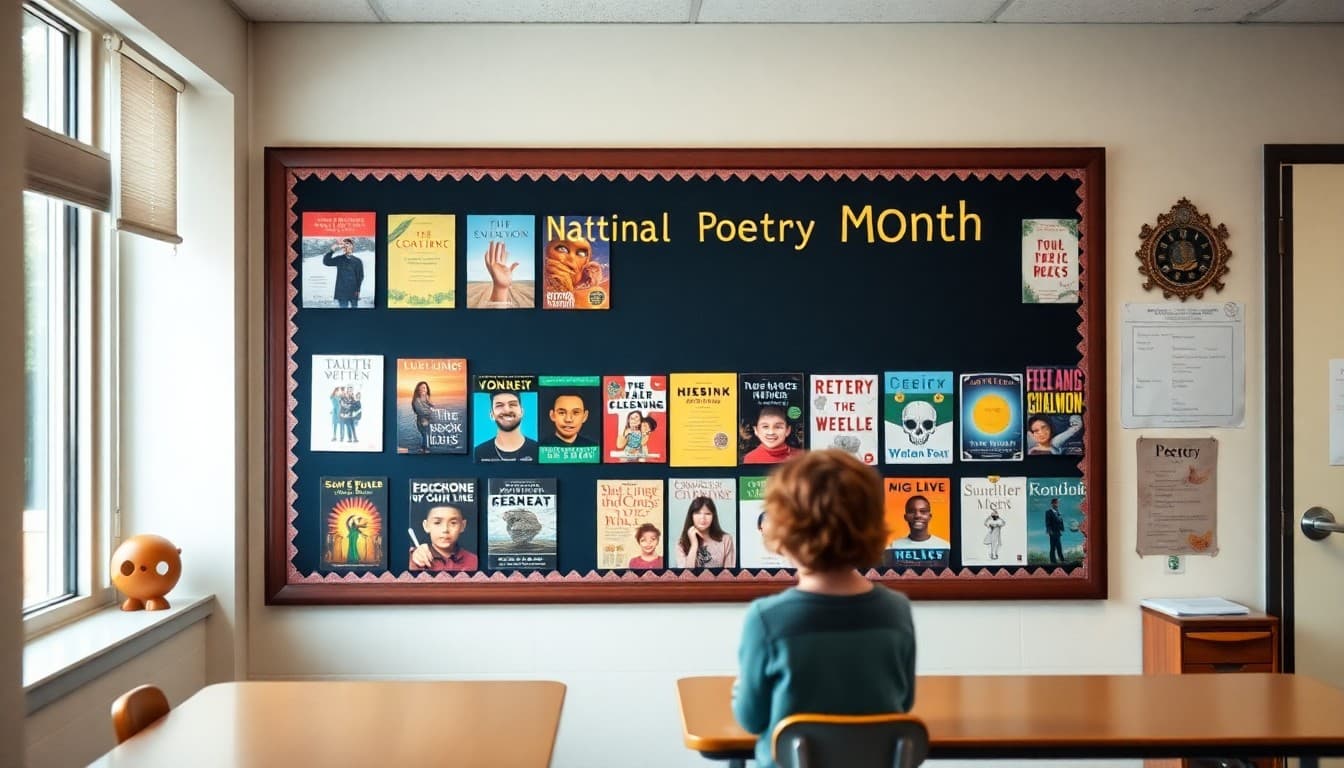
National Poetry Month (April): connect it to what students are making
April newsletters work best when they describe the actual work students are producing rather than just celebrating the month. Name the forms students are writing in, the poets they have been reading, and any culminating event. "This month we are finishing our poetry unit. Students have written odes, elegies, and persona poems from the perspective of a historical figure. We have been reading alongside Lucille Clifton, Pablo Neruda in translation, and Warsan Shire. Our classroom poetry reading is April 22 at 2:45 PM in room 208. Students will each share one poem they chose."
Give families one poem to read at home, or one prompt to try with their student. "Ask your student to show you the ode they wrote. Ask them why they chose the subject they chose. The conversation will tell you something about them." That kind of home connection is what families remember.
Black History Month (February): foreground the literature, not the month
The strongest Black History Month newsletters in ELA classrooms treat February as the middle of a longer curriculum conversation rather than a standalone event. "We are two weeks into our unit on the Harlem Renaissance. Students are reading Langston Hughes, Zora Neale Hurston, and Claude McKay alongside primary historical documents from the 1920s. The central question of the unit is: how do writers use language to claim dignity in a society that denies it? Students are applying that question to the literature and then to their own writing."
Include a recommended reading list for families who want to read alongside their student. One or two titles from the same author, or by a writer in the same tradition, gives families a way to participate without needing a literary background.
Hispanic Heritage Month (September 15 to October 15): use the overlap strategically
Hispanic Heritage Month runs across the start of the school year, which makes it natural to connect to a unit students are beginning. "We are opening the year with Sandra Cisneros's The House on Mango Street. Cisneros's vignette structure, where each chapter functions as a complete scene, is the model for the personal narrative unit students will complete by the end of October. Students are reading about Esperanza's neighborhood and then writing about their own. The parallel is intentional."
If your class has students whose home language is Spanish, acknowledge it in the newsletter. "Several students in our class are reading the Spanish-language edition alongside the English. Code-switching and the relationship between language and identity are themes in the book that those students will bring into our discussions in a way that enriches everyone's reading."
Banned Books Week (last week of September): make it an instructional lesson
Here is a newsletter excerpt that frames Banned Books Week as critical literacy rather than controversy:
"Dear Families, This week in ELA we are looking at the history of book challenges in schools. Students are reading the same passages from four books that have been challenged or banned in school districts over the past decade, then reading the arguments made for and against each challenge. Their assignment is to evaluate the arguments on both sides using the same analytical framework we apply to any persuasive text. The goal is not to decide whether any particular book should or should not be in schools. The goal is to practice the skill of evaluating the quality of an argument, which is the most transferable skill we teach. If you have questions about specific texts we are using, I am happy to share the full list."
National Reading Month (March): give families a concrete participation role
Reading month newsletters that families actually engage with give them something to do rather than just something to know. "This March we are tracking reading volume. Students logged 22,000 pages read as a class in February. Our goal for March is 30,000. Students can count any reading they do at home, in any language, in any format. Ask your student what they are reading and how many pages they have added to the class total." A class-wide goal that includes home reading makes families genuine participants rather than observers.
Native American Heritage Month (November): center Indigenous authors
Newsletters for November work best when they foreground specific writers rather than a general cultural celebration. "This month we are reading Tommy Orange's There There alongside excerpts from Sherman Alexie, Louise Erdrich, and Joy Harjo. We are examining how these writers use narrative structure to reclaim and complicate the stories often told about Indigenous communities by outsiders. Students are writing a comparison essay that asks: what does the form of a text communicate about whose voice matters?" Author-centered newsletters give families writers to look up and genres to explore.
Make the home connection specific and low-barrier
Every national month newsletter should end with one thing families can do. Not a reading list of fifteen books. One thing. "Ask your student to read you the first stanza of the poem they wrote this month. Ask them to explain one choice they made." One ask, done well, builds more family engagement than a dozen asks that families skim and ignore.
Get one newsletter idea every week.
Free. For teachers. No spam.
Frequently asked questions
Which national months are most relevant to ELA teachers?
The months most directly tied to ELA instruction are: National Poetry Month (April), which connects to any poetry unit; Black History Month (February) and Hispanic Heritage Month (September 15 to October 15), which connect to author studies and diverse literature; National Reading Month (March), which connects to reading instruction; Banned Books Week (late September), which connects to literary freedom and critical reading; and Native American Heritage Month (November), which connects to Indigenous authors and oral storytelling traditions. The best ones to focus on are those that align with what you are already teaching rather than those that require a detour from your curriculum.
How do I write a newsletter for National Poetry Month without it feeling like a generic announcement?
Connect it to what students are actually doing in class. 'This April we are wrapping up our six-week poetry unit. Students have written in five forms: free verse, haiku, ode, elegy, and a found poem built from newspaper text. On April 23, we will hold a poetry reading during the last 20 minutes of class. Families are welcome to attend. Students will choose which of their five poems to share.' That is a poetry month newsletter that feels like it is about the students rather than about the calendar.
Should I focus every newsletter during Black History Month on Black authors, or is that tokenizing?
The concern is valid. The solution is to make sure Black authors appear in your curriculum year-round, not only in February. If they do, a February newsletter can highlight what students are currently reading without framing Black literature as a special-occasion subject. 'This month we are midway through our Toni Morrison unit. We have been reading The Giver of Stars alongside Beloved to examine how two authors from different eras write about memory, grief, and what gets passed down across generations.' This framing puts the literature first and the month second.
How do I write a meaningful Banned Books Week newsletter for families?
Use it to explain what you teach about intellectual freedom and critical reading. 'During Banned Books Week we look at the history of book challenges in schools and communities. Students read excerpts from challenged books alongside the arguments made for and against removing them. The goal is not to shock them with controversial content. It is to teach them to think carefully about who decides what gets read, by whom, and why. This skill matters in every subject they study.' That framing gives families an educational reason to find the week interesting rather than alarming.
What makes a national month newsletter stand out in a family's inbox?
Specificity to what the class is actually doing and a connection to something families can do at home. Generic 'this is National Reading Month' newsletters are easy to ignore. A newsletter that says 'We are tracking reading stamina this month. Students set a personal reading goal on Monday and we check in on Friday. Ask your student what their goal is and whether they hit it.' gives families an entry point into the month. Daystage lets you include that kind of call to action cleanly and format it so it reads well on a phone.

Adi Ackerman
Author
Adi Ackerman is a former classroom teacher and curriculum writer with 8 years in K-8 schools. She writes about school communication, parent engagement, and what actually works in real classrooms.
More for Subject Teachers
Ready to send your first newsletter?
3 newsletters free. No credit card. First one ready in under 5 minutes.
Get started free