
Economics Teacher Newsletter: Field Trip Newsletter to Parents

An economics field trip to a Federal Reserve Bank, a regional stock exchange, a financial institution, or a financial literacy museum is one of the most effective ways to bring abstract economic concepts to life. Supply and demand, monetary policy, market structures, and fiscal decisions are easier to understand when students can see them operating in real institutions staffed by real economists and financial professionals. A strong field trip newsletter ensures that families understand the academic purpose of the visit and have everything they need to prepare their student properly.
This guide covers what to include in an economics field trip newsletter, how to communicate about professional environment requirements, and how to connect the trip to the unit students have been studying.
Name the destination and its connection to the curriculum
Start the newsletter by naming the specific destination and its direct connection to what students are studying. "On April 17, students in AP Macroeconomics will visit the Federal Reserve Bank of [City] as part of our monetary policy unit" is a far stronger opening than a generic announcement that the class is going on a field trip.
Follow the destination announcement with two to three sentences describing why this site was chosen. Federal Reserve visits connect to monetary policy, interest rates, inflation, and the banking system. Stock exchange or brokerage visits connect to financial markets, capital allocation, and investment. Financial literacy museum exhibits connect to personal finance, budgeting, and consumer decision-making. Families who understand the academic rationale support the trip more enthusiastically and are more likely to have a meaningful conversation with their student about it afterward.
Provide complete logistics with no gaps
Economics field trips to financial institutions often involve more logistical complexity than a standard museum visit. Some Federal Reserve branches require pre-registered student lists, government-issued ID for entry, or security screening that adds time to the arrival process. Some stock exchange visits have strict no-phone policies on the trading floor.
List every logistical detail clearly: departure time from school, expected return time, cost and payment deadline, what students should bring, what students should not bring, the lunch arrangement, and the transportation method. If the destination has a specific ID or security requirement, explain it plainly: "Students must bring a valid school ID for entry. The institution conducts a standard security screening similar to an airport. Plan for an additional 10 to 15 minutes at entry." Families who are warned about security screening are not alarmed by it; families who encounter it without warning may become concerned about why their student's school is taking them somewhere with airport-level security.

Address the dress code and professional environment expectations
Professional attire requirements are a real feature of financial institution visits, and the newsletter needs to communicate them clearly and with the right rationale. Business casual is standard for most Federal Reserve and financial institution visits. Define what this means for your student population in specific, practical terms.
A note like "Students are expected to dress in business casual attire: collared shirts, clean trousers or skirts, and closed-toe shoes. Athletic wear, ripped clothing, and sandals are not appropriate for this visit. Students who do not meet the dress code may not be permitted to enter certain areas of the facility" gives families a clear standard and a consequence that motivates compliance. Adding a brief note that the dress code is part of the learning experience, not an arbitrary rule, tends to reduce pushback from students and families alike.
Explain what students will do and see at the site
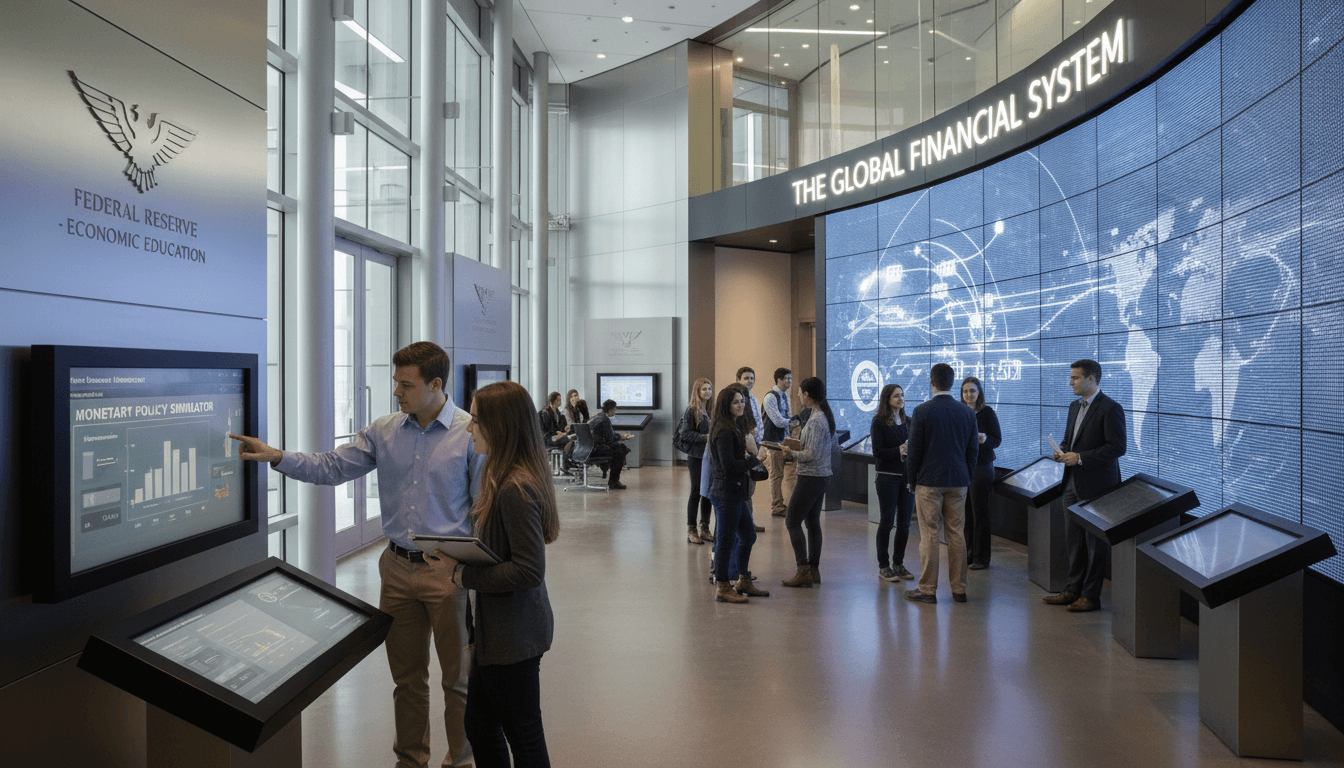
Give families a specific description of the itinerary. Will students tour the vault? Sit in on a panel discussion with a Federal Reserve economist? Participate in a mock monetary policy decision exercise? Walk through an interactive financial literacy exhibit? Observe a stock trading simulation?
The more specific the itinerary description, the more families understand what their student is actually experiencing rather than imagining a vague "educational visit." Specific itinerary details also give families natural conversation starters for when their student gets home: "Did you get to meet the economist they mentioned?" or "What did the vault actually look like?" These conversations reinforce the learning in a way that a quiet ride home does not.
Connect the visit to what students already know
An economics field trip works best when it is positioned as an extension of classroom learning rather than a standalone event. Tell families where the trip falls in the unit sequence and what foundational concepts students already have before the visit.
For a Federal Reserve visit, this might sound like: "Students have spent the past three weeks studying monetary policy tools, the federal funds rate, and how the Federal Reserve uses open market operations to influence economic activity. The visit will allow them to see the institution behind those policy decisions and to ask questions of professionals who work with these systems daily." This context communicates academic rigor and helps families see the trip as a purposeful investment of instructional time rather than a day off from learning.
Give the permission form deadline prominent placement
The permission form deadline is the most action-required element of the field trip newsletter, and it should be impossible to miss. Put it in bold, in a separate line, and near both the top and the bottom of the newsletter if the newsletter is long. For financial institution visits that require individual student registration or ID verification at the site level, note that the deadline is non-negotiable: "Students whose forms are not received by April 10 cannot be added to the site's pre-registered visitor list and will not be able to attend."
Tell families what happens if the form is not returned. Will students stay at school with an alternate assignment? Is there an extended deadline with a late fee? Clarity about consequences produces a much higher on-time return rate than a reminder email sent after the deadline has already passed.
Tell families what comes next after the trip
Close the newsletter with a note about how the field trip experience will connect back to classroom work. Will students complete a reflection paper? Is there a discussion or a project that builds on what they observed? Does the visit count as a grade or factor into an ongoing project evaluation?
For AP economics students approaching the exam period, you can also mention how the real-world exposure from the trip connects to the types of questions that appear on the free-response section. Understanding that the Fed economists they met are the people actually making the monetary policy decisions described in AP exam prompts is a motivating piece of context that connects the field trip experience to the academic outcome students are working toward.
Get one newsletter idea every week.
Free. For teachers. No spam.
Frequently asked questions
What should an economics field trip newsletter include?
The newsletter needs the destination name and address, the date and departure and return times, the cost and payment method, the dress code or professional attire requirements, what students should bring, the learning objectives tied to the current unit, and contact information for questions. For destinations like Federal Reserve Banks or financial institutions, add a brief note about the professional environment students will be entering, the security screening process if applicable, and any photography or device policies the site enforces.
How far in advance should the field trip newsletter go out?
Send the newsletter at least two weeks before the trip. Financial institution visits often require government-issued ID, background check submissions for the institution, or parent-signed forms beyond the standard school permission slip. Two weeks gives families time to gather what is needed and return paperwork by the deadline. If the site requires individual student registration or ID verification, note that explicitly so families understand what is required of them and not just of the school.
How should an economics teacher explain the educational value of a Federal Reserve visit?
Connect the visit directly to the unit content students have been studying. A Federal Reserve tour is most useful as a follow-on to a monetary policy unit, where students have already studied the Fed's dual mandate, the federal funds rate, and open market operations. Tell families what concepts students already understand and explain how seeing the institution in person deepens that learning. 'Students will see the vault, meet with a Federal Reserve economist, and participate in a discussion about how policy decisions connect to everyday economic outcomes' is more compelling than a generic trip announcement.
What dress code should economics students follow for a financial institution visit?
Business casual is the standard for most Federal Reserve, stock exchange, and financial institution visits. The newsletter should define what business casual means at the appropriate age level: collared shirt or blouse, clean trousers or skirt, closed-toe shoes, no athletic wear or ripped clothing. Explain to families that this is a professional environment and that the dress code is part of the learning experience, not an arbitrary rule. Students who dress appropriately are taken more seriously by the professionals they meet, which directly affects the quality of the experience.
How does Daystage help economics teachers send field trip newsletters to families?
Daystage lets economics teachers build a field trip newsletter template with sections for destination details, learning objectives, logistics, dress code requirements, and permission form deadlines. For recurring visits like an annual Federal Reserve tour or a stock exchange trip, the template can be updated each year with the current date and any new site requirements. Daystage tracks open rates so teachers know which families have received and read the newsletter before the permission deadline, allowing targeted follow-up rather than a blanket reminder sent to the entire class.

Adi Ackerman
Author
Adi Ackerman is a former classroom teacher and curriculum writer with 8 years in K-8 schools. She writes about school communication, parent engagement, and what actually works in real classrooms.
More for Subject Teachers
Ready to send your first newsletter?
3 newsletters free. No credit card. First one ready in under 5 minutes.
Get started free