

Drama Teacher Newsletter: Supply Request Newsletter
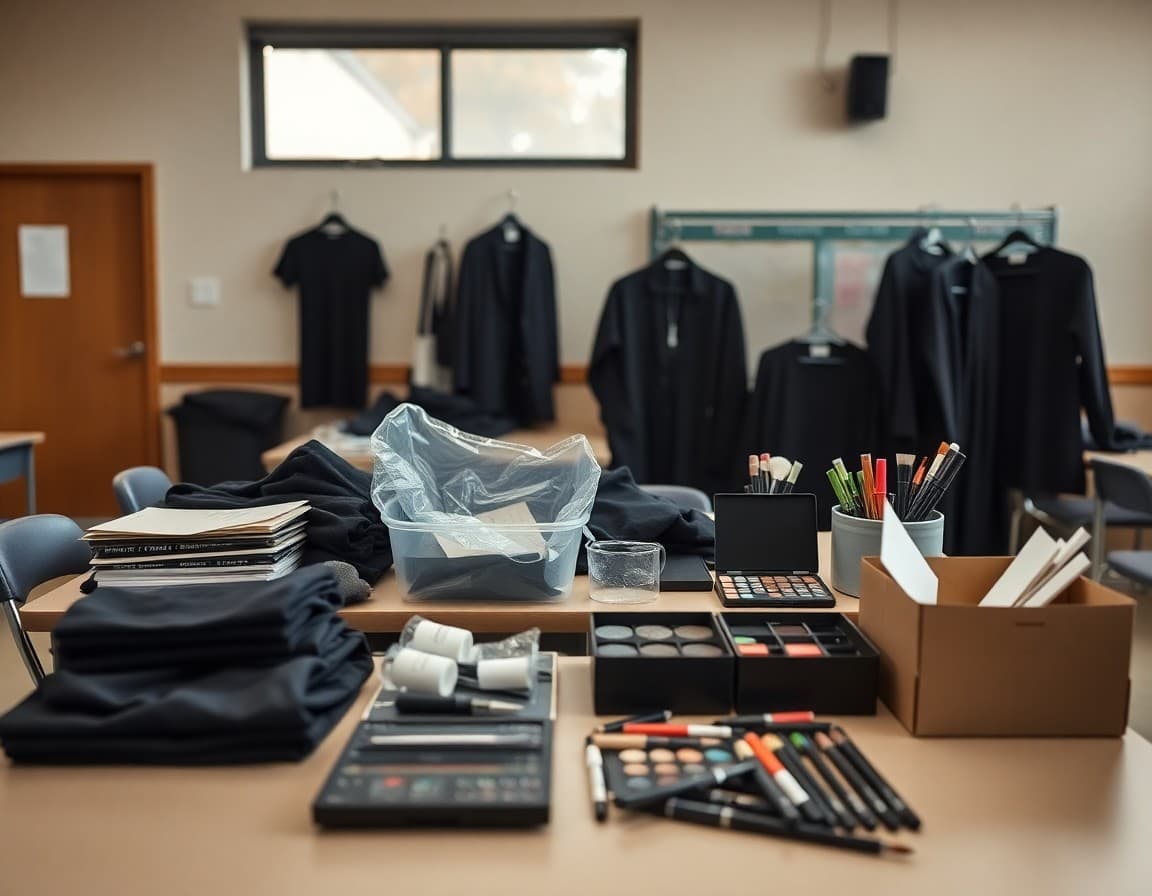
Supply requests in a drama program range from the completely standard (a composition notebook) to the genuinely complex (a period-accurate costume piece for a specific character). The standard requests are easy. The complex ones require clear communication about exactly what you need, why you need it, what the alternatives are, and how families can help even if they cannot purchase the specific item you described.
This guide covers how to structure a drama supply request newsletter, how to handle cost-sensitive requests gracefully, and what a ready-to-use template looks like.
Start with the required all-black performance attire
Every drama program that performs publicly has a performance attire standard. If yours is all-black, state it in the first newsletter of the year and repeat it in every supply request newsletter before a production. "For all performances this year, students are required to wear all-black attire: solid black pants or a long skirt (no shorts), a solid black shirt (no logos), and black closed-toe shoes. No jewelry, visible logos, or brightly colored accessories. This attire is the audience's cue to focus on the character rather than the performer."
State where families can find it affordably. Thrift stores typically stock solid black clothing year-round. The school's costume closet may have items available for lending. Offering the lending option proactively removes the financial barrier before families have to ask.
List production-specific costume requests with context
For a specific production, list the costume elements students are expected to provide and explain why each one is needed for the character. "For our spring production of 'Our Town,' students playing townspeople are asked to provide period-appropriate casual clothing from approximately 1938. For women: a simple modest dress or blouse and skirt in muted colors (gray, brown, navy, or cream). For men: dark dress pants, a button-up shirt, and suspenders if available. The costume department will provide accessories. Estimated cost: $5 to $20 at a thrift store."

Address makeup and personal care item requests thoughtfully
If your production requires stage makeup, be specific about what is needed without naming expensive brands. "For our fall production, student performers will apply basic stage foundation, which is heavier than everyday makeup to prevent the stage lighting from washing out facial features. Foundation should match the student's skin tone. Brand name is not important. Drugstore options work perfectly. The drama department has powder and highlight available for student use during performances." Specificity here prevents families from purchasing the wrong items and returning them after opening night.
Explain classroom supply needs separately from production needs
Separate the ongoing class supplies from the one-time production supplies so families do not confuse them. "For the classroom portion of drama class, students need a composition notebook (any size, any color) kept in class. These are used for script analysis, character journaling, and reflection after each unit assessment. Notebooks will stay in the classroom unless students need to work on them at home." Keeping these categories distinct helps families understand what is a semester-long need versus a one-time purchase.
Request prop donations separately and clearly
If you are looking for donated props or set pieces, frame the request as optional and time-limited. "For our fall production, we are looking for the following donated or loaned items: a vintage rotary phone (any working condition), a leather briefcase or satchel, and a wooden rocking chair. Items will be returned after our final performance on December 8. If any family has these items available, please email me at [email]." This kind of specific list generates responses from families who have exactly what you need in their basement and are happy to contribute.
Include a sample supply request template excerpt
Here is a short example from a drama supply request newsletter for a spring production:
"Our spring production of 'The Diary of Anne Frank' opens on May 14. Here is what students need to provide for their costumes: solid dark-colored pants or skirt (navy, brown, or dark gray), a white or light-colored blouse or button-up shirt, and closed-toe dress shoes in any dark color. These items can typically be found at a thrift store for under $15 total. Students who need help sourcing costume items should email me by April 14. The school's costume closet is available for lending during fittings, which begin the week of April 21."
Address financial access directly without making it awkward
Every supply request newsletter for a drama program should include a single sentence that names the support option: "If purchasing any costume items is difficult, please email me privately and I will make sure your student has what they need from the costume closet before opening night." This sentence is short, non-judgmental, and effective. Students whose families cannot afford costume pieces are far more likely to remain in the production when they know a solution is available than when they have to figure it out alone.
Close with a deadline and your contact information
End with a specific date by which all supplies or costume pieces are needed, typically at least one week before the first full technical rehearsal, and your email address. Families who have everything they need by the technical rehearsal deadline save the production week from becoming a logistics scramble.
Get one newsletter idea every week.
Free. For teachers. No spam.
Frequently asked questions
What supplies do drama teachers typically request from families?
Common requests include all-black performance attire for formal performances (black pants or skirt, black shirt, black closed-toe shoes), a composition notebook for script analysis and reflection work, and comfortable clothing or dance shoes for movement exercises. For specific productions, requests might include period-appropriate costume pieces, character shoes, or prop items that students provide rather than the drama department. Makeup for performance is sometimes required but should be specified precisely: 'basic stage makeup' without naming specific products allows families to find affordable alternatives.
How far in advance should a drama teacher request production materials?
For all-black performance attire, request it in the first newsletter of the year since it is needed for every performance. For production-specific costume pieces or props, request them four to six weeks before opening night. For makeup or specialty items, three to four weeks is usually sufficient. The more expensive or difficult to find the item, the more lead time families need.
How do you handle requests for costume pieces without making families spend too much?
Give a specific price range and name where to find affordable options. 'All-black performance attire can usually be found at a thrift store for under $10. The school also maintains a costume lending closet with black dress items that students may borrow for performances. If purchasing is not possible, please email me and I will set your student up with a loaner from the closet.' This approach keeps the cost low and removes the barrier for families who cannot purchase new items.
Can a drama teacher request prop donations from families?
Yes, and framing it as a donation request rather than a required purchase is important. 'We are looking for donations of the following items for our production of Twelve Angry Men: a long wooden table, folding chairs (we need 12 matching ones if possible), and a simple single light fixture. If any family has these items available for the production period of November through December, please email me. Items would be returned after strike in December.' Frame it as optional and time-limited.
How does Daystage help drama teachers send supply request newsletters?
Daystage lets you format a supply request newsletter with clear required versus optional sections, price ranges, and links to costume closet sign-up forms or donation request forms. The newsletter is easy to forward and easier to find in an inbox than a plain email, which matters when families need to reference the item list while shopping weeks after receiving the original message.

Adi Ackerman
Author
Adi Ackerman is a former classroom teacher and curriculum writer with 8 years in K-8 schools. She writes about school communication, parent engagement, and what actually works in real classrooms.
More for Subject Teachers
Drama Teacher Newsletter Guide: Communicating About Theater Productions
Arts & Music · 6 min read
Music Teacher Newsletter Guide: Keeping Families Connected to the Music Program
Subject Teachers · 7 min read
Art Teacher Newsletter Guide: Communicating with Families About Visual Arts
Arts & Music · 6 min read
Ready to send your first newsletter?
3 newsletters free. No credit card. First one ready in under 5 minutes.
Get started free