
Drama Teacher Newsletter: National Month Newsletter Ideas
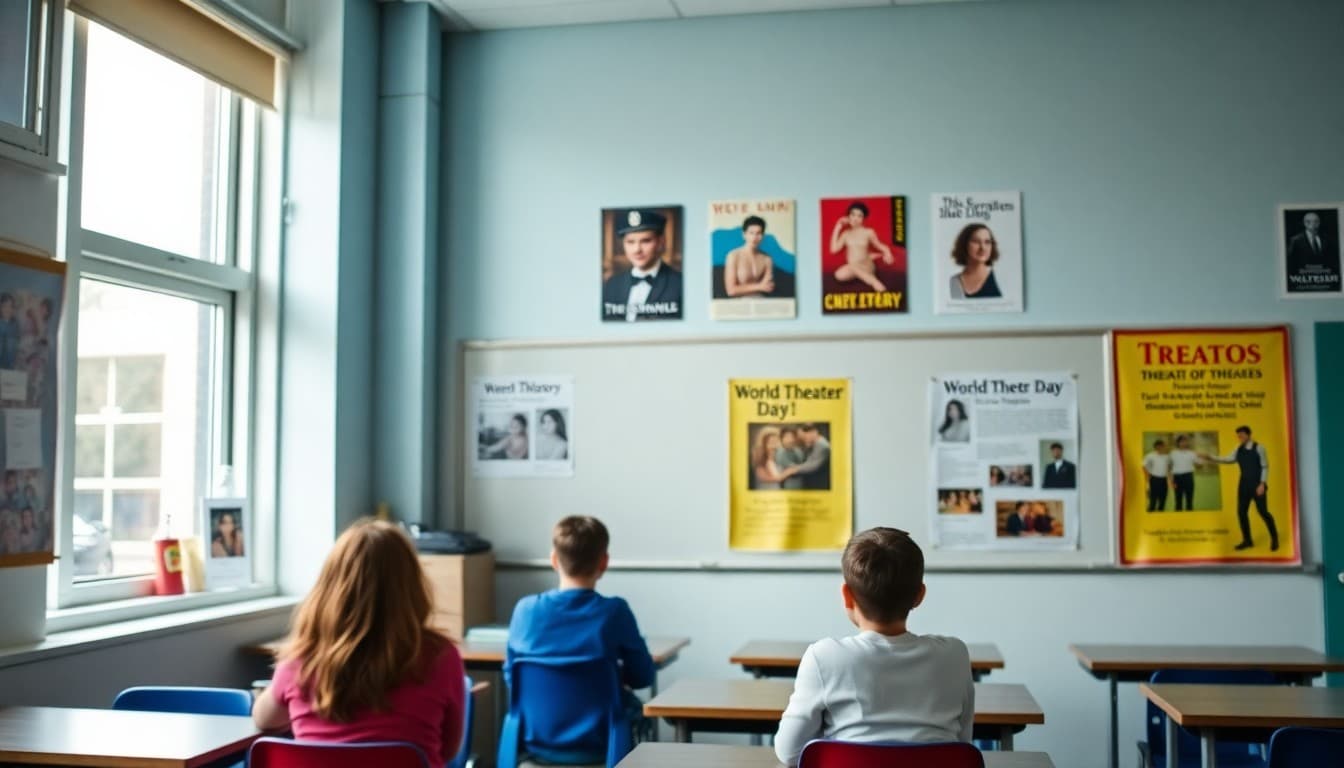
National awareness months give drama teachers a natural reason to send newsletters that celebrate what theater does rather than communicating logistics or grades. World Theater Day, Arts Education Month, and Black History Month all provide genuine hooks for content that connects families to the living tradition of performance their students are learning to inhabit. Done well, these newsletters build enrollment, generate performance attendance, and deepen the school community's relationship with the arts program.
This guide covers the key awareness events for drama teachers, how to build a newsletter around each one, and what makes these newsletters worth reading versus worth deleting.
World Theater Day: March 27
World Theater Day was established in 1961 by the International Theatre Institute, a UNESCO partner organization. Each year, a prominent international theater artist is invited to write a message on the meaning of theater. Past contributors include Peter Brook, Dario Fo, Ariane Mnouchkine, and Jon Fosse. These messages are short, powerful, and freely available online.
A World Theater Day newsletter for a school drama program can include a brief excerpt from that year's message, a description of what students are currently working on in class, and an invitation to the upcoming spring production. "On World Theater Day, I want to share a moment from our class this week. We were working on Meisner repetition, and a pair of students stayed fully present with each other through a six-minute exchange without breaking character once. That is exactly what World Theater Day is about: the live moment of human connection that happens between two people in a room when the conditions are right."
Arts Education Month: March
Arts Education Month, observed in March in many US states, celebrates the role of arts instruction in student development. For drama teachers, this is an opportunity to make the case to families that theater education builds skills that extend beyond performance: public speaking, emotional intelligence, collaborative problem-solving, and the capacity to inhabit perspectives other than one's own.
Share a specific example of how a theater skill showed up in an unexpected context. "One of my drama students told me this month that the breathing technique we practice before performances helped her calm down before a math exam. Another said that understanding what a character wants in a scene helped him understand a conflict with a friend at school. Theater teaches skills that look like theater skills until students start using them everywhere."

Black History Month: the African American theatrical tradition
February offers drama teachers a natural entry into the African American theatrical tradition. The Harlem Renaissance produced writers like Langston Hughes, whose plays were among the first to portray Black urban life on stage with dignity and complexity. The American Negro Theatre trained generations of artists including Sidney Poitier and Ruby Dee. August Wilson's Century Cycle of ten plays, one set in each decade of the 20th century, is among the most significant body of dramatic work in American theatrical history. Lorraine Hansberry's "A Raisin in the Sun" was the first play by a Black woman produced on Broadway.
A Black History Month drama newsletter can feature one of these playwrights alongside a specific excerpt from their work that students are performing or studying. Name the work, the playwright, and what makes it significant. Then describe what students are discovering through it.
Women's History Month: women who shaped theater
March is an opportunity to feature the women who built the theatrical traditions students study. Aphra Behn was one of the first professional female playwrights in the English language, writing in the 1670s. Sarah Bernhardt was the most famous actor of the 19th century and one of the first to tour internationally. Viola Spolin developed the improv training system that underlies most modern acting pedagogy. Lynn Nottage is the only woman to have won two Pulitzer Prizes for drama. A newsletter that connects these names to active work in your classroom honors the tradition students are entering.
Include a student-facing activity for the awareness month
Give families a specific activity to do with their student during the awareness period. For World Theater Day: "Ask your student to teach you one exercise we do in class and do it with them for five minutes. The ensemble mirror exercise, where two people face each other and mirror each movement without either person leading, is a good one. You will immediately see what we mean when we talk about listening with your whole body." Activities that involve doing something together are more memorable than activities that involve reading about theater.
Feature a filmed production families can watch together
Include a specific recommendation for a filmed production connected to the month's theme. For Black History Month: "Watch the 2004 Broadway revival of 'A Raisin in the Sun' available on BroadwayHD, featuring Phylicia Rashad, Audra McDonald, and Sean Combs. It is one of the finest productions of the play ever filmed and gives students a reference point for what the work we are studying looks like at the highest professional level." Specific recommendations outperform generic suggestions every time.
Connect the awareness content to your upcoming production
If your spring or fall production connects to the theme of the awareness month, name that connection explicitly. "We are producing 'Fences' this spring, which is part of August Wilson's Century Cycle. The play is set in 1957 Pittsburgh, and the themes August Wilson explores, the weight of history on families, the conflict between dreams and obligation, and the cost of pride, are as immediate today as they were when the play premiered in 1985." Connecting awareness content to your own program builds excitement for the production while honoring the tradition that produced it.
Close with performance dates and your contact information
End the newsletter with your upcoming performance dates and your email address. National month newsletters tend to generate warm responses from families who feel connected to the program. Make yourself easy to reach and those responses become the foundation for a stronger family relationship with the drama program.
Get one newsletter idea every week.
Free. For teachers. No spam.
Frequently asked questions
Which national months and events are most relevant for drama teachers?
World Theater Day on March 27 is the flagship international event for theater educators. Drama in Education Month, observed in April in many districts, celebrates theater as a teaching and learning tool. Arts Education Month in March aligns with World Theater Day and covers all arts disciplines. Black History Month in February is a strong hook for exploring the African American theatrical tradition, including the Harlem Renaissance and the works of August Wilson. Women's History Month in March connects to the history of women in theater, from Aphra Behn to Lynn Nottage.
How do you make a World Theater Day newsletter feel specific rather than ceremonial?
Tie it to something students are actively doing in class and to a specific fact or tradition that is genuinely surprising or compelling. 'World Theater Day was established in 1961 by the International Theatre Institute at UNESCO. The 2024 message was written by the playwright Jon Fosse. This year in our class, students are studying the tradition Fosse works in: poetic realism, where the language on stage sounds naturalistic but carries the weight of poetry. We are staging two short scenes in that style this week.' A newsletter tied to active classroom work feels authentic.
How do you engage families in drama awareness events who have rarely seen live theater?
Give them a simple, free entry point: a short filmed production to watch on YouTube, a podcast episode about theater history, or an invitation to attend an upcoming school production. 'If your family has never attended a live theater performance, the best first experience is a school production. They are free or inexpensive, the performers are students you know, and the energy of a live performance is something no recording captures.' Lowering the bar for first-time theatergoers is more effective than assuming families already have theater exposure.
Can drama teachers use national months to feature student work in their newsletter?
Yes, and this is one of the best uses of a national month newsletter. Feature a short excerpt from a student monologue, describe a devised scene students created, or include a quote from a student reflection about what they discovered in a recent performance exercise. Student voices in a newsletter give it an energy that teacher-only writing cannot match, and families of the featured students almost always share it widely.
How does Daystage help drama teachers create awareness month newsletters?
Daystage lets you embed production photos, student work samples, and links to filmed theater in a newsletter that looks professional and engaging. For awareness months where the goal is building family enthusiasm for the program, the visual quality of the newsletter matters more than in a logistics update. A Daystage newsletter with strong images from recent productions is a powerful recruiting and community-building tool.

Adi Ackerman
Author
Adi Ackerman is a former classroom teacher and curriculum writer with 8 years in K-8 schools. She writes about school communication, parent engagement, and what actually works in real classrooms.
More for Subject Teachers
Drama Teacher Newsletter Guide: Communicating About Theater Productions
Arts & Music · 6 min read
Music Teacher Newsletter Guide: Keeping Families Connected to the Music Program
Subject Teachers · 7 min read
Art Teacher Newsletter Guide: Communicating with Families About Visual Arts
Arts & Music · 6 min read
Ready to send your first newsletter?
3 newsletters free. No credit card. First one ready in under 5 minutes.
Get started free