

Drama Teacher Newsletter: Club and Activity Newsletter
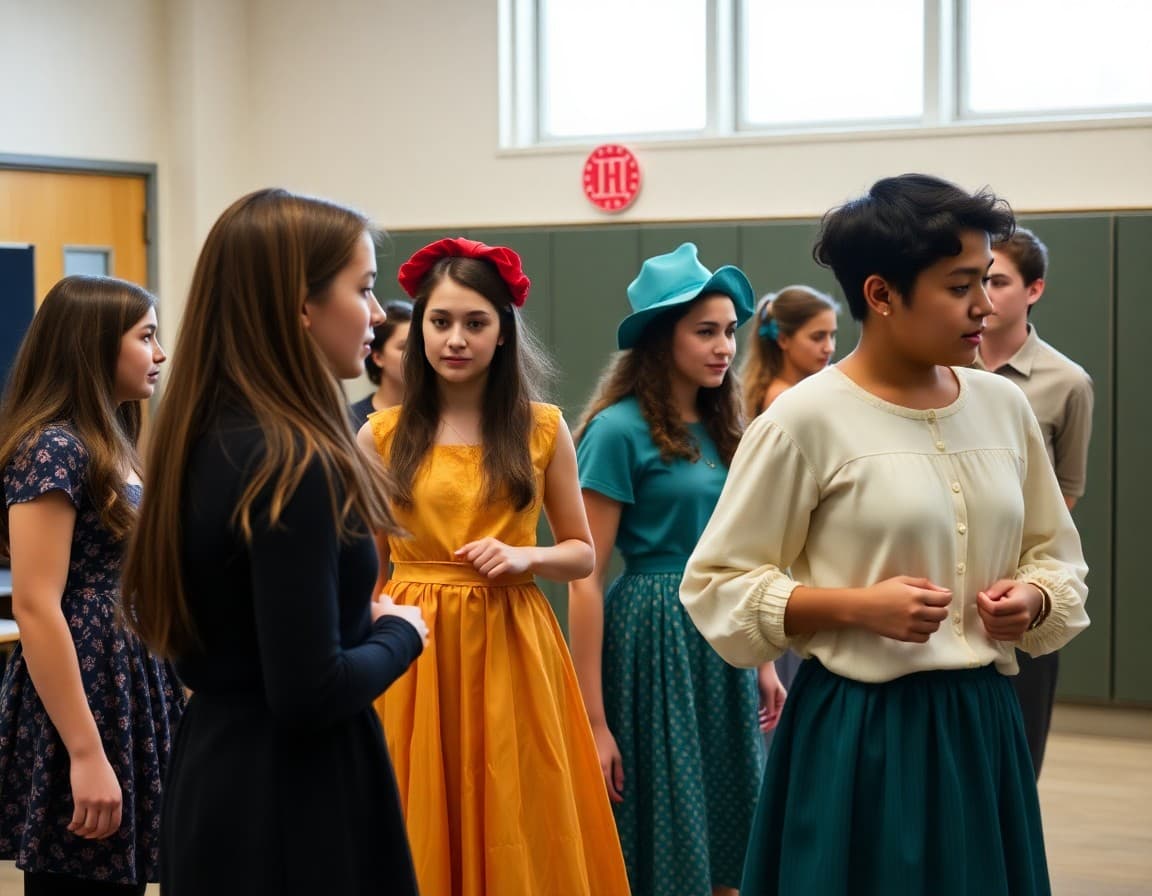
The drama club newsletter is one of the most important documents a theater director produces each year. It recruits new members, sets expectations for existing ones, and builds family support for a program that requires more out-of-school time than almost any other student activity. A newsletter that is vague about the commitment, the productions, or the audition process generates confusion and dropouts. A newsletter that is specific and honest generates committed members and engaged families.
This guide covers how to write a drama club newsletter that does all three jobs well and gives you a template to adapt for your specific program.
Open with the production season
Name the productions the club will mount this year and who directed or wrote them. "This year, the Westfield Drama Club will produce 'Matilda the Musical' in December and 'The Glass Menagerie' in April. Auditions for 'Matilda' are open to all students in grades 6 through 12." Naming the shows immediately tells families and students what they are committing to and whether their student has any background with or interest in the material.
If you are still selecting the spring production at the time of the fall newsletter, say so and give a timeline for when the announcement will come. Families who plan ahead need that information.
Describe the audition process in full detail
Audition anxiety is real. The more specific you are about the process, the more students will show up prepared and confident. Include: what students will be asked to do (prepared song, cold read, dance call), how long the audition takes, who sees the audition, when callbacks happen, and when and how casting decisions are announced. "The audition for 'Matilda' consists of a 32-bar cut of a song from any musical and a cold reading from the script. Auditions are 10 minutes per student. Callbacks will be held September 18. Casting will be announced by September 20 via email."

State the full rehearsal commitment clearly
The time commitment is the element most likely to cause family conflict mid-production if it is not stated upfront. Name every rehearsal day, time, and location, and flag when the schedule intensifies before opening night. "Regular rehearsals run Tuesday and Thursday from 3:30 to 6:30 PM and Saturday from 10:00 AM to 2:00 PM, starting October 1. During the two weeks before opening night (December 2 through December 14), rehearsals extend to Monday through Friday 3:30 to 8:00 PM and Saturday 10:00 AM to 5:00 PM." Families who see that schedule before auditions can make an informed decision about whether the commitment is feasible for their family right now.
Address the "my student didn't get the role they wanted" situation
This is worth a paragraph in the newsletter rather than being addressed after the fact with individual families. "Casting decisions are based on the audition, the ensemble balance of the production, and the director's interpretation of each role. Every student who auditions will receive a role or a crew assignment. Students who are disappointed with their casting are expected to bring the same commitment to their assigned role as they would to the lead. A student who performs a supporting role with full commitment builds their craft faster than a student who performs a lead with resentment."
Explain crew and technical positions
Many drama clubs undersell crew positions as a consolation for students who did not get cast. Reframe crew as a distinct and valuable track. "Students who are interested in the technical side of theater are encouraged to apply for crew positions in lighting, sound, costumes, props, or stage management. Crew members learn skills that no acting class teaches and that professional theater requires at every level. A strong stage manager is as essential as a strong lead actor." Some of your most talented students may prefer crew to performance.
Cover ticket and performance logistics
Give families the performance dates, ticket prices, purchase method, and any reserved seating policies. "Performances of 'Matilda' are December 12, 13, 14 at 7 PM and December 15 at 2 PM. Tickets are $8 general admission, $5 for students and seniors. Purchase online at [link] or at the door. Cast members receive two complimentary tickets for one performance of their choice. Recording of the production is not permitted due to licensing requirements; photography during the curtain call is welcome."
Include a family volunteer section
Name the specific ways families can help and the contact for each. "We need parent volunteers for costume crew (sewing and alterations, starting October 15), set painting (Saturdays in November), and concessions during the performance run. Contact our booster president at [email] to sign up for any of these." Families who know there are meaningful ways to contribute are more likely to be engaged supporters of the program throughout the production.
Close with audition dates and your contact information
End with a clear summary of next steps: audition dates and times, where to sign up, and your email for questions. A newsletter that makes the path from interest to audition completely clear will bring more students through the door.
Get one newsletter idea every week.
Free. For teachers. No spam.
Frequently asked questions
What should a drama club newsletter include to attract new members?
Lead with what the club is producing this year and who it is for. Name the productions, audition eligibility, and what a student gains from participating beyond the course work. 'The Drama Club produces two full-length shows per year and a one-act festival. Membership is open to any student in grades 6 through 8 regardless of whether they are enrolled in drama class. Students who participate in one production typically audition with significantly more confidence for the next.' That kind of specific, outcome-focused language is more persuasive than a generic invitation.
How do you communicate rehearsal commitment to families before auditions?
Be very specific about the time commitment before families let their student audition. 'Production rehearsals run Monday, Wednesday, and Friday from 3:30 to 6:00 PM starting October 1. Full-cast call weeks in the two weeks before opening night require attendance Monday through Friday from 3:30 to 7:00 PM. Students who miss more than two rehearsals without advance notice may be removed from the production.' Families who understand the full commitment upfront are more likely to support it throughout.
How do you explain the difference between class drama and the drama club to families?
Be direct about it. 'Drama class is a credit-bearing academic course where students learn acting technique, theater history, and design fundamentals. The Drama Club is a voluntary extracurricular focused on full productions. Students in Drama class are eligible but not required to audition. Students who are not enrolled in drama class are welcome to audition for club productions.' This clarity prevents families from assuming club membership is automatic for enrolled students.
What ticket and performance logistics should a drama club newsletter cover?
Include ticket price, how to purchase, whether family members are reserved seats in advance, how many free tickets (if any) cast members receive, and any policies about photographing or recording the performance. Some productions have licensing restrictions on recording. State the policy plainly so families do not arrive with professional camera equipment expecting to record the full show.
How does Daystage help drama teachers promote their theater club?
Daystage lets you send a newsletter with production photos from previous years, a schedule of auditions and performances, and a link to the sign-up form all in one organized document. Production photos are especially persuasive for recruiting. A newsletter that shows families what last year's performance looked like generates more interest than a text-only audition announcement. Daystage makes embedding those images straightforward.

Adi Ackerman
Author
Adi Ackerman is a former classroom teacher and curriculum writer with 8 years in K-8 schools. She writes about school communication, parent engagement, and what actually works in real classrooms.
More for Subject Teachers
Drama Teacher Newsletter Guide: Communicating About Theater Productions
Arts & Music · 6 min read
After-School Program Newsletter Guide: Keeping Families Engaged Beyond the School Day
Subject Teachers · 6 min read
Music Teacher Newsletter Guide: Keeping Families Connected to the Music Program
Subject Teachers · 7 min read
Ready to send your first newsletter?
3 newsletters free. No credit card. First one ready in under 5 minutes.
Get started free