

Drama Teacher Newsletter: Back to School Newsletter for New Students and Parents
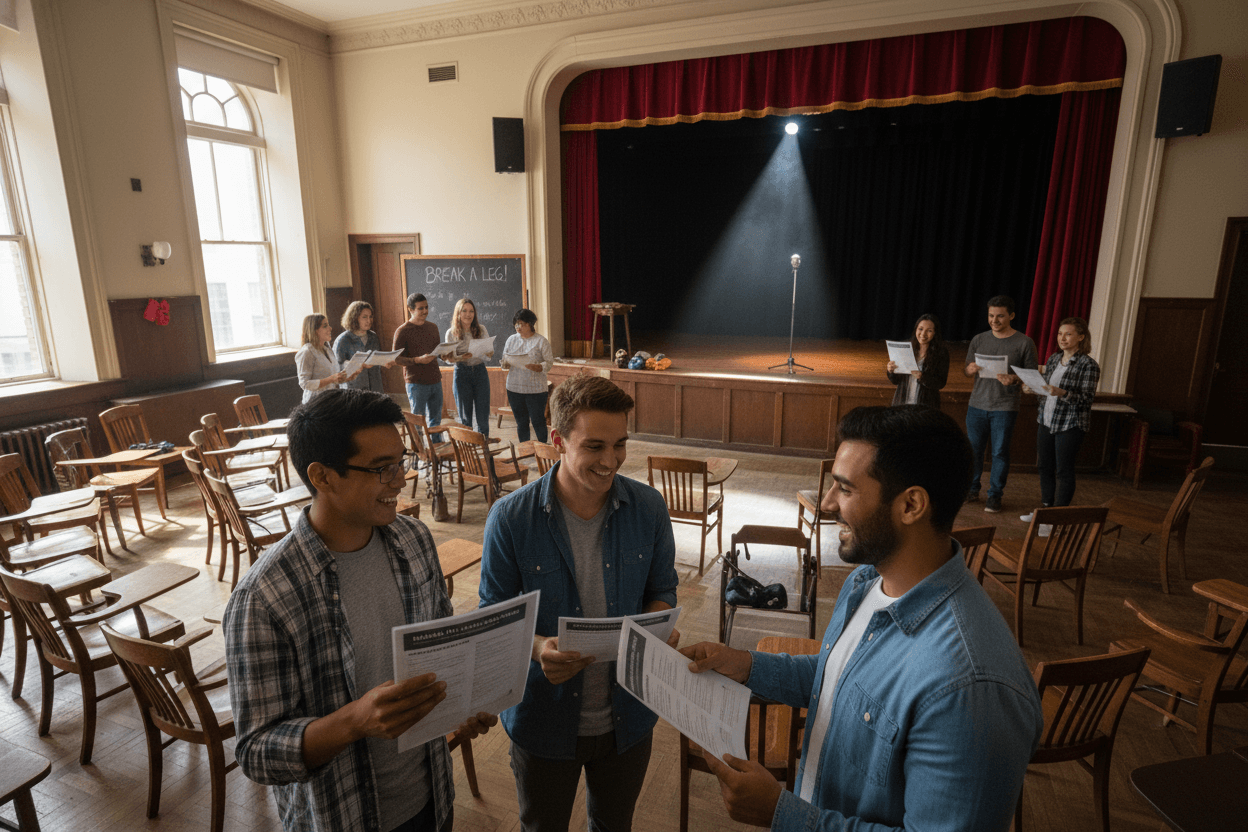
The first newsletter a drama teacher sends sets the tone for the entire year of family communication. For students who are new to the program and families who have never been involved in a school theatre program, the back-to-school newsletter is their first real introduction to what drama class involves and what they are signing up for.
This guide covers what to include in a drama back-to-school newsletter, how to explain the ensemble philosophy of the program to families who may be expecting something closer to a traditional class, and how to invite parents into the community before the year even begins.
Introduce yourself and your approach to teaching drama
Families want to know who their student is spending time with and what that person believes about the subject they teach. A brief introduction that goes beyond your name and credentials and speaks to why you teach drama and what you want students to take from the experience is worth far more than a formal bio.
Keep it to three or four sentences. Name the belief that drives your classroom: that every student has a performer inside them, that ensemble work builds skills that transfer to every area of life, that theatre is a space to practice being human. Families who understand your philosophy from the first newsletter trust the decisions you make throughout the year because they know the reasoning behind them.
Explain the structure of the class and the production calendar
Tell families how the drama class is organized: what percentage of the year is spent in class-based units versus production work, how many productions the program produces per year, and what roles are available to students at each level. If you distinguish between introductory and advanced levels with different expectations, explain that distinction clearly.
If the production calendar is confirmed, include it. Audition dates, rehearsal start dates, technical rehearsal weeks, and performance nights are all dates that families need to plan around. The earlier families have the full calendar, the fewer scheduling conflicts arise during the production period. A production calendar in the first newsletter of the year signals that you run a professional program and that family planning matters to you.

List required materials clearly
New students need to know what to bring to drama class and when. Name each required item, explain its purpose briefly, and distinguish between what is needed from the first week and what can wait until a later unit. A dedicated notebook for character work, scene analysis, and reflective writing is useful from the first day. Scripts may not be needed until the first production unit begins.
If comfortable, movement-friendly clothing is an expectation on physical theatre days, say so in the newsletter. Students who show up in restrictive clothing on the day you are doing a movement exercise are not prepared to participate fully. Naming practical expectations in the first newsletter prevents the most common first-month friction points before they happen.
Demystify the audition policy
For many new students and their families, auditions are the most intimidating part of joining a drama program. The back-to-school newsletter is the right place to address this honestly. Explain who may audition, what the audition involves, how casting decisions are made, and what happens for students who audition and are not placed in a performing role.
Tell families directly that being in the ensemble, on the crew, or supporting the production in a technical role is not a consolation prize. In most strong theatre programs, the technical and crew experience is where some students find their greatest growth. Families who understand this philosophy before auditions happen are far less likely to interpret a non-cast outcome as rejection or failure, and their student is more likely to stay involved in the program across the full year.
Introduce the ensemble philosophy of the program
Drama class is not structured the same way as most academic subjects. Grades are not primarily based on individual test performance. Participation, risk-taking, listening to scene partners, and supporting the work of others are all graded. For families coming from a traditional academic context, this can feel unfamiliar.
Explain your ensemble philosophy in plain terms. Tell families that in this program, the group's success matters as much as individual performance. A student who delivers a strong monologue but ignores their scene partners or disrupts rehearsal is not performing well by your standards. A student who takes risks, listens actively, and supports the ensemble even when they are not in the spotlight is performing exactly as expected. Naming this early removes most of the confusion around drama grades and builds family support for the program's values.
Name how stage fright is handled in the classroom
Stage fright is the concern families of new drama students most commonly have. Many parents worry their student will be forced to perform before they are ready, or that nerves will become a barrier to participation and grades. The back-to-school newsletter is the place to address this directly.
Tell families that your classroom builds toward performance progressively. Students work in small groups before performing for the full class. They use warm-up exercises and physical preparation routines designed to channel nerves rather than eliminate them. No student is ever forced into a performance situation they are not prepared for. Ask families to reinforce this at home by celebrating courage rather than polished results. A parent who says "I am proud of you for trying that" rather than "that was perfect" is giving their student exactly the right message.
Invite parents into the program from day one
Drama programs thrive when parent communities are engaged. The back-to-school newsletter is the first and best opportunity to extend that invitation. Name specific ways families can be involved beyond attending performances: set construction weekends, costume organization sessions, front-of-house volunteering, reception hosting, or serving on the booster organization if one exists.
Give families a point of contact and a way to express their interest. Some parents have skills in carpentry, sewing, graphic design, or catering that could directly support the program. Families who feel welcomed and useful from the first week are more invested in the program for the rest of the year and more likely to show up when the newsletter calls for their help.
Get one newsletter idea every week.
Free. For teachers. No spam.
Frequently asked questions
What should a drama teacher include in a back-to-school newsletter?
Cover the structure of the class, the production calendar if it is set, required materials, the audition policy, and your ensemble philosophy. The back-to-school newsletter sets the tone for how families will understand and engage with the drama program all year. A newsletter that explains the philosophy of the program rather than just listing dates and rules builds family alignment from the start and reduces the most common sources of misunderstanding: audition disappointment, grade transparency, and production logistics.
How should a drama teacher explain the audition policy to new families?
Be specific about who may audition, how auditions are structured, how casting decisions are made, and what role is available to students who audition but are not cast in a performing role. Families who have never been through a school theatre audition process often assume the worst: that their student will be humiliated, cut without explanation, or excluded from the program if they are not cast. A newsletter that demystifies the process and communicates that every student has a meaningful place in the program reduces family anxiety and increases participation.
How should a drama teacher address stage fright in the back-to-school newsletter?
Name it directly and normalize it. Tell families that stage fright is present in virtually every performer at every level and that one of the core skills students build in drama class is the ability to perform despite nerves, not the ability to eliminate them. Ask families to support this at home by celebrating their student's attempts rather than focusing on polished results. A student who knows their family sees courage rather than perfection in performance is more willing to take the risks that lead to growth.
What materials do new drama students typically need?
A dedicated notebook or journal for character work, scene notes, and reflective writing. A folder or binder for scripts and handouts. Comfortable clothing that allows movement for days focused on physical theatre. Some programs also ask students to bring index cards for monologue work or a USB drive for recording projects. List the specific materials for your program in the newsletter and note which are required from the first week and which can wait until a specific unit begins.
How does Daystage help drama teachers start the year with strong family communication?
Daystage lets drama teachers send a polished, branded back-to-school newsletter to all enrolled families before the first day of class. Set up your program template once and update it each year with the current production calendar, audition dates, and any policy changes. Families receive a consistent, professional first impression of the program, and you can see which families opened the newsletter so you know who may need a personal follow-up in the first week.

Adi Ackerman
Author
Adi Ackerman is a former classroom teacher and curriculum writer with 8 years in K-8 schools. She writes about school communication, parent engagement, and what actually works in real classrooms.
More for Subject Teachers
Ready to send your first newsletter?
3 newsletters free. No credit card. First one ready in under 5 minutes.
Get started free