

Computer Science Teacher Newsletter: Club and Activity Newsletter
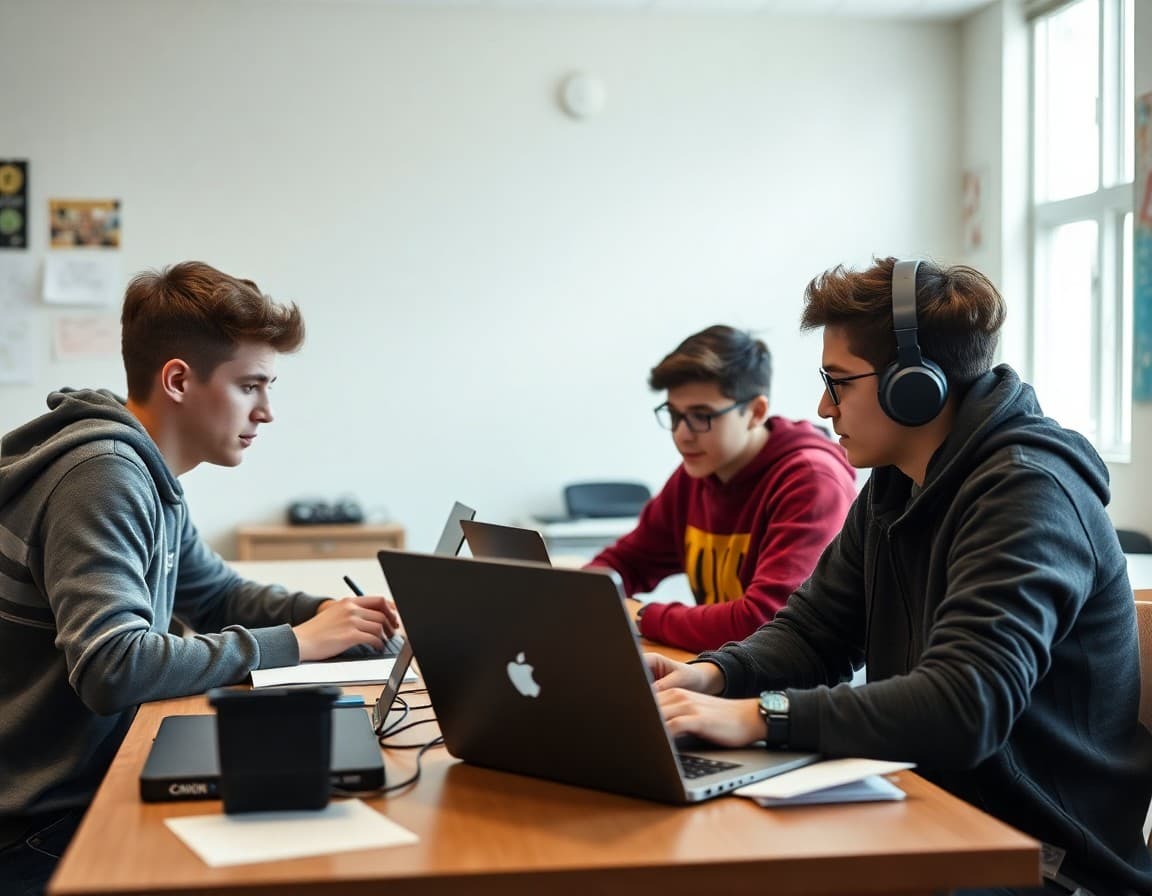
Coding clubs and CS extracurriculars are often the highest-impact activity a school offers for students interested in tech careers. But they only work if families understand what they are, support the time commitment, and feel confident their student belongs there even without a strong prior coding background. A well-written extracurricular newsletter does all three jobs at once.
This guide covers how to write a CS club or activity newsletter that recruits effectively, communicates logistics clearly, and builds family buy-in for what can be a significant time commitment outside of class.
Open with what students actually do in the club
The most common mistake in club newsletters is leading with abstract mission statements. "Our coding club develops the next generation of software engineers" tells families nothing useful. Instead, lead with a concrete description of last month's or last year's work: "Last spring, our coding club team built a mobile app that helps students at our school track their extracurricular service hours. The team presented at the district technology fair and won first place in the student impact category."
That kind of opening tells prospective members what the club actually produces and gives returning families a sense of the club's track record. Both are more persuasive than a mission statement.
Describe this year's focus or competition track
If the club is competing in a specific event this year, name it and explain it briefly. For a club entering the ACSL (American Computer Science League) competition: "This year, the team will compete in ACSL, which consists of five monthly online contests covering topics like Boolean algebra, data structures, and graph theory, followed by an all-star competition for top scorers in the spring. Students who have completed Introduction to Computer Science are well-prepared to compete."
For a club focused on a hackathon: "In February, we will participate in a regional hackathon where teams of three to four students have 12 hours to build a working solution to a real-world problem provided by the organizers. Last year's winning team built a web app that mapped accessible public transportation routes for wheelchair users."

List meeting details precisely
Give families the complete meeting schedule: day of week, time (start and end), location in the building, and whether meetings are every week or biweekly. If the schedule changes around competition season, note that too. "Regular meetings are Tuesdays from 3:15 to 4:45 PM in Room 214. In the two weeks before the February hackathon, we add a Thursday session to finalize the team's project."
Transportation and pickup logistics matter enormously to families. If the school provides no late bus, say that plainly so families can arrange pickup before their student commits.
Address the experience level question
Many students and families assume a coding club is only for students who already know how to code well. Address this directly. State what experience level is appropriate and what beginners can expect when they join. If you pair beginners with experienced members for the first month, describe that. Removing the barrier of assumed expertise increases the diversity of students who show up.
Share a brief template families can reference
Here is a short extracurricular newsletter excerpt:
"The Westfield Coding Club is open to all students who have completed or are currently enrolled in Introduction to Computer Science. No prior competition experience is required. We meet Tuesdays from 3:15 to 4:45 PM in Room 214 starting September 16. This year's main event is the regional Congressional App Challenge, where individual students or pairs build an app that addresses a civic or social challenge. Students interested in joining should complete the sign-up form at [link] by September 12. Questions? Email me at [email]."
Be transparent about the time commitment
Families support extracurricular involvement more consistently when they know what to expect before the student joins rather than discovering the commitment level midway through. If the club runs from September through April with a heavier schedule in February and March, say that. If students who compete in the spring need to practice at home between meetings, estimate the weekly time. Transparency here prevents the dropout that happens when reality does not match the initial impression.
Include any costs, materials, or permission requirements
List any competition registration fees, required software licenses, or travel costs with their amounts and payment deadlines. If there is financial assistance available through the school, mention it. If families need to sign a permission form for a field trip or competition travel, include a deadline for when that form needs to be returned.
Close with a call to action and your contact information
End the newsletter with a single clear next step: complete the sign-up form by this date, email me with questions, or come to the interest meeting on this date at this location. Newsletters that close with multiple options tend to produce inaction. One clear ask gets the most responses.
Get one newsletter idea every week.
Free. For teachers. No spam.
Frequently asked questions
What should a CS club newsletter include to recruit new members?
Lead with what students will build or compete in, not a generic description of the club's purpose. If your coding club builds apps for local nonprofits, say that. If it competes in FIRST Tech Challenge or VEX Robotics, name the competition. Students join clubs to do specific things, and families support participation when they understand what those things are. Include meeting days, times, location, and whether the club is open to all grade levels or has any prerequisites.
How do you explain a hackathon or competition to parents who are unfamiliar with it?
Describe it as a timed event where teams solve a real problem by building a software or hardware solution. 'Students have 24 hours to design and build a working app that addresses a community problem, then present it to a panel of judges from local tech companies.' That is specific enough to give families a clear picture without requiring any coding background to understand.
What logistics should a CS extracurricular newsletter cover?
Cover meeting frequency, duration, location, supervision, and any transportation implications. If the club stays until 5:30 PM on Wednesdays, families need to know that for pickup planning. If there are weekend competitions or field trips involved, include those dates even if they are months away. Early notice on transportation and schedule commitments prevents the last-minute conflicts that cause students to drop out.
Should a CS club newsletter mention costs or commitments?
Yes, and be specific. If there is a registration fee for a competition, name the amount and the deadline. If the school covers the fee or has a fund for students who cannot pay, mention it. If the club requires a minimum meeting attendance to qualify for competitions, state that so families understand the commitment level before their student joins.
How can Daystage help a CS teacher promote the coding club?
Daystage makes it easy to send a visually organized club newsletter that includes photos from past meetings, a schedule, and a sign-up link. Sending through Daystage also means the newsletter arrives as a formatted document rather than a plain email, which stands out in a crowded inbox and tends to get a better response rate from families when you are trying to recruit new members.

Adi Ackerman
Author
Adi Ackerman is a former classroom teacher and curriculum writer with 8 years in K-8 schools. She writes about school communication, parent engagement, and what actually works in real classrooms.
More for Subject Teachers
Ready to send your first newsletter?
3 newsletters free. No credit card. First one ready in under 5 minutes.
Get started free