
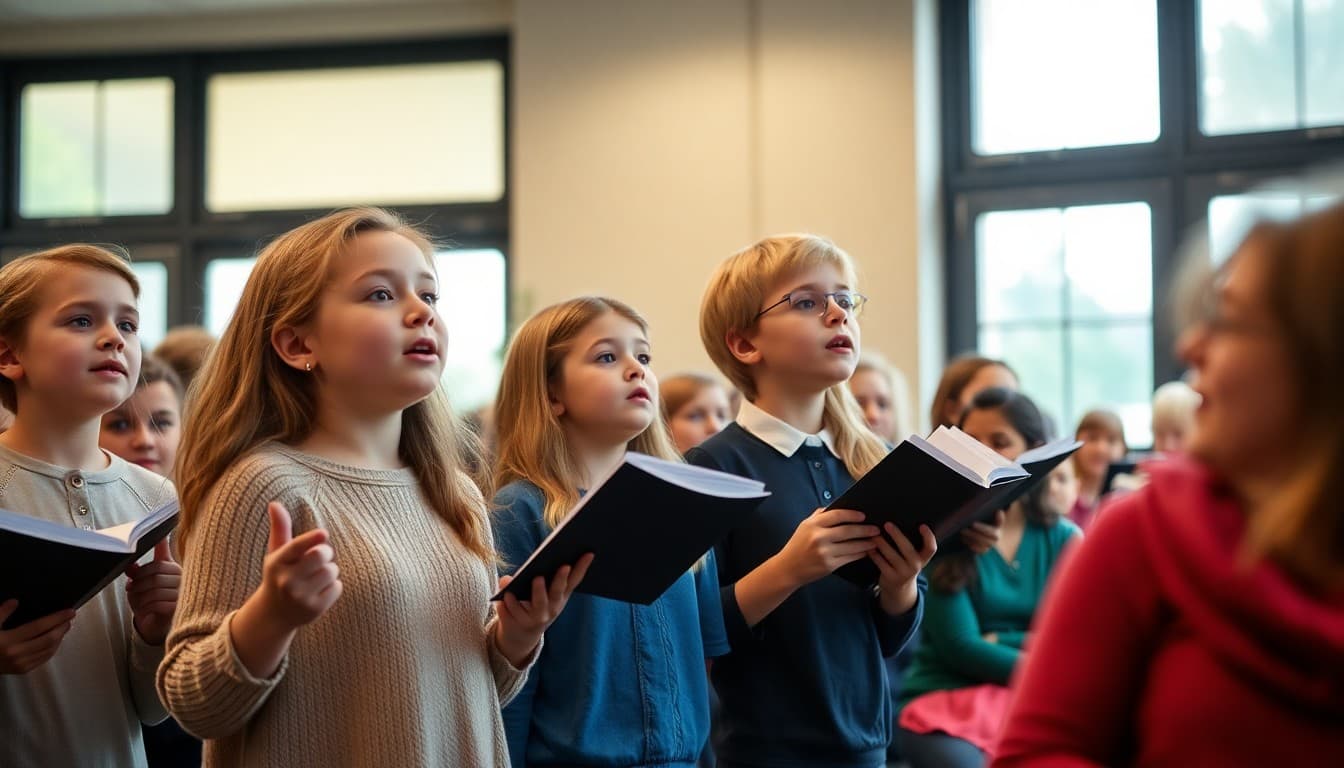
Choir Teacher Newsletter: National Month Newsletter Ideas
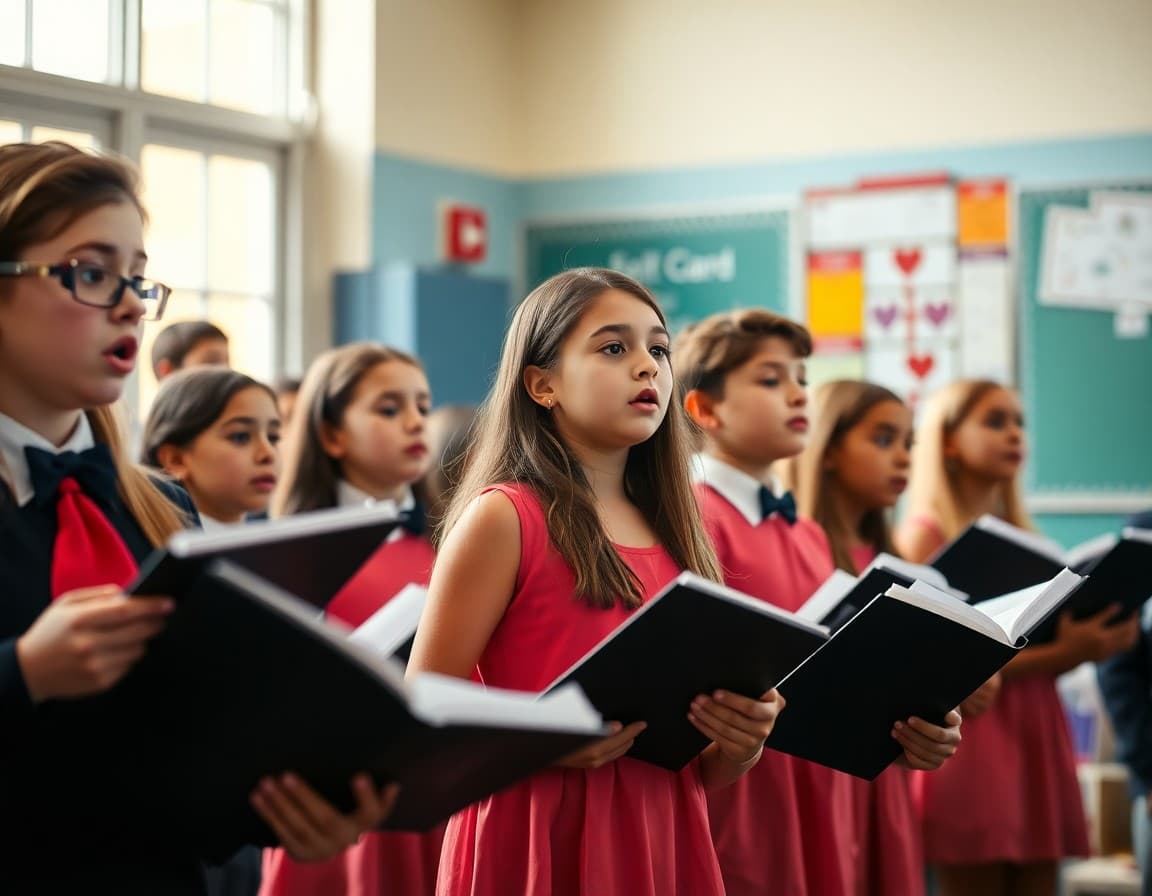
National awareness months give choir directors a natural reason to send newsletters that celebrate what choral singing does rather than communicate logistics. Music In Our Schools Month, Black History Month, Women's History Month, and World Choir Day all provide genuine hooks for content that connects families to the living tradition of choral music their students are learning to participate in. A strong awareness month newsletter builds enrollment, generates concert attendance, and deepens the school community's relationship with the choral program.
This guide covers the key awareness events for choir directors, what to put in each newsletter, and how to make the content specific and engaging rather than generic.
Music In Our Schools Month: March
Music In Our Schools Month is organized by the National Association for Music Education and observed throughout March. For choir directors, this is the prime opportunity to make the case to families and school administrators that choral music education is not a peripheral activity but a core developmental experience. The research supporting music education is extensive; use specific findings rather than general claims.
"Students who sing in a choral ensemble for at least two years demonstrate measurably stronger language processing skills than non-singers, according to research published in the Journal of Neuroscience. This is because choral singing requires simultaneous attention to pitch, rhythm, text, language, ensemble blend, and physical breath management, all coordinated in real time. Your student is doing that every time we rehearse. MIOSM is a chance to celebrate what that kind of instruction produces." Pair this kind of specific research claim with a description of what your choir is currently working on.
Black History Month: the African American choral tradition
February offers choir directors a deep well of content connecting the African American experience to the choral tradition. The Negro spiritual is one of the most significant musical forms in American history: songs of coded meaning, community resilience, and profound emotional depth created by enslaved people and preserved through oral tradition before being notated and arranged for choral performance in the late 19th and early 20th centuries.
Specific composers and arrangers have shaped the concert spiritual as we know it today. Harry T. Burleigh was the first major arranger of spirituals for solo voice; his arrangements brought the tradition into Carnegie Hall. Moses Hogan's choral arrangements of spirituals including "Elijah Rock" and "Ev'ry Time I Feel the Spirit" are performed by choirs worldwide. André Thomas, a professor at Florida State University, has composed and arranged more than 100 choral works that bridge the spiritual tradition and the contemporary choral repertoire.

Women's History Month: women who shaped choral music
March's Women's History Month provides a strong hook for a newsletter about the women who built the choral tradition. Clara Schumann composed choral works alongside her more famous piano repertoire. Nadia Boulanger trained virtually every major American composer of the 20th century, many of whom composed significant choral music. Marin Alsop was the first woman to lead a major American orchestra; her early career was in choral conducting. Contemporary composers like Ēriks Ešenvalds (whose choral works are performed by choirs worldwide) stand alongside women like Cecilia McDowall, Caroline Shaw, and Libby Larsen, all of whom have written significant choral repertoire that your program may already perform.
World Choir Day: first Saturday of December
World Choir Day is organized by the International Federation for Choral Music and celebrated in countries across the world. It is a particularly strong hook for a December newsletter that arrives just before or after your winter concert. "This Saturday is World Choir Day. Around the world, choirs are performing in parks, concert halls, schools, and community centers to celebrate what human beings have been doing together for thousands of years: singing in harmony. Your student's choir is part of that same tradition, and their performance on December 19 is their contribution to it this year." A newsletter that connects your local program to a global tradition gives families a sense of what their student is participating in that a concert announcement alone does not provide.
Include a family listening activity
Every awareness month newsletter should include one specific thing families can do together. For MIOSM: attend the spring concert and arrive early enough to hear the ensemble warming up, which gives a different perspective on how a choral ensemble functions than a polished performance. For Black History Month: listen to Moses Hogan's arrangement of "Elijah Rock" performed by the Paul Laurence Dunbar High School choir (available on YouTube) and ask your student what specific choral technique they notice the ensemble using. For Women's History Month: listen to Caroline Shaw's "And the Swallow" performed by the ACDA All-National Choir and discuss what makes the contemporary choral sound different from music written 100 years ago.
Feature something happening in your class during the awareness period
Connect the awareness content to your rehearsal room. What are students learning during this month? "During Black History Month, our Concert Choir is working on Moses Hogan's arrangement of 'Deep River.' Hogan's arrangement uses the spiritual's original melodic material in the soprano line while the lower voices create a slow, rolling harmonic foundation that suggests deep water. The piece requires our singers to sustain long phrases with absolute even breath control, which is exactly the skill we have been developing since September." Families who read that description understand both what the choir is doing and why it matters.
Close with the next concert date and your contact
End every awareness month newsletter with the upcoming concert date, ticket information, and your email address. Cultural awareness newsletters tend to generate warm family responses. Make yourself easy to reach and those responses build the community relationship that sustains the choral program long-term.
Get one newsletter idea every week.
Free. For teachers. No spam.
Frequently asked questions
Which national months are most relevant for choir directors?
Music In Our Schools Month in March is the flagship event for vocal music teachers and is organized by the National Association for Music Education. Black History Month in February connects directly to the African American spiritual and gospel choral traditions that are foundational to American choral music. Women's History Month in March connects to the history of women composers and conductors who shaped the choral tradition. World Choir Day, held on the first Saturday of December, is organized by the International Federation for Choral Music and celebrates choral singing worldwide.
How do you make a Music In Our Schools Month newsletter feel specific rather than generic?
Connect it to something students are actively learning in rehearsal and to a specific fact about choral music education research. 'Students who sing in a choral ensemble for at least two years develop significantly stronger pitch recognition, rhythmic precision, and phonological awareness than non-singers. This week in rehearsal, we applied that phonological awareness to the Latin pronunciation in 'Ave Verum Corpus.' Your student is building those skills every Monday, Wednesday, and Friday.' A newsletter grounded in active classroom work and real research is worth reading.
How do you celebrate the African American choral tradition in a Black History Month newsletter?
Feature a specific choral form or composer with enough context to make it meaningful for families who are unfamiliar with the tradition. The Negro spiritual is one of the foundational genres of American choral music; composers like Moses Hogan, Brazeal Dennard, and André Thomas have arranged spirituals in ways that are now performed by choirs worldwide. Marian Anderson, whose performance at the Lincoln Memorial in 1939 was a watershed moment in American civil rights history, was a contralto who began singing in church choirs. These are specific, human stories that connect a musical tradition to lived experience.
Should a choir national month newsletter feature student recordings or performances?
Yes, if you have quality recordings and the students' families have signed media releases. A 60-second audio clip or video from a recent rehearsal or performance embedded in the newsletter is the most powerful content a choir newsletter can contain. Families who can hear their student's ensemble performing are more engaged than families who only read about what the group sounds like. If you do not have a recording available, describe the repertoire and link to a professional recording of the same piece.
How does Daystage help choir directors create national month newsletters?
Daystage makes it easy to embed video and audio links, include concert photos, and write a newsletter that is visually organized and professional. For a Music In Our Schools Month newsletter that you plan to share with school administration as part of advocacy for the program, Daystage's polished format is significantly more appropriate than a plain email forward.

Adi Ackerman
Author
Adi Ackerman is a former classroom teacher and curriculum writer with 8 years in K-8 schools. She writes about school communication, parent engagement, and what actually works in real classrooms.
More for Subject Teachers
Music Teacher Newsletter Guide: Keeping Families Connected to the Music Program
Subject Teachers · 7 min read
Drama Teacher Newsletter Guide: Communicating About Theater Productions
Arts & Music · 6 min read
After-School Program Newsletter Guide: Keeping Families Engaged Beyond the School Day
Subject Teachers · 6 min read
Ready to send your first newsletter?
3 newsletters free. No credit card. First one ready in under 5 minutes.
Get started free