
Choir Teacher Newsletter: Field Trip Newsletter to Parents

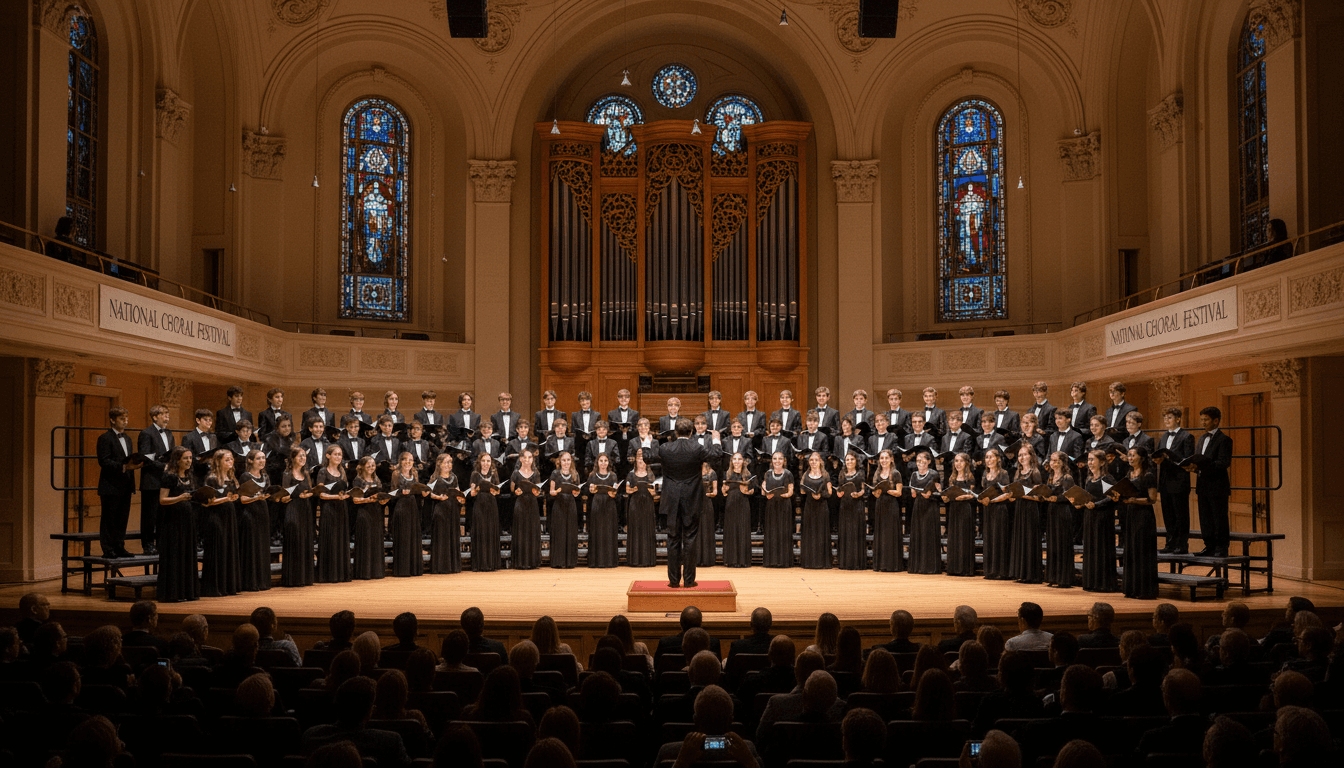
Choral festival trips are high-stakes logistics events. Students need to arrive at the right place at the right time in the right attire, prepared to perform at their best in front of judges and a live audience. A clear, comprehensive field trip newsletter is not optional preparation for this kind of event. It is what makes the difference between a day that goes smoothly and one where the director is solving avoidable problems backstage.
This guide covers what to include in a choir field trip newsletter, how to communicate festival logistics to families who have never attended a choral competition, and how to handle the details that most newsletters miss.
Open with the purpose and destination of the trip
Start by telling families exactly where the choir is going and why. Name the festival or event, the hosting venue with its full address, and the purpose of the trip: are students competing for a rating, performing in a non-adjudicated showcase, or attending as an observer? Families who understand the significance of the event are more invested in helping their student prepare and arrive ready.
If this is a competitive festival, tell families briefly what the choir has been working toward. Name the pieces the ensemble will perform. Families who know the program feel connected to the event even if they cannot attend.
Give the full schedule with specific times
Vague time communication creates anxiety and logistical errors. Give families the exact call time for students at school, the departure time, the arrival time at the venue, the performance window, and the expected return time. If the return time is approximate, give a range and tell families how you will communicate when you are en route.
If families are permitted to meet the choir at the venue rather than riding the bus, explain whether that is allowed, where to meet the group, and what time students need to arrive. Give the procedure for students who need to leave directly from the venue rather than returning on the school bus. Every logistical variation needs a clear answer in the newsletter so families are not contacting you individually for answers you can give once.

Spell out the concert attire requirements completely
Concert attire is the area where field trip newsletters most commonly fail families. A directive that says "concert attire" or "dress professionally" is not sufficient instruction. Write out every item: top, bottom, shoes, socks or hosiery, and any restrictions on jewelry, makeup, or hair. If there are gendered or non-gendered options, list both clearly.
Tell families what the consequence is if a student arrives without proper attire. If a student not in dress code cannot perform with the ensemble, that policy should be in the newsletter, not delivered as a surprise on the morning of the festival. Including this information is not punitive. It is protective of the student who might otherwise face that situation and the director who would have to enforce it on the day.
List what to bring and what to leave home
A field trip packing list in the newsletter eliminates a common source of friction. Tell families what students need: their instrument if applicable, a bag lunch or money for food if there is a break period, a water bottle, any required medications with proper forms, and a small bag for personal items. Tell families what should not come: large bags, valuables, electronics that are not permitted by school policy, and anything that would distract from the performance focus of the day.
If your school has a specific field trip electronics policy, restate it briefly. Families appreciate knowing the rules in advance rather than having items confiscated at departure.
Explain how the festival adjudication works
Most choir parents have never watched a choral adjudication and do not know what to expect. Give them a one-paragraph explanation: trained judges evaluate the ensemble on specific criteria, take notes during the performance, and assign scores or ratings in each category. The choir typically receives a written comment sheet and an overall rating. Tell families what rating scale your festival uses, whether it is a numerical score, a division ranking, or a Superior and Excellent rubric.
If families are permitted to attend the performance, explain where they can sit, whether photography or video is allowed, and how to support the ensemble as an audience. Families who know what they are watching are better audience members and have a richer experience of the day.
Address performance expectations for students
Choir students need to understand that a choral festival is a different environment from a school concert. The adjudicators are watching stage presence, uniformity of attire, posture, and how the ensemble carries itself from the moment they enter the performance space. Remind families to reinforce with their students that the day requires focus from the moment they leave school, not just during the performance itself.
Include a note about vocal health for the days leading up to the festival. Students should stay hydrated, avoid yelling or whispering, and get adequate sleep. A choir that arrives vocally fatigued cannot perform at the level they achieved in rehearsal.
Tell families how to reach you on the day
Give families an emergency contact method for the day of the trip. This might be a school office number, a chaperone contact, or your own phone number if your school permits it. Tell families the difference between a non-urgent question and a genuine emergency so they know when to call versus when to wait for the return communication.
Close the newsletter with a note of excitement about what the ensemble has prepared. Families who feel your confidence in the choir arrive at the event as genuine supporters, and that energy reflects in how students carry themselves on the day.
Get one newsletter idea every week.
Free. For teachers. No spam.
Frequently asked questions
What should a choir field trip newsletter include?
A choir field trip newsletter should cover the destination and purpose of the trip, the departure and return schedule with specific times, the full dress code with every item spelled out, what students should bring and what they should leave at home, any costs or payment due dates, the chaperone situation, and emergency contact procedures. For choral festivals, also include the performance schedule, what the adjudication process looks like, and how families can watch if spectators are permitted. Cover all of this in one newsletter rather than sending multiple partial updates.
How early should a choir field trip newsletter go out?
Send the main logistics newsletter two to three weeks before the trip date. This gives families enough time to arrange schedule changes, submit permission slips, and pay any fees. Send a shorter reminder newsletter two to three days before with a checklist of what to bring and confirmation of key times. Two newsletters are more effective than one rushed send the week of the trip.
How do you explain a choral festival to parents who have not attended one before?
Tell families that a choral festival is a competitive or adjudicated event where school choirs perform for trained judges who evaluate the ensemble on tone quality, blend, intonation, diction, musical interpretation, and stage presence. The choir typically performs a prepared program of two to four pieces and receives a rating and written feedback from the panel. Explain the rating scale your festival uses so families understand what the scores mean. Tell them whether spectators are welcome and if so, where to sit and when to arrive.
How do you handle concert attire in a field trip newsletter?
Be as specific as possible. Do not write concert black and assume families know what that means. Write: black dress pants or a black knee-length skirt, a white long-sleeve button-down shirt, black closed-toe dress shoes, black socks or black opaque tights. If jewelry is permitted or restricted, say so. If hair must be pulled back, say so. If students who arrive without proper attire will not be permitted to perform, include that policy. Clarity prevents the wardrobe problems that become a crisis on the morning of a festival.
How does Daystage help choir teachers communicate field trip logistics to families?
Daystage lets choir directors build a detailed field trip newsletter template that covers all logistics in one organized send. You can include a checklist section families can reference the morning of the trip, embed the permission slip link or attachment, and track who has opened the newsletter before the deadline. Open rate visibility means you know which families have read the logistics and which may need a phone call before the trip date.

Adi Ackerman
Author
Adi Ackerman is a former classroom teacher and curriculum writer with 8 years in K-8 schools. She writes about school communication, parent engagement, and what actually works in real classrooms.
More for Subject Teachers
Ready to send your first newsletter?
3 newsletters free. No credit card. First one ready in under 5 minutes.
Get started free