
Choir Teacher Newsletter: Teacher Newsletter Examples That Actually Work

Choir newsletters that work are not generic. They are specific to the program, specific to the current moment in the calendar, and written in a way that gives families something concrete to do or understand. Looking at what effective choir directors actually write helps you see the patterns that distinguish communication that builds program engagement from communication that gets deleted.
This guide breaks down the most common choir newsletter types, explains what makes each one effective, and gives you a framework for building your own template library.
The concert announcement newsletter
A concert announcement newsletter does more than announce a date. It builds anticipation, gives families the logistics they need to attend, and tells them what they are going to hear. Name the pieces the choir will perform and give a one-sentence description of each. Families who know the program arrive as an engaged audience. Families who receive only a date arrive as passive observers.
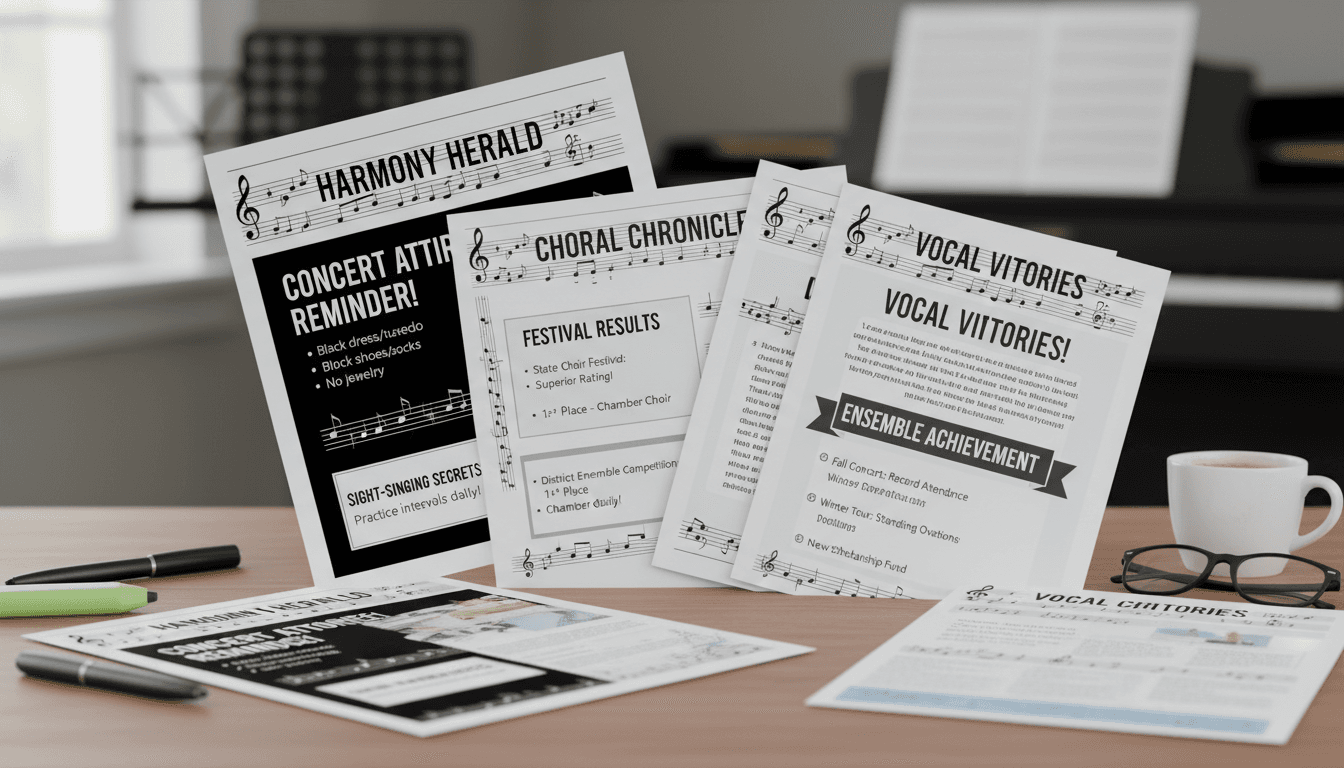
Include the full dress code in the concert newsletter, not a separate reminder sent a week before. Families need lead time to prepare attire, and a specific list eliminates the ambiguity that produces wardrobe problems on the night of the performance. Tell families the audience arrival time, the student call time, and the expected duration of the concert. Cover every logistical question they are likely to have before they ask it.
The festival result newsletter
Post-festival newsletters are an opportunity to celebrate the ensemble's work and give families who could not attend a complete picture of the day. Open with the result: the rating received, any special recognition, or standout moments from the performance. Then explain what the rating means for families unfamiliar with the adjudication system your festival uses.
Include a note about what the adjudicators praised and what you will focus on in the next rehearsal cycle. This framing shows families that performance is a continuous process of growth rather than a pass or fail event. A festival recap newsletter that only reports the rating leaves families without context and misses the chance to build deeper investment in the choir's ongoing development.

The vocal health newsletter
A newsletter focused on vocal health is relevant year-round but especially valuable during winter illness season, state testing periods when students are under additional stress, or weeks before a major performance. Remind families of the basic practices that protect vocal health: consistent hydration with water rather than caffeine, avoiding whispering and shouting, sleeping adequately, and not pushing through vocal fatigue.
Give families one or two specific actions they can take at home to support their student's vocal health: keeping a water bottle accessible throughout the day, encouraging a brief humming warm-up before a practice session rather than diving immediately into full-voice singing, and being aware of signs of vocal strain such as hoarseness, soreness, or reduced range. Families appreciate practical guidance they can act on.
The repertoire preview newsletter
A newsletter that introduces the choir's current repertoire is one of the most underused tools in choir communication. When families know what the ensemble is learning, they become more invested. Tell families the title and composer of each piece the choir is currently rehearsing. Give a one-sentence description: the historical context, the emotional arc of the piece, or the technical challenge it presents for the ensemble.
If a recording of the piece is available on a streaming platform or video site, include a link. A parent who listens to a recording of a piece the choir is preparing arrives at the concert with a reference point for what the ensemble has accomplished. That transformation from passive audience member to informed listener is worth the thirty seconds it takes to find and include a link.
The attire reminder newsletter
Attire newsletters work best when they are sent two to three weeks before a performance rather than a few days before. This gives families time to shop, borrow, or alter what they need. Do not assume that because you sent the attire requirements in the concert announcement newsletter, every family read and retained that information. A brief dedicated attire reminder is worth sending.
Reiterate every item in the dress code with the same specificity you used in the original announcement: the exact color and style of top and bottom, shoe type and color, hosiery requirements, hair and jewelry policies. Include a note about what happens if a student arrives without proper attire. Clarity before the event prevents the conversations you do not want to have backstage.
The beginning-of-semester newsletter
Each semester is an opportunity to reset expectations and give families a preview of what is coming. Share the performance calendar for the semester, the major skills or repertoire the ensemble will focus on, and any changes to class structure or grading. If there are new students in the program, a welcome note from the director helps families feel connected before the first rehearsal.
Include your contact information and preferred communication method. Families who know how to reach you and what kind of response to expect are more likely to get in touch when a question comes up rather than letting confusion or concern sit unaddressed.
What all effective choir newsletters have in common
The choir newsletters that families actually read and act on share a few consistent qualities. They are specific rather than general. They respect the reader's time by being short enough to read completely. They connect the current moment to the larger arc of the program. And they give families a clear next action when one is needed.
Build a template library for your recurring send occasions and update the specifics each time rather than rewriting from scratch. Consistent, well-structured communication is what transforms a choir program from a class students attend into a community families feel part of.
Get one newsletter idea every week.
Free. For teachers. No spam.
Frequently asked questions
What should a choir teacher newsletter include?
A strong choir newsletter covers what students are working on in rehearsal, upcoming performance dates with logistics, any action items families need to complete, and a short tip for supporting vocal practice at home. Newsletters that only share event dates miss the opportunity to help families understand and value the work happening in the choral room. When families understand what the choir is building toward and how their student fits into that picture, their investment in the program grows.
How often should choir directors send newsletters?
Monthly newsletters work well for routine communication. Add a targeted send two weeks before any concert, festival, or audition so families have enough time to prepare. During peak periods like the weeks before a major performance or a festival trip, weekly shorter updates may be warranted. The goal is consistent visibility into the program without overwhelming families. Irregular communication that only surfaces during crises trains families to view choir as a source of last-minute stress rather than a structured program.
What makes a choir newsletter example useful for planning my own communication?
A useful example shows you the structure and specificity that effective directors use: how they introduce a concert program in a way that builds anticipation, how they communicate attire requirements without generating confusion, and how they phrase practice tips in language that parents without musical backgrounds can act on. Use examples to build a template library for your program's recurring send occasions and adapt the language to your own voice and your ensemble's specific needs.
How do you write a choir newsletter that parents actually read?
Put the most time-sensitive information at the top. Use clear headers so families can scan for the section most relevant to them. Keep the total length short enough to read in two minutes. Use specific details rather than general statements: name the pieces the choir is performing, give the exact dress code requirements, state the due date for the permission slip. Newsletters that are specific and brief get read. Newsletters that are long and vague get skimmed or ignored.
How does Daystage help choir teachers send better newsletters?
Daystage gives choir directors a dedicated newsletter builder with templates for the most common send occasions: concert prep, festival communication, back to school introductions, and assessment reminders. You build a template once and update the relevant details each time you send. Families receive a consistent, readable newsletter rather than a buried message in a classroom app, and you can track open rates to see which families have read the communication before an event or deadline.

Adi Ackerman
Author
Adi Ackerman is a former classroom teacher and curriculum writer with 8 years in K-8 schools. She writes about school communication, parent engagement, and what actually works in real classrooms.
More for Subject Teachers
Ready to send your first newsletter?
3 newsletters free. No credit card. First one ready in under 5 minutes.
Get started free