
Biology Teacher Newsletter: Field Trip Newsletter to Parents

A biology field trip is one of the most valuable classroom experiences you can offer, and it is also one of the most logistically complex. A well-written field trip newsletter handles the logistics clearly, explains the learning purpose in language families can act on, and prepares students for what they will encounter in the field before they leave the classroom.
This guide covers what a biology field trip newsletter should include, how to explain ecosystem data collection to non-scientist parents, and how to connect the field experience to the broader biology unit in a way that families understand.
Lead with the learning objective, not the logistics
Many field trip newsletters open with the date and permission form deadline. Open with the academic purpose instead. "Next Thursday, biology students will visit the Meadowbrook Nature Preserve to collect field data on the freshwater ecosystem for our current unit on ecological relationships and biodiversity." That sentence tells families exactly why the trip is happening before they read a single logistics detail.
Families who understand the academic purpose are more likely to help their student prepare before the trip and engage with what their student observed when they return home. A trip framed as "a day outside at the nature preserve" generates less meaningful conversation at the dinner table than a trip framed as a field data collection opportunity tied to the current unit.
Explain what students will do in the field
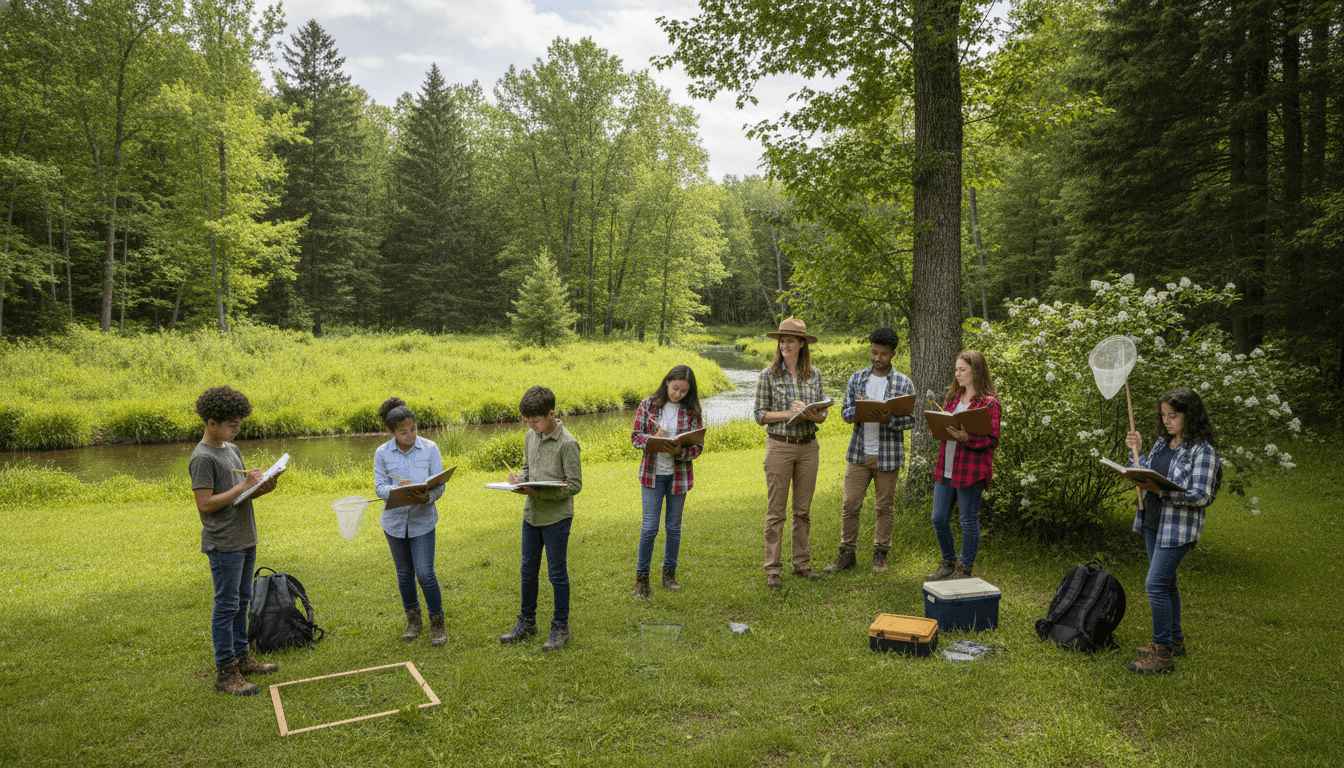
Tell families specifically what biology activities students will complete during the trip. For a wetland ecosystem study, that might include using a dichotomous key to identify native plant species, measuring abiotic factors like water temperature, dissolved oxygen, and pH at two different sites along a stream, sampling a quadrat plot to estimate invertebrate population density, and recording field observations in a biology data notebook.
Naming these activities gives families a window into the scientific method in action. Students who are told they will be "doing science outside" arrive less prepared than students who know they will be using specific tools, recording specific data, and applying specific vocabulary from their current unit. A brief activity overview in the newsletter sets that expectation.

Describe the field biology tools students will use
Field biology involves equipment that parents may not recognize: collection nets, Secchi disks, pH strips, hand lenses, quadrat frames, field guides, and data recording sheets. Briefly naming the tools students will work with serves two purposes. It helps families understand what their student is doing when they describe the trip, and it gives students a reason to take the trip seriously as a scientific exercise rather than a casual walk.
If students need to review how to use any of these tools before the trip, say so in the newsletter. Suggest they review the relevant section of their field biology notes, the dichotomous key format from a recent class session, or the data table structure from their last lab report. Students who arrive knowing how to use their tools collect better data.
Connect the field trip to the current biology unit
Name the unit the field trip connects to and tell families exactly what concepts students will see in the field. If the class is in the middle of an ecology unit, the field trip reinforces biotic and abiotic factor relationships, trophic levels, producer and consumer identification, and ecosystem resilience concepts. If the class is in a biodiversity unit, the trip gives students direct exposure to species variety, habitat structure, and the visible effects of environmental pressures.
Telling families this connection frames the field trip as an extension of classroom learning, not a pause from it. Students who understand that the organisms they identify in the field will appear in follow-up assignments are more careful observers. Parents who understand the connection ask better questions when their student gets home.
Cover safety, clothing, and what to bring
Biology field trips to natural settings require specific preparation that families need to know about in advance. Tell students and families to wear closed-toe shoes and, for sites with wooded or tall grass areas, long pants tucked into socks to reduce tick exposure. Recommend sun protection for open sites. Name anything students should bring: a reusable water bottle, a pencil (pens do not work reliably on wet paper in the field), any required medication in its original container, and their field notebook or data sheet.
Include any trip-specific safety rules: students must stay with their assigned group, no eating in collection areas, wash hands before eating, and report any unexpected reactions or concerns to a chaperone immediately. Address any known allergen or mobility concerns by directing those families to contact you directly before the trip so accommodations can be arranged.
Explain the permission form and deadline clearly
Permission form logistics should be specific and easy to follow. Name the form, the deadline, and the method for returning it. If the form is digital, include the link or explain where to find it in the school's parent portal. If it is paper, say when it was sent home and what happens if it is lost. Tell families whether students who do not return a signed permission form by the deadline will be unable to attend and what the alternative assignment will be. Clarity on consequences reduces the number of last-minute forms you receive the morning of the trip.
If chaperones are needed, include that information here as well. Name the number of chaperone spots available, any requirements for chaperones (background check status, for example), and how families can sign up.
Tell families what students will do with their field data
Close the newsletter by explaining what happens with the data students collect during the trip. Will they write a field report analyzing their findings? Will they build a food web or energy pyramid using the organisms they identified? Will they compare their ecosystem data to published biodiversity indices? Naming the follow-up assignment signals to students and families that the data they collect matters and will be evaluated.
Ask families to talk to their student after the trip about one thing they observed that surprised them. That simple conversation reinforces scientific curiosity and gives the trip staying power beyond a single afternoon. Field biology is most effective when the observations students make in the field continue to live in their thinking back in the classroom.
Get one newsletter idea every week.
Free. For teachers. No spam.
Frequently asked questions
What should a biology field trip newsletter cover?
Cover the learning objective, the location, the date and logistics, what students will be doing during the trip, what to wear and bring, and any permission or health form requirements. Tell families specifically what biology concepts the trip connects to so the outing does not seem like a reward or a day off. A biology field trip to a wetland preserve connects directly to ecosystem structure, food webs, biodiversity, and ecological relationships. When families understand the academic purpose, they take the trip seriously and help their student come prepared.
How should a biology teacher explain ecosystem field data collection to parents?
Tell parents what tools students will use and what data they will record. A field biology data collection activity might involve using a dichotomous key to identify plant species, recording abiotic factors like water temperature and pH at a stream site, counting organisms in a sample plot to estimate population density, or photographing biodiversity for a classroom species log. When families understand what their student will be doing, they can help their student review the relevant vocabulary and tools before the trip and ask meaningful questions when they return.
Should a biology field trip newsletter include safety information?
Yes. Biology field trips often involve natural settings where students encounter insects, plants, uneven terrain, and weather variability. Tell families what safety precautions are in place, what students should wear (closed-toe shoes, long pants for tick prevention in wooded areas, sun protection), and what they should bring (water, any required medication, allergy or mobility forms). If students with specific medical needs require accommodations, direct those families to contact you privately. Addressing safety proactively in the newsletter reduces the volume of individual follow-up questions you receive.
What is the academic follow-up after a biology field trip?
Tell families what students will do with their field data when they return to the classroom. If students collected ecosystem observation data, they may use it to write a field report, compare their findings to a published biodiversity index, or build a food web from the organisms they identified. Naming the follow-up activity connects the field trip to the classroom unit and signals to families that the trip is a data-collection opportunity, not a standalone event. Students who know what they will do with their data are more careful observers in the field.
How does Daystage help biology teachers send field trip newsletters?
Daystage gives biology teachers a clean newsletter template that handles all the logistics families need: date, location, permission form deadline, what to bring, and the academic purpose of the trip. You can send it on your schedule and see which families have opened it, which tells you who has not yet returned the permission form without having to track responses manually. A well-organized field trip newsletter from Daystage also builds family trust: it signals that the trip is purposeful and well-planned, not improvised.

Adi Ackerman
Author
Adi Ackerman is a former classroom teacher and curriculum writer with 8 years in K-8 schools. She writes about school communication, parent engagement, and what actually works in real classrooms.
More for Subject Teachers
Ready to send your first newsletter?
3 newsletters free. No credit card. First one ready in under 5 minutes.
Get started free