
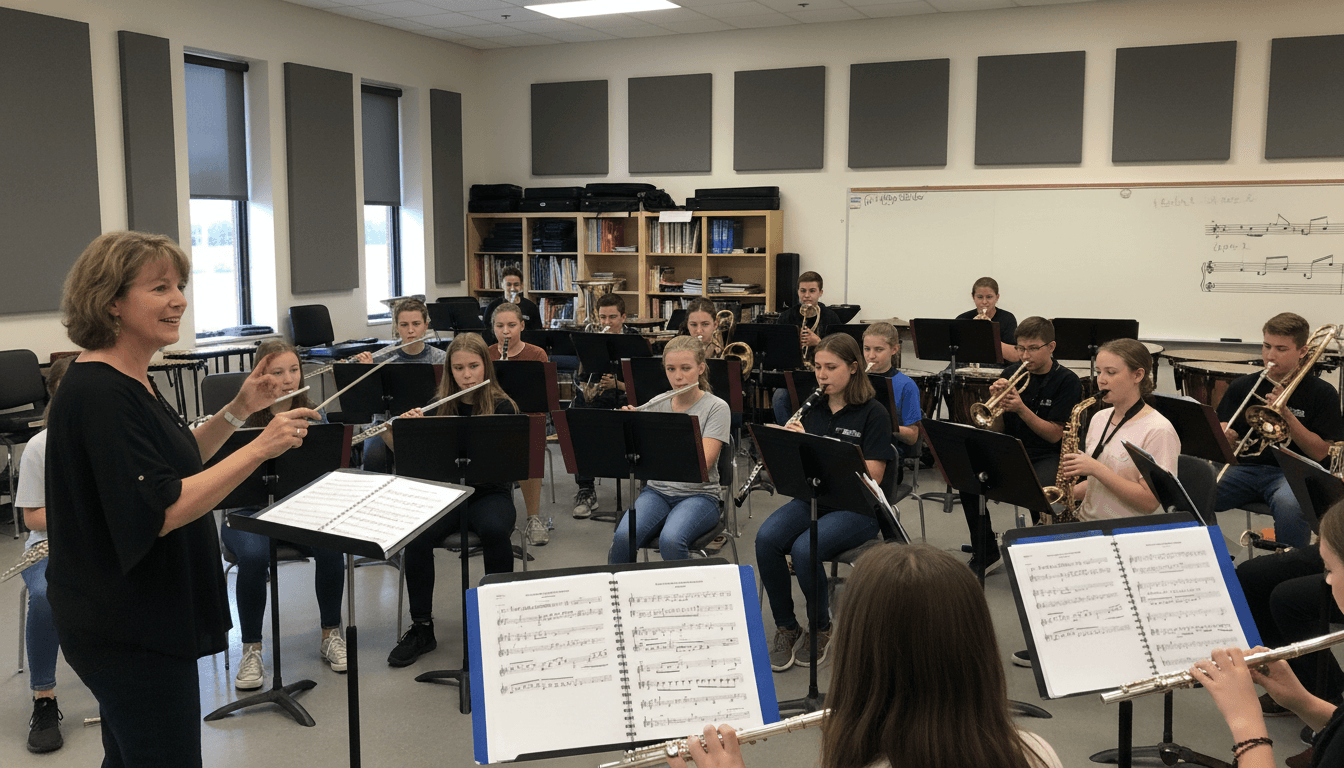
Band Teacher Newsletter: Playing Test Newsletter for Parents

Band playing tests measure a different kind of learning than a written quiz. A student cannot guess on a scale test. The preparation is physical, cumulative, and highly dependent on daily practice outside of class. A band teacher newsletter sent before a playing test gives families the specific information they need to support that practice, even if they have no musical background.
This guide covers what to include in a playing test newsletter, how to explain assessment criteria in plain language, and how to help families build the kind of structured home practice that actually makes a difference before the evaluation.
Name exactly what will be assessed
The most common failure in a playing test newsletter is being too general. "Students should review their scales" tells a family almost nothing. "Students in 7th grade band will perform B-flat, E-flat, and A-flat major scales in sixteenth notes at quarter note equals 88 beats per minute" tells a student and family exactly what to practice and at what standard to aim.
Name the specific scales, key signatures, intervals, or musical excerpt that will be tested. State the required tempo. Note whether the student will perform from memory or whether a fingering chart is permitted. If an excerpt from the ensemble repertoire is part of the test, give the measure numbers and state whether the full excerpt or a specified passage will be played. Specificity is what separates a newsletter from noise.
Explain the rubric in terms families understand
Band playing test rubrics typically include tone quality, intonation, rhythm accuracy, articulation, and technique. These categories are familiar to band directors but may not be clear to a parent trying to evaluate their student's home practice.
Take a sentence for each category and translate it into practical terms. Tone quality refers to how full, steady, and controlled the sound is: does the note ring cleanly or does it have air gaps and instability? Intonation means whether the pitches are in tune with each other. Rhythm accuracy means whether the student is playing the correct note lengths in the correct sequence. Articulation refers to how the student starts and connects notes: short and detached, smooth and connected, or a mix as marked in the music. When families understand the language, they can observe practice with more useful attention.

Give families a daily practice structure
Tell families exactly how much time students should practice each day in the week before the playing test and what that practice should look like. A structured recommendation is more likely to be followed than a general instruction to practice more.
A useful daily structure for scale preparation: start with long tones for two minutes to establish tone and embouchure stability, run each scale three times slowly and three times at the target tempo, then play through any assessed excerpt from beginning to end twice without stopping. For students who struggle with a specific passage, isolate the three or four measures that are causing problems and repeat them until they are clean before running the full excerpt. This targeted repetition is more effective than running the passage from the beginning every time and is something families can encourage without musical training.
Introduce metronome use to families who may not know what it is
Many parents have heard of a metronome but have never used one and do not know why it matters for band practice. A brief explanation in the newsletter makes this recommendation actionable.
Explain that a metronome keeps a steady beat, which is exactly what a playing test requires. When students practice without a metronome, they often unconsciously speed up through easy passages and slow down through difficult ones. The playing test does not allow for this kind of flexibility. Practicing with a metronome trains the student to maintain a steady tempo under the mild pressure of performance. Recommend starting at 10 to 15 beats per minute below the target tempo and only increasing it once the passage is clean and controlled at the lower speed. Name one or two free metronome apps so the recommendation requires no additional purchase.
Address practice log expectations
If your program uses a practice log, the playing test newsletter is the right place to remind families of their role in verifying it. Tell parents that a signed practice log is not just a habit tracker. It is a form of accountability that research consistently shows improves student practice quality and consistency.
Ask families to sign the log after each practice session, not in a batch at the end of the week. A student who fills in the log from memory on Friday night is not getting the same accountability benefit as a student whose parent signs it after watching the practice happen. The signing ritual itself signals to the student that the practice session mattered and that the family is paying attention.
Help families understand the format and timing of the test
Tell families what the playing test actually looks like so students are not surprised by the format on the day. Will the student perform individually for the director while the rest of the class works independently? Will tests be recorded? Is the test timed, and if so, how long does each student typically take? Will students receive scores the same day or later?
The anxiety around playing tests often comes from uncertainty about the process rather than uncertainty about the material. A student who knows exactly what to expect when they walk up to perform is more confident and more likely to demonstrate their actual preparation level. Giving families that format information in advance means they can walk their student through the process before the test day, which is one of the most effective ways to reduce performance anxiety.
Tell families what comes next after the test
Close the newsletter with a note about what follows the playing test. When will scores be shared? What does the ensemble move to after the assessment? If students who need additional work on the tested material have a chance to address it before grades are finalized, explain that process.
Families who understand that the playing test is a checkpoint in the student's musical development rather than a final verdict stay more engaged and more supportive over the full course of the year. Framing the assessment as part of a progression rather than an endpoint reduces the all-or-nothing pressure that makes test weeks harder for students than they need to be.
Get one newsletter idea every week.
Free. For teachers. No spam.
Frequently asked questions
When should a band teacher send a playing test newsletter?
Send it 7 to 10 days before the playing test. For a scale test or technical exercise assessment, one week gives students enough time to add focused daily repetition to their existing practice routine. For a more complex excerpt or etude assessment, send it two weeks out so families have time to structure practice sessions around the specific material being tested. The goal is enough lead time to be useful without so much distance that students lose focus on the criteria.
What should a band playing test newsletter tell parents?
Name the specific material being assessed: the exact scales, key signatures, rhythmic patterns, or musical excerpt. State the tempo. Describe the rubric categories in plain language: tone quality, intonation, rhythm accuracy, articulation, and technique. Tell parents what a strong performance looks like in each category and what common preparation gaps look like. Families who cannot interpret a playing test rubric cannot help their student practice toward the right goals.
How can parents support band playing test prep at home?
Parents do not need musical training to support home practice. The most effective support is consistent time and a practice log. Ask families to sign the practice log each day as a verification of completed practice, to set a timer for the practice session, and to ask their student to play the scale or excerpt from beginning to end without stopping at the end of each session as a run-through simulation. These three actions support the habit of complete, consistent practice without requiring the parent to evaluate the musical content.
Should the band test prep newsletter explain metronome use?
Yes. Many students practice scales and excerpts at a comfortable tempo at home and then struggle to maintain tempo during the playing test. Tell families that using a metronome during home practice is one of the highest-leverage preparation habits a band student can build. Recommend starting at 10 to 15 beats per minute below the target tempo and only increasing the metronome once the passage is clean at the lower speed. Many free metronome apps are available, and naming one or two makes the recommendation actionable.
How does Daystage help band teachers send playing test newsletters efficiently?
Daystage lets band teachers build a reusable playing test newsletter template that can be updated for each new assessment cycle. Swap in the specific scales, the target tempo, the assessment date, and any rubric updates, then send to all band families in under ten minutes. Families receive a consistent newsletter rather than a buried classroom app notification, and you can track open rates to identify which families may need a follow-up reminder before the test date.

Adi Ackerman
Author
Adi Ackerman is a former classroom teacher and curriculum writer with 8 years in K-8 schools. She writes about school communication, parent engagement, and what actually works in real classrooms.
More for Subject Teachers
Ready to send your first newsletter?
3 newsletters free. No credit card. First one ready in under 5 minutes.
Get started free