

Band Teacher Newsletter: Summer Work Newsletter
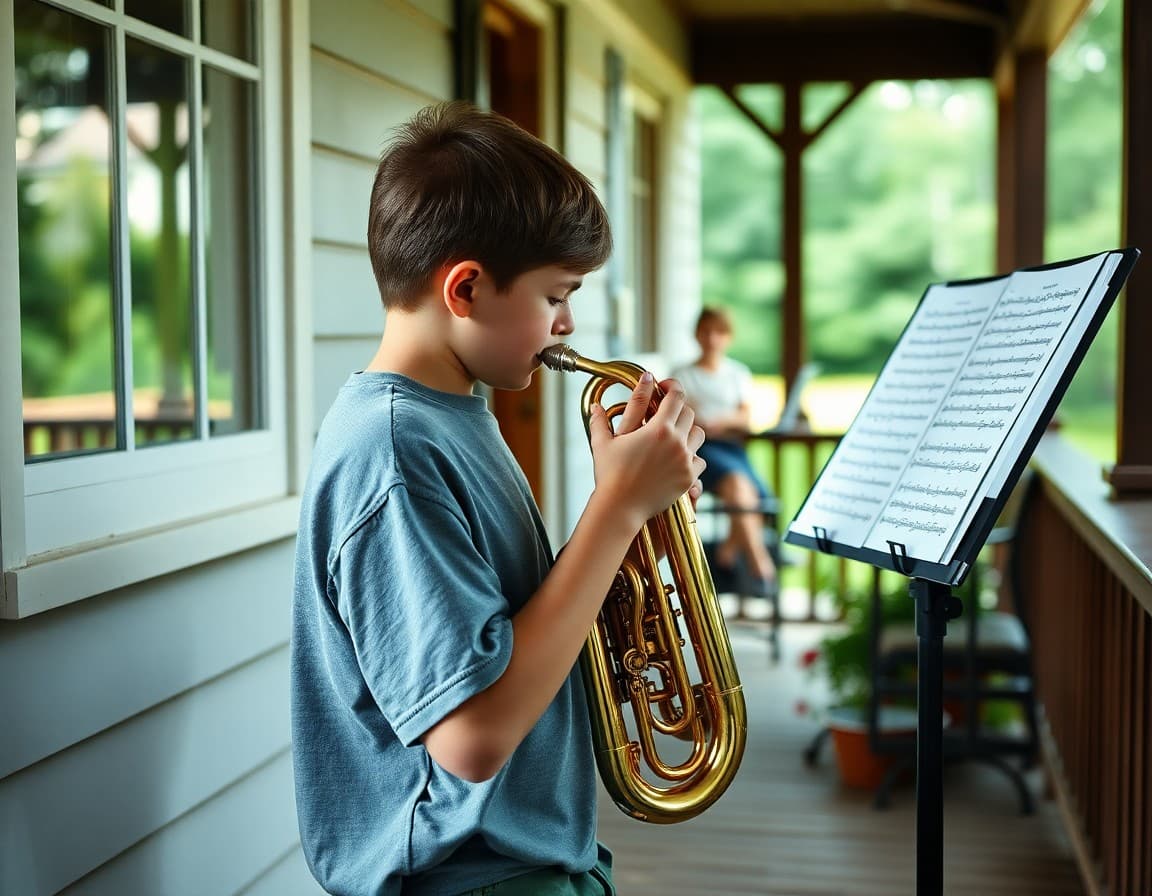
The gap between June and September is long enough to erase most of the physical technique a student developed over the school year if they do not practice at all. A student who enters September with good tone, clean scales, and a piece of music already partially learned starts the fall season from a position of strength. A student who has not touched their instrument since June arrives behind where they left off and often falls further behind in the first months of rehearsal as they rebuild what was lost.
A summer work newsletter that is specific, practical, and motivating gives students and families what they need to keep the instrument active over the summer without it feeling like school never ended. This guide covers what to assign, how to communicate it, and how to make the assignment feel worthwhile.
Frame the assignment as protecting investment, not adding obligation
Open the newsletter by connecting the summer assignment to the year's work. "You spent a full year building technique on your instrument. The summer assignment below is designed to protect that investment. Students who play 15 minutes per day over the summer arrive in September exactly where they left off in June. Students who do not play at all typically spend the first month of the fall semester rebuilding what they lost. The choice is yours, but the difference in fall is significant."
Assign specific scales and exercises with a written practice plan
Give students a specific daily practice routine rather than a vague "practice your instrument." For beginning band students: 5 minutes of long tones on Bb and F, 5 minutes of the Bb major scale at 60 BPM with a metronome, 5 minutes of any piece from the school year you want to maintain. For concert band: 5 minutes of long tones on Bb, Eb, and Ab, 5 minutes of all major scales learned this year, 10 minutes of the summer etude or solo piece assigned below. Specific plans produce consistent practice. Open-ended assignments produce occasional playing when students feel like it.

Assign a specific summer piece or etude
Give students something musical to work toward beyond scales. For beginning band: a simple melody from the method book they have not yet played. For concert band: an etude from the Standard of Excellence book or a simple solo piece by a recognized composer. For advanced students: a more challenging solo or a transcription of a professional recording they have listened to. Include the publisher, title, and where to find it. "The summer etude for Concert Band is Etude No. 3 from 'Technical Studies for the Cornet' by Herbert Clarke. It is available free as a PDF at imslp.org."
Include a listening assignment with specific recommendations
Listening develops musical ear more efficiently than almost any other practice activity. Assign three to five listening experiences with specific recording recommendations. For a concert band program: "Listen to the Tokyo Kosei Wind Orchestra's recording of 'Armenian Dances Part 1' by Alfred Reed (available on YouTube). Notice how the ensemble balances the melody between sections and how the dynamic contrasts between the loud and soft sections are managed. Write two or three sentences on what you noticed." This kind of guided listening builds vocabulary and musical intelligence that transfers directly to rehearsal.
Address students who will be in marching band or jazz band in the fall
If specific students are returning to a fall extracurricular that requires prior preparation, communicate that expectation directly. "Students who are in the Marching Band should learn the fight song from memory before August 4 band camp. The music is available at [link]. Students who arrive at band camp knowing the fight song save significant rehearsal time and start the season ahead." Separate expectations for different groups prevent the confusion of a one-size-fits-all summer newsletter that does not actually fit any group precisely.
Tell families how to support summer practice
Give families two or three specific things they can do to support summer practice without needing any musical knowledge. "Ask your student to play their summer piece for you once a week. You do not need to know whether it is correct; ask whether it sounds better than it did last week, and let your student tell you what they have been working on. Help them build a daily practice time into the summer routine, even if it moves around based on your family's schedule. 15 minutes before or after dinner is a natural fit for many families."
Share a sample summer work newsletter excerpt
Here is a brief example from a Concert Band summer newsletter:
"This summer, I am asking all Concert Band students to practice 15 minutes per day, five days per week. Each session should include: 5 minutes of long tones on Bb, Eb, and Ab; 5 minutes of major scales at a comfortable tempo with a metronome; 5 minutes on the summer etude (Clarke Etude No. 3, available at imslp.org). Additionally, listen to one of the recordings on the listening list below and write two or three sentences about what you notice. Bring your summer practice notes and the listening reflection to the first rehearsal on September 8. The first rehearsal includes a brief individual scale check-in."
Close with the fall start date and your contact information
End with the date and time of the first fall rehearsal, what students should bring, and your email for summer questions. "Questions during the summer? Email me at [email]. I check email weekly. Have a great summer and I will see you September 8."
Get one newsletter idea every week.
Free. For teachers. No spam.
Frequently asked questions
What summer work makes sense for a band program?
Daily scales and long tones are the most valuable summer practice for any instrumentalist because they maintain tone quality, intonation, and technique. A method book etude or solo piece to work on through the summer gives students a musical goal beyond exercises. Listening assignments, where students listen to professional recordings and write a brief observation, develop musical ear and vocabulary. For students entering marching band or jazz band in the fall, learning specific repertoire over the summer is also a reasonable assignment.
How many minutes per day should a band director expect students to practice over the summer?
Fifteen to twenty minutes per day is realistic and achievable for most students and is enough to maintain technique developed over the school year. Asking for more than that tends to result in sporadic long sessions rather than consistent daily practice, which is less effective for maintaining physical technique. State the target clearly: 'I am asking for 15 to 20 minutes of daily practice on at least five days per week.' Families can build that into a summer routine.
Should summer band practice be verified or graded?
A brief first-day assessment in September is the most honest verification method. 'On the first day of fall rehearsal, I will listen to each student play their summer scales and a portion of the summer piece. Students who maintained consistent practice will play with notably better tone and technical control than students who did not. The fall assessment also determines chair placement in some programs.' Framing the first-day assessment as a natural verification is more effective than trying to verify practice logs submitted over the summer.
What listening resources should a band director recommend for summer?
YouTube has recordings of virtually every major concert band, jazz ensemble, and orchestra. Recommending specific ensembles gives students a quality reference. For concert band: the Tokyo Kosei Wind Orchestra, the United States Marine Band, and the Eastman Wind Ensemble all have extensive YouTube catalogs. For jazz: Miles Davis's Kind of Blue, Ella Fitzgerald's Songbook series, and any John Coltrane quartet recording are strong starting points. Matching the listening recommendation to the style of music students will play in the fall makes the assignment directly relevant.
How does Daystage help band directors send summer work newsletters?
Daystage lets you send a formatted summer newsletter with a specific practice schedule, a link to the summer method book pages or a YouTube playlist of recommended listening, and the fall start date and first rehearsal expectations. Scheduling the send for the last week of school means it arrives when families are thinking about summer plans and can build band practice into the routine from the start.

Adi Ackerman
Author
Adi Ackerman is a former classroom teacher and curriculum writer with 8 years in K-8 schools. She writes about school communication, parent engagement, and what actually works in real classrooms.
More for Subject Teachers
Music Teacher Newsletter Guide: Keeping Families Connected to the Music Program
Subject Teachers · 7 min read
After-School Program Newsletter Guide: Keeping Families Engaged Beyond the School Day
Subject Teachers · 6 min read
AP Teacher Newsletter Guide: Communicating Expectations, Exam Prep, and Support to Families
Subject Teachers · 6 min read
Ready to send your first newsletter?
3 newsletters free. No credit card. First one ready in under 5 minutes.
Get started free