

Band Teacher Newsletter: How to Write Your First Unit Newsletter
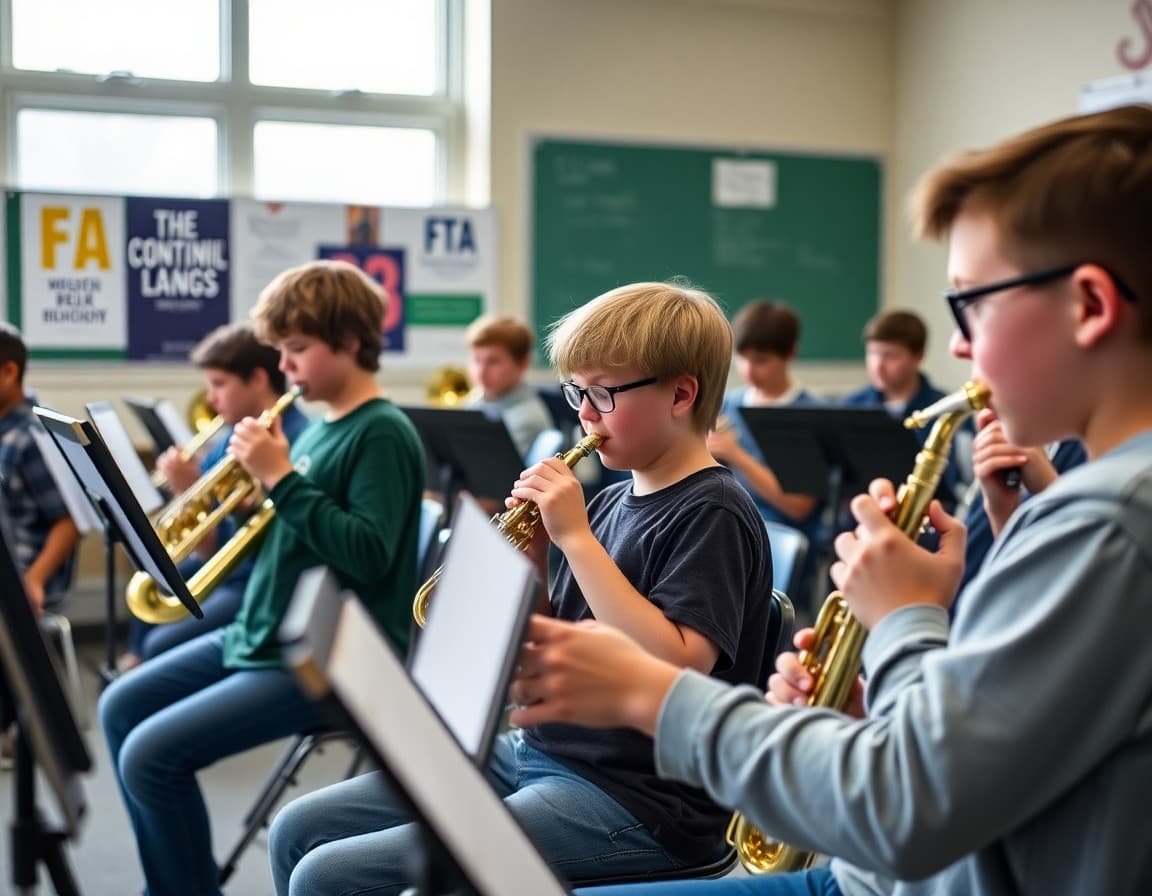
A band unit newsletter has a job that most academic unit newsletters do not: it needs to turn family members who cannot read music into productive supporters of their student's practice at home. Families who understand what their student is working on, what good practice sounds like, and what the goal of this unit is will engage with band in a way that significantly accelerates their student's progress. Families who receive no guidance will support band passively at best.
This guide covers what to put in a band first-unit newsletter, how to describe technical musical content in accessible language, and what a specific practice-guidance section looks like when done well.
Name the unit's focus and what it builds toward
Lead with the unit's central skill and connect it to the upcoming performance. "Unit 1 is focused on tone production and ensemble blend. These two skills are the foundation of everything we will do this year. A student who can produce a clear, steady tone and listen to the people around them is ready to play in an ensemble. A student who has not developed those skills yet will struggle with everything that follows. We are building the foundation now so the concert in November is enjoyable rather than stressful for everyone."
Describe the specific technique being developed in plain language
Name the technique and explain it in terms that do not require musical knowledge. "This week, students are working on long tones. A long tone is simply holding one note for four to eight counts with a steady, even sound from start to finish. No wobbling, no fading at the end, no squeaking in the middle. Long tones feel boring to practice but they are the most efficient way to develop the physical control and breath support that makes everything else in band work. Students who skip long tone practice almost always develop bad habits that take twice as long to fix later."
Introduce the concert repertoire students are learning
Name the pieces students are learning and give families a way to hear them. "We are working on two pieces for the fall concert: 'Imperium' by Michael Sweeney and 'Dorian Overture' by Larry Daehn. Both are available on YouTube. Search 'Imperium Michael Sweeney concert band' and you will find several performances. Listening to the piece before your student plays it gives them a reference for what they are working toward and is one of the most effective things a family can do to support band practice at home."

Give families a specific weekly practice plan
The most useful section of a band unit newsletter is the specific practice guidance. Instead of "practice your music," give families a structured plan. "This week's practice should cover: five minutes of long tones (Bb, Eb, F, concert pitch); five minutes of the Bb major scale, slowly, at 60 BPM with a metronome; ten minutes on measures 1 through 24 of 'Imperium,' going back to slower tempo when accuracy breaks down. Total time: 20 minutes. Practicing with a metronome is essential this week. A free metronome app works fine." Families who see this kind of plan understand what their student should be doing and can verify they are doing it.
Explain what the first playing assessment involves
Tell families when the first formal playing assessment happens, what it covers, and how students are evaluated. "The first individual playing assessment is the week of October 6. Students will play their long tones on Bb, Eb, and F, and the first 16 measures of 'Imperium' from memory. Assessment criteria: tone quality (clear and steady), accuracy (correct notes and rhythms), and tempo (consistent pace). Students who have completed home practice consistently will be well-prepared. Students who have not practiced at home often struggle with the tempo and accuracy sections even if they know the notes."
Help families understand what good practice sounds like
Give families specific things to listen for. "When your student practices long tones, the sound should be steady from the first beat to the last, not louder at the start and fading at the end. When they practice the scale, the notes should all be roughly the same volume with no squeaky or cracked notes. When they practice the concert piece, they should play at a slower tempo that allows them to get every note right before speeding up. If they are flying through the piece and missing half the notes, the tempo is too fast for productive practice."
Include a brief template excerpt from a band unit newsletter
Here is a short example from a beginning band unit newsletter:
"We are in Week 3 of Unit 1. This week, students are adding a second concert piece, 'Rolling Thunder' by Gordon, to their practice time. Practice schedule for the week: five minutes of long tones on Bb and F; five minutes of the Bb major scale; five minutes on measures 1 through 8 of 'Rolling Thunder,' slowly; five minutes of reviewing 'Imperium' measures 1 through 24. First playing assessments are the week of October 6. Students who practice the specific items listed here each day this week will be well-prepared."
Close with the first concert date and your contact information
End with the fall concert date, arrival time, and concert attire requirement, and your email. Families who can see how the unit's practice connects to the concert date are more motivated to support daily practice than families who see the two as unrelated obligations.
Get one newsletter idea every week.
Free. For teachers. No spam.
Frequently asked questions
What should a band first-unit newsletter cover?
Cover the skills being developed in rehearsal this unit, the specific concert pieces students are learning, what home practice should focus on, the format of the first playing assessment, and the timeline from now to the first performance. For a beginning band unit on tone production and long tones, explain what a long tone is and why it matters before the student tries to play any song.
How do you explain what students are working on in rehearsal to families who do not read music?
Describe the skill in functional terms. 'This week, students are working on producing a steady, clear tone on their instrument rather than a breathy or squeaky sound. This is called tone production, and it is the foundation of everything else in band. A student who masters tone production early will learn music faster than one who skips this step.' Non-musicians understand 'steady and clear' even if they do not understand what embouchure or air support means.
How do you describe the first concert piece to families?
Name the piece, describe the character or mood it creates, and explain what skills it requires students to develop. 'We are learning 'African Symphony' by Van McCoy this fall. The piece is energetic and rhythmically driven, and students need to develop a steady internal pulse to play it together. We will use a metronome at home practice to develop that pulse before we can lock it in as an ensemble.'
Should a band unit newsletter include specific practice instructions for home?
Yes, and be very specific. 'This week's home practice should focus on: (1) long tones on your concert Bb, F, and Eb for four counts each at 60 BPM; (2) the chromatic scale from low Bb to high F and back, slowly; (3) measures 1 through 16 of 'African Symphony' at half tempo.' Families who see a specific practice plan are far more likely to help their student follow through than families who receive a vague 'practice your music' instruction.
How does Daystage help band directors write unit newsletters?
Daystage lets you include practice instructions, a recording or video link for families to hear what the concert piece should sound like, and the upcoming performance calendar all in one organized newsletter. Band families who receive a Daystage newsletter with a link to a professional recording of the piece their student is learning often listen to it with their student, which improves the student's musical understanding significantly.

Adi Ackerman
Author
Adi Ackerman is a former classroom teacher and curriculum writer with 8 years in K-8 schools. She writes about school communication, parent engagement, and what actually works in real classrooms.
More for Subject Teachers
Music Teacher Newsletter Guide: Keeping Families Connected to the Music Program
Subject Teachers · 7 min read
After-School Program Newsletter Guide: Keeping Families Engaged Beyond the School Day
Subject Teachers · 6 min read
Academic Support Teacher Newsletter: Communicating Intervention Services and Progress to Families
Subject Teachers · 6 min read
Ready to send your first newsletter?
3 newsletters free. No credit card. First one ready in under 5 minutes.
Get started free