
Band Teacher Newsletter: Field Trip Newsletter to Parents

A music festival or competition field trip involves more logistical complexity than almost any other school trip. Instruments, uniforms, warm-up schedules, adjudicator expectations, chaperone assignments, and transit timing all require clear communication with families well before the departure date. A band field trip newsletter that handles all of these elements in one place prevents the most common crises and lets students focus on the performance.
This guide covers what to include in a band festival field trip newsletter, how to explain the educational purpose of the festival to families, and how to prepare students and chaperones for the professional expectations of a competitive music event.
Lead with the event and its educational significance
Before covering logistics, tell families what festival or competition the ensemble is attending and why it matters for the students' development as musicians. A regional band festival with adjudicated feedback is a different educational experience than a holiday concert tour or a community performance. Tell families what that difference is.
Explain that adjudicators are professional musicians and educators who will listen to the ensemble's performance and provide written or recorded feedback on specific musical criteria. This feedback is not available in a typical school concert setting. Students who understand before the trip that the adjudicator comments will be used in class practice sessions after the festival approach the performance with more focus and take the feedback more seriously when it arrives.
Cover instrument transport with full specificity
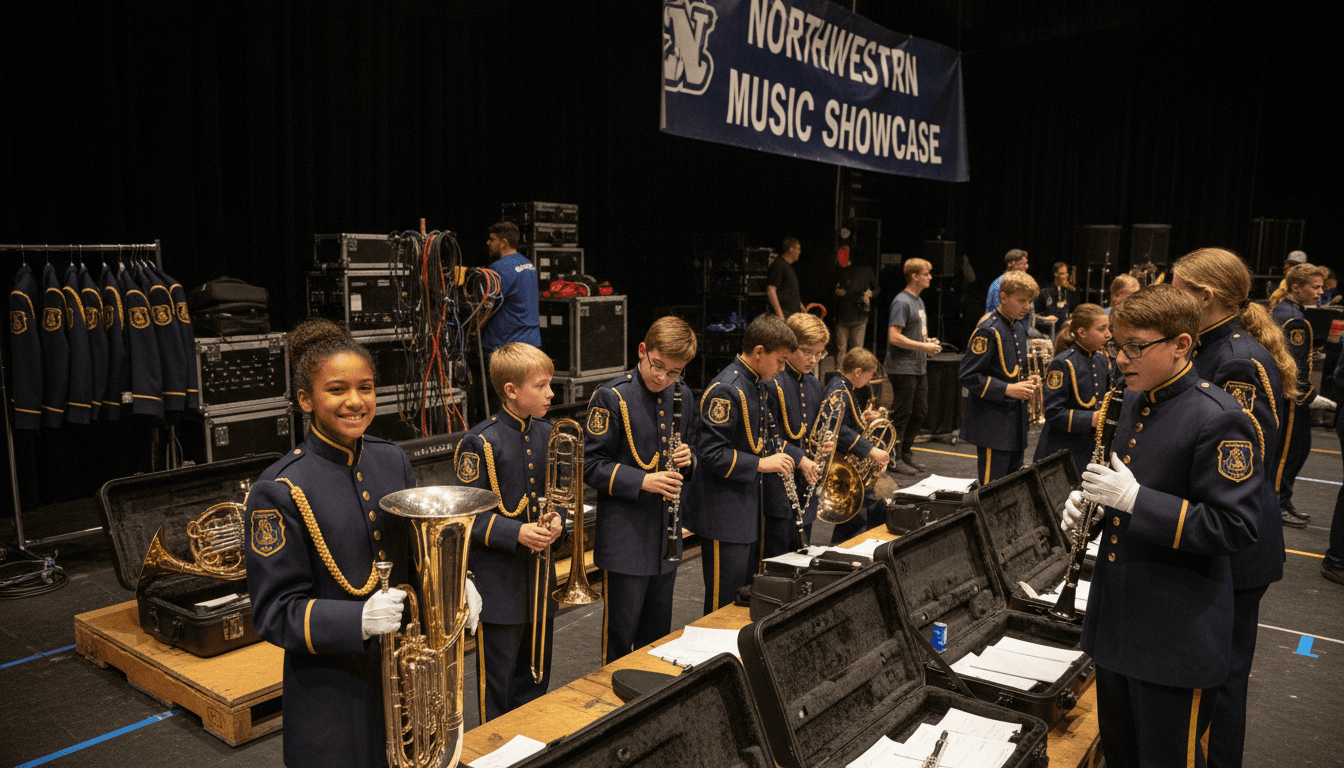
Instrument transport is the highest-stakes logistical element of a band field trip. Give families a complete plan. Name which instruments will travel in the school vehicle, which will travel with a cargo transport, and which students are responsible for carrying their own cases on the bus.
For large instruments, name the loading time and explain whether students who have percussion, tubas, or other equipment that requires special handling need to arrive at a different time than the general student call. Tell families who is responsible for securing the instrument cargo during transit and what the plan is at the venue: where cases are stored during the performance and how students access their instruments for warm-up. A transport plan with no gaps leaves students free to focus on preparation rather than logistics.

State uniform requirements completely
Uniform compliance at a festival reflects on the program and affects the ensemble's overall presentation. Name every element of the required uniform in the newsletter: formal jacket or blazer, dress shirt or blouse, formal trousers or skirt, dress shoes, tie or cravat, and any accessories that are part of the school's band uniform standard.
State clearly what is provided by the school and what must be supplied by the student. Tell families whether jewelry, visible nail polish, or non-standard hair arrangements are permitted with the uniform. Name the inspection point: when the uniform check will happen before departure or at the venue. If a student arrives without a complete uniform, what is the protocol? Families need this information in advance, not on the morning of the trip.
Walk through the warm-up schedule
A band festival warm-up is not optional and is not the same as a casual pre-rehearsal tune-up. Most festivals assign specific warm-up rooms and time slots, and ensemble preparation in those 20 to 30 minutes directly affects performance quality. Tell families what the warm-up schedule looks like so they understand why the call time is what it is.
Explain what a structured festival warm-up involves: long tones for tone and blend, scale and technical exercises at performance tempo, targeted run-throughs of the most challenging passages in the program, and a full performance run of the set in order. Students who understand why the warm-up is structured this way arrive more focused. Families who understand it are less likely to request schedule accommodations that would compromise the warm-up time.
Explain competition etiquette and audience expectations
Band festival etiquette is specific and differs from a school concert. Tell families and students what is expected. When another ensemble is performing, the audience is expected to be completely silent: no talking, no phone use, no movement between rows. Entering or exiting the performance hall during another ensemble's set is typically not permitted except between performances. Applause happens after each complete performance, not between movements.
For students performing in a competitive festival, entering the performance stage with the ensemble means they are in professional-level presentation mode from the moment they walk on. Stage deportment, posture, and attention to the director during the performance are all visible to adjudicators. Name these expectations in the newsletter so they are not new information on the day of the festival.
Define chaperone roles clearly
Parent chaperones at a music festival have different responsibilities than chaperones on a typical field trip. They are responsible for group supervision during transit, at the venue, and during meals or any downtime between warm-up and performance. They are not there to watch the performance from the audience during warm-up or to socialize in the lobby while students are unsupervised.
Name the specific tasks chaperones are responsible for: taking roll before departure and after each venue transition, keeping students together during unstructured time, and helping manage instrument loading and unloading. Give chaperones a direct line to the band director for day-of communication. Chaperones who know exactly what they are responsible for are more confident and more effective, and the festival day runs significantly more smoothly as a result.
Tell families how adjudicator feedback will be used afterward
One of the most valuable things a music festival produces is written or recorded adjudicator feedback. Tell families in the newsletter that this feedback will be reviewed in class after the festival and will inform rehearsal priorities for the rest of the semester.
Ask students and families to approach the results as professional feedback rather than a final verdict on the ensemble's quality. A score at a regional festival reflects how the ensemble performed on that specific day against specific adjudication criteria. Strong adjudicator feedback, whether the scores are high or lower than expected, is a gift: it gives the ensemble specific, expert-level guidance on what to work on next. Families who understand this before the festival are far better prepared to help their student process the results with a growth mindset rather than a competitive one.
Get one newsletter idea every week.
Free. For teachers. No spam.
Frequently asked questions
What should a band director include in a music festival field trip newsletter?
Cover logistics first: departure and return times, transportation method, instrument transport plan, and permission form deadline. Then explain the educational purpose of the festival: what adjudicators listen for, how written feedback will be used in class, and what students should focus on during their performance that is different from a school concert setting. A newsletter that explains why the festival matters produces better student preparation and stronger family investment in the logistics.
How should a band director explain instrument transport in the newsletter?
Be specific about which instruments ride in which vehicles, whether students carry their own cases or load them into a cargo vehicle, and who is responsible for instrument security during transit and at the venue. For large instruments such as tubas, percussion, or string basses, explain any special loading requirements and whether students need to arrive earlier than the general call time to assist with loading. A clear instrument transport plan prevents the most common day-of logistical crises at music festivals.
What uniform requirements should a band festival newsletter cover?
Name every component of the uniform and state whether it is provided by the school or purchased by the student. List what students should wear under the uniform if it is warm weather and the performance space is not air-conditioned. Tell students whether jewelry, nail polish, visible piercings, or non-standard hair arrangements are permitted with the uniform. State the inspection point: when and where uniform checks will happen. Uniform compliance at a festival is a logistical issue that reflects on the program, and families need complete information well before the trip.
How should a band director explain adjudicator feedback to families?
Tell families that adjudicators at regional and state band festivals are professional musicians and educators who provide written and sometimes recorded feedback on each ensemble's performance. Explain that this feedback is one of the most valuable learning tools the ensemble will receive all year. Note that scores at festivals reflect how the ensemble performed on that day against specific adjudication criteria, not a definitive ranking of the program's quality. Families who understand the feedback process before the festival are better prepared to engage productively with the results afterward.
How does Daystage help band directors send festival field trip newsletters?
Daystage gives band directors a reusable field trip newsletter template that can be updated for each festival or competition visit. Add the venue, the performance time, the instrument transport plan, the uniform requirements, and the warm-up schedule, then send to all band families in one send. Track open rates to see which families have not read the logistics, so you can follow up before the trip rather than handling surprises on the morning of departure.

Adi Ackerman
Author
Adi Ackerman is a former classroom teacher and curriculum writer with 8 years in K-8 schools. She writes about school communication, parent engagement, and what actually works in real classrooms.
More for Subject Teachers
Ready to send your first newsletter?
3 newsletters free. No credit card. First one ready in under 5 minutes.
Get started free