
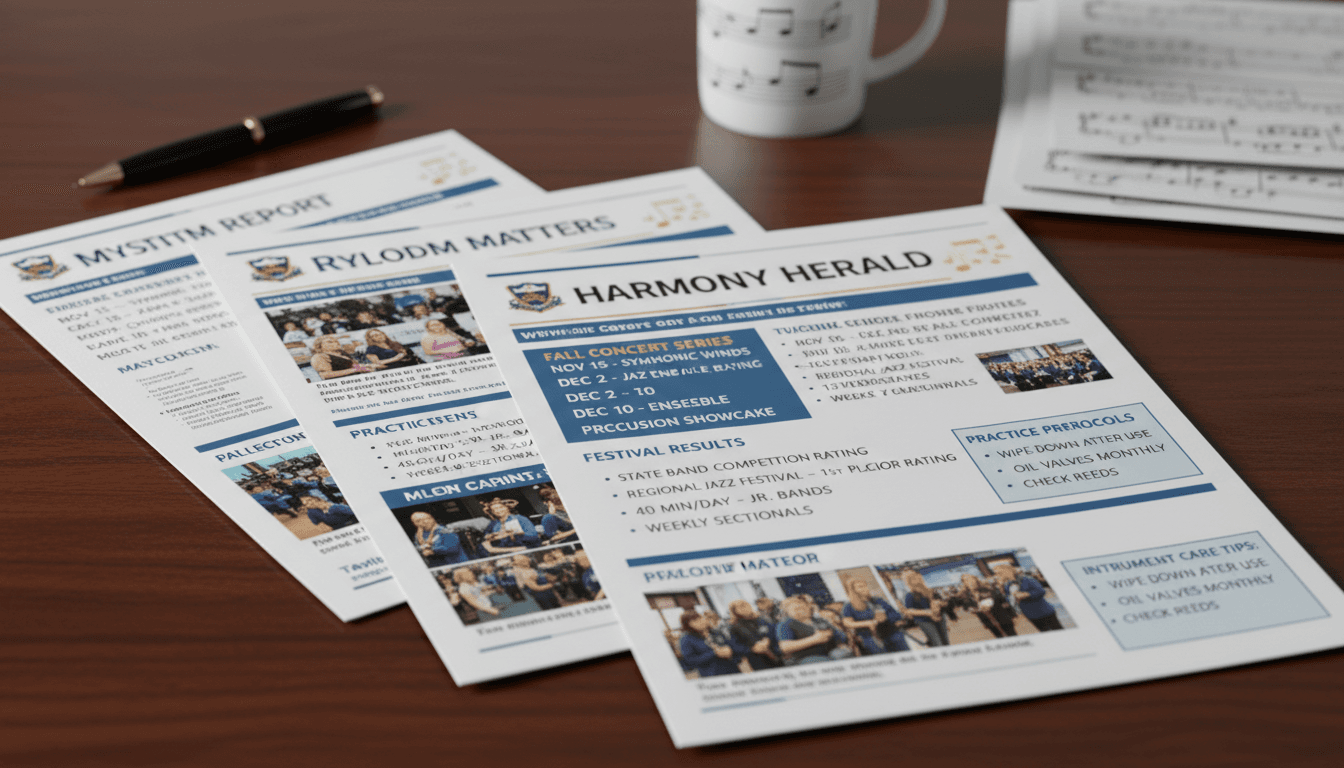
Band Teacher Newsletter: Teacher Newsletter Examples That Actually Work

The best band teacher newsletters do not just announce events. They build program culture, set expectations for home practice, and give families the specific information they need to support their student between rehearsals. Whether you are writing your first newsletter or trying to improve a template you have been using for years, looking at real examples helps you see what strong communication actually looks like.
This guide breaks down what effective band newsletters include, walks through examples for the most common send occasions, and explains how to adapt each format to your program.
The concert announcement newsletter
Concert newsletters work when they give families everything they need to show up prepared. That means the date, time, and location with full address. It means call time for students, which is always earlier than doors open for the audience. It means dress code information with enough detail that families do not have to guess: "Black dress pants, white button-down shirt, black dress shoes, and black socks" is more useful than "concert black."
A strong concert newsletter also explains what students will perform. Name the pieces and give a one-sentence description of each. Families who know what to expect arrive as an engaged audience, not passive attendees. Close with a note about the weeks of preparation that went into the performance so families understand the work behind the event.
The audition season newsletter
Audition newsletters require more precision than most. Families need to know what the audition is for, whether it is All-State, district honor band, or a chair placement within the ensemble, and what the stakes are. Explain the audition format: is it live or recorded? Blind or identified? How many judges? What material is required?
Include a timeline with key dates: when students should have the required scales and etudes memorized, when practice recordings are due if you are collecting them, and when official auditions take place. Give families a practice structure for the four to six weeks leading up to the audition, broken into phases. Families who understand the audition process are more likely to protect practice time at home.

The festival recap newsletter
Post-festival newsletters give the program a moment to celebrate and document what the ensemble accomplished. Start with the result: the rating received, any special awards, or standout individual performances. Then explain what the rating means to families who may not be familiar with the adjudication system.
Include a note about what the adjudicators praised and what the ensemble will focus on next. This shows families that performance is a continuous process and that feedback from festivals shapes the direction of future rehearsals. A festival recap newsletter that only reports the rating misses the chance to deepen family investment in the program's growth.
The practice tips newsletter
Practice newsletters are not about the schedule. They are about helping families understand what productive home practice looks like and how to support it without needing musical expertise themselves.
Explain the current focus of rehearsals: scales, a specific concert excerpt, or a technical skill like tone production or articulation. Give families a recommended daily practice time based on grade level. For middle school students, 20 to 30 minutes of focused practice is more effective than an hour of unfocused noodling. Suggest specific things parents can do: set a timer, sit in the room while their student practices, ask their student to play the hardest measure three times before moving on. These small suggestions have a measurable impact on student preparation.
The beginning-of-year newsletter
The first newsletter of the year sets the tone for family communication throughout the season. Use it to introduce yourself and your teaching philosophy in a few sentences. Share the year's performance calendar so families can plan ahead. Explain what students need to have ready for the first week of rehearsals: instrument in working condition, method book, pencil, practice log.
Include your preferred communication method and response time so families know what to expect when they reach out. A newsletter that tells families how you operate builds trust before any problem arises.
The instrument care and logistics newsletter
At least once per semester, send a newsletter focused on instrument maintenance. Remind families that valve oil, slide grease, rosin, and reeds are consumables that need to be replenished. Explain what happens when instruments are not maintained: stuck valves affect tone, dry rosin affects bow grip, a worn reed affects intonation. These are not abstract warnings. They directly affect how students perform in rehearsal and assessment.
Include information about local music stores, school repair services, and any loaner instrument policies your program has. Families who understand the practical logistics of instrumental music are better equipped to handle problems before they affect their student's participation.
What all effective band newsletters have in common
Across every type of newsletter, the strongest examples share a few characteristics. They are specific rather than general. They give families a clear action if one is needed. They connect the current moment in the program's calendar to what comes next. And they are short enough to read completely without setting the email aside for later.
The band teacher newsletters that families actually read are the ones that respect their time, give them useful information, and make them feel like part of the program rather than recipients of a logistics memo. Use these examples as a starting point and build your own template library over time.
Get one newsletter idea every week.
Free. For teachers. No spam.
Frequently asked questions
What should a band teacher newsletter include?
A strong band newsletter covers four areas: what students are working on in rehearsal, upcoming performance dates and logistics, any action items families need to complete, and a short practice tip for home. When you include all four, families have a complete picture of where the program is and what their student needs to do. Newsletters that only share event dates miss the opportunity to build investment in the program.
How often should band teachers send newsletters?
Most band directors find a monthly newsletter sufficient for routine communication, with additional targeted sends before major events like concerts, auditions, or festivals. If you wait until the end of the semester to communicate, families feel disconnected from the program. Monthly newsletters keep them informed without overwhelming inboxes. Add a pre-concert send two weeks before any performance so families have enough time to plan transportation and attire.
How do you write a newsletter that gets parents to actually read it?
Keep the newsletter short enough to read in two minutes. Use clear headers so families can scan to the section most relevant to them. Lead with the most time-sensitive information, not with a general update about how rehearsals are going. If there is an audition sign-up deadline or a permission slip due date, put it in the first paragraph, not buried at the bottom. Families are more likely to act when the call to action is obvious.
How can band newsletter examples help me improve my own communication?
Looking at examples helps you identify patterns that work: how effective directors structure their intros, how they explain complex logistics like festival transportation without writing an essay, and how they phrase practice expectations without sounding demanding. Use examples as a starting framework rather than copying them directly. The most effective newsletters feel personal to the director's voice and specific to the program's current season.
How does Daystage help band teachers send better newsletters?
Daystage gives band teachers a dedicated newsletter builder with reusable templates for recurring sends like concert prep, audition season, and post-festival recaps. You can build a template once, update the details each time, and send in under ten minutes. Unlike a classroom app or email thread, Daystage keeps all your band newsletters in one place so families can reference past sends, and you can see open rates to know whether your communication is landing before the day of the event.

Adi Ackerman
Author
Adi Ackerman is a former classroom teacher and curriculum writer with 8 years in K-8 schools. She writes about school communication, parent engagement, and what actually works in real classrooms.
More for Subject Teachers
Ready to send your first newsletter?
3 newsletters free. No credit card. First one ready in under 5 minutes.
Get started free