
Band Teacher Newsletter: Communicating Differentiation to Parents
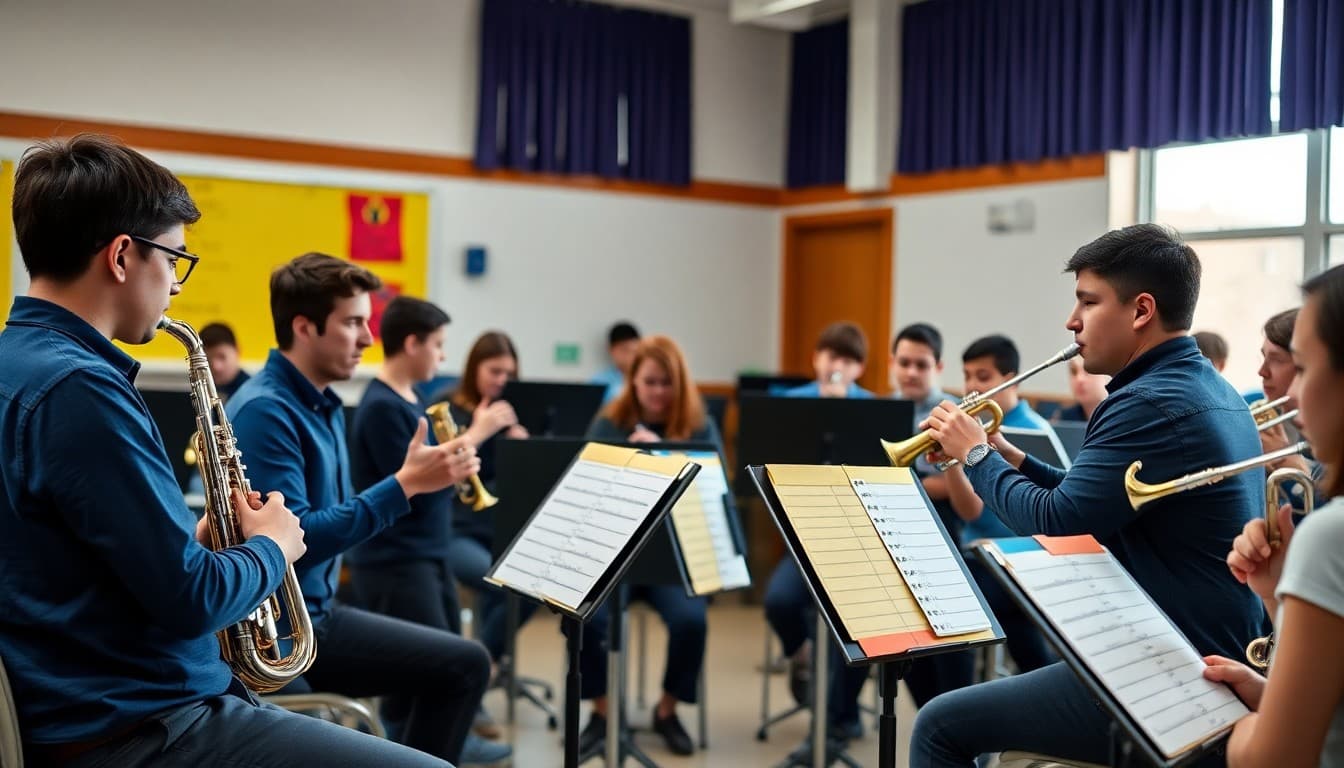
Differentiation in a band class is built into the structure of ensemble music. Every section has first, second, and third chairs. Every concert piece has parts of varying technical difficulty. Students who have played for five years and students who started eight months ago sit in the same ensemble and play the same concert. A newsletter that explains how you manage that range builds family understanding of a system that can otherwise feel opaque or unfair.
This guide covers how to write a band differentiation newsletter that explains chair placement, individual skill targets, and home practice guidance in ways that make sense to non-musicians.
Start by explaining how an ensemble manages different skill levels
Families who do not have a musical background may not know that concert band parts are intentionally written at different difficulty levels. "Concert band music is arranged so that the first chair parts carry the primary melodic and technical demands while the second and third chair parts provide harmonic support and are scored at a somewhat lower technical level. This means a beginning player and an advanced player can rehearse and perform the same concert piece together because the music is designed to accommodate that range. The ensemble needs all three chairs to sound complete."
Explain how chair placement decisions are made
Describe your process for placing students in chairs. "Chair placement in Concert Band is determined by playing assessments held at the beginning of each semester, the results of which I pair with my observations from rehearsal about who is ready for the technical demands of each part. Placements change when a student's playing assessment results show they are ready for a different level of challenge. Students who want to move up a chair are encouraged to come to office hours and work with me on the specific skills that would make them ready for that part."

Describe individualized practice targets
Tell families that home practice targets vary by student level. "While all Concert Band students should practice the concert repertoire and their major scales each session, individual students have personalized practice targets based on the areas where they are currently developing. Some students have specific technical exercises for intonation, others are working on reading rhythmic patterns more accurately, and others are focusing on dynamic range. I communicate these individual targets through practice logs, office hours, and sectional rehearsals. If your student is unsure what their specific focus area is this week, ask them to show you their most recent practice feedback from me."
Tell families how differentiation shows up in sectional rehearsals
If you run sectional rehearsals (one instrument group at a time), explain what they accomplish. "Sectional rehearsals allow me to work with each instrument group at the level appropriate for that section. In a sectional, I address the technical issues specific to that instrument rather than sacrificing full-rehearsal time for one section's needs. Advanced players in a sectional work on phrasing and interpretation while developing players work on intonation and accuracy for the same passage." Families who understand what a sectional is and why it exists appreciate the directorial attention it represents.
Give families instrument-specific practice guidance by level
Provide a brief practice framework for students at different development stages. For students who are building foundational technique: "Focus on long tones and scales before touching concert music each session. The first five minutes of practice should always be technical fundamentals." For students who are ready for interpretive work: "Once your scales and long tones are done, work on the concert piece at tempo with attention to dynamics, articulation, and style, not just notes and rhythms." These distinctions help families support appropriate practice even without musical training.
Include a brief template excerpt from a band differentiation newsletter
Here is a short example:
"In Concert Band, students are working on the same concert repertoire but with different roles and individual practice targets based on their current development. Chair assignments reflect the technical demands of each part in the music and are reviewed each semester through playing assessments. Students who want to work toward a more advanced chair assignment should come to Tuesday or Thursday office hours from 3:15 to 4:15 PM and I will give them specific targets to work toward. If you would like to know your student's individual practice focus for this month, please email me and I will send a brief summary."
Invite individual conversations about specific students
The general newsletter explains your approach. Individual conversations address each student specifically. Close by explicitly inviting families to reach out. "If you would like to discuss your student's current placement and what I am working toward with them specifically, please email me and I will set up a brief call or email summary. I find these conversations helpful for keeping families informed about their student's progress in a way a newsletter cannot always capture."
Close with your contact information and the next assessment date
End with the date of the next playing assessment, your email, and your preferred response time. Families who know when the next formal progress check happens are more likely to support consistent daily practice between now and then.
Get one newsletter idea every week.
Free. For teachers. No spam.
Frequently asked questions
How does differentiation work in a band setting?
In a band class, all students rehearse the same concert repertoire together, but differentiation happens through individual practice assignments, personalized feedback during sectional rehearsals, tiered scale and technical requirements by level, and varied roles within the ensemble such as section leader, first chair, or supportive secondary part. A first-chair clarinetist and a third-chair clarinetist are both playing the same concert piece but with different levels of technical demand, different responsibilities within the section, and different individual practice targets.
How do you explain chair placement to families without making lower chairs feel like lesser musicians?
Frame chair placement as a functional assignment, not a ranking of worth. 'Chair assignments in Concert Band reflect the current technical demands of each part in the concert repertoire, not a permanent ranking of musician quality. The first chair part carries the primary melody and the highest technical demands for that section. The third chair part is equally important to the ensemble's balance and is the appropriate challenge for where that student is developing right now. Both chairs are necessary and both are recognized in the same concert.' Frame it as a functional team role rather than a competition result.
How do you tell a family their student needs more support without labeling them as struggling?
Lead with what the student does well before naming the area that needs attention. 'Your student shows excellent musicianship and musical instincts in ensemble playing. Right now, I am focusing their individual practice on scale accuracy and long-tone quality, which are technical fundamentals that will unlock more of their musical potential. Students who build a strong technical foundation early develop faster over the long term than students who skip that step.' End with a specific action plan rather than just a diagnosis.
Should a band newsletter tell families which chair their student holds?
You can communicate chair placement in an individual note or phone call, but a class-wide newsletter is not the place to list each student's chair. The general differentiation newsletter explains your approach to varied assignments and expectations. Individual conversations address a specific student's placement and what it means for their practice targets this semester.
How does Daystage help band directors communicate differentiation to families?
Daystage lets you send a general differentiation newsletter to the full class explaining your approach to chair placement and individual skill targets, and then follow up with individual targeted messages to families whose students have specific support needs or advanced development opportunities. Managing both communications from the same platform keeps your outreach organized across a class that may have 40 or more students.

Adi Ackerman
Author
Adi Ackerman is a former classroom teacher and curriculum writer with 8 years in K-8 schools. She writes about school communication, parent engagement, and what actually works in real classrooms.
More for Subject Teachers
Music Teacher Newsletter Guide: Keeping Families Connected to the Music Program
Subject Teachers · 7 min read
Academic Support Teacher Newsletter: Communicating Intervention Services and Progress to Families
Subject Teachers · 6 min read
After-School Program Newsletter Guide: Keeping Families Engaged Beyond the School Day
Subject Teachers · 6 min read
Ready to send your first newsletter?
3 newsletters free. No credit card. First one ready in under 5 minutes.
Get started free