
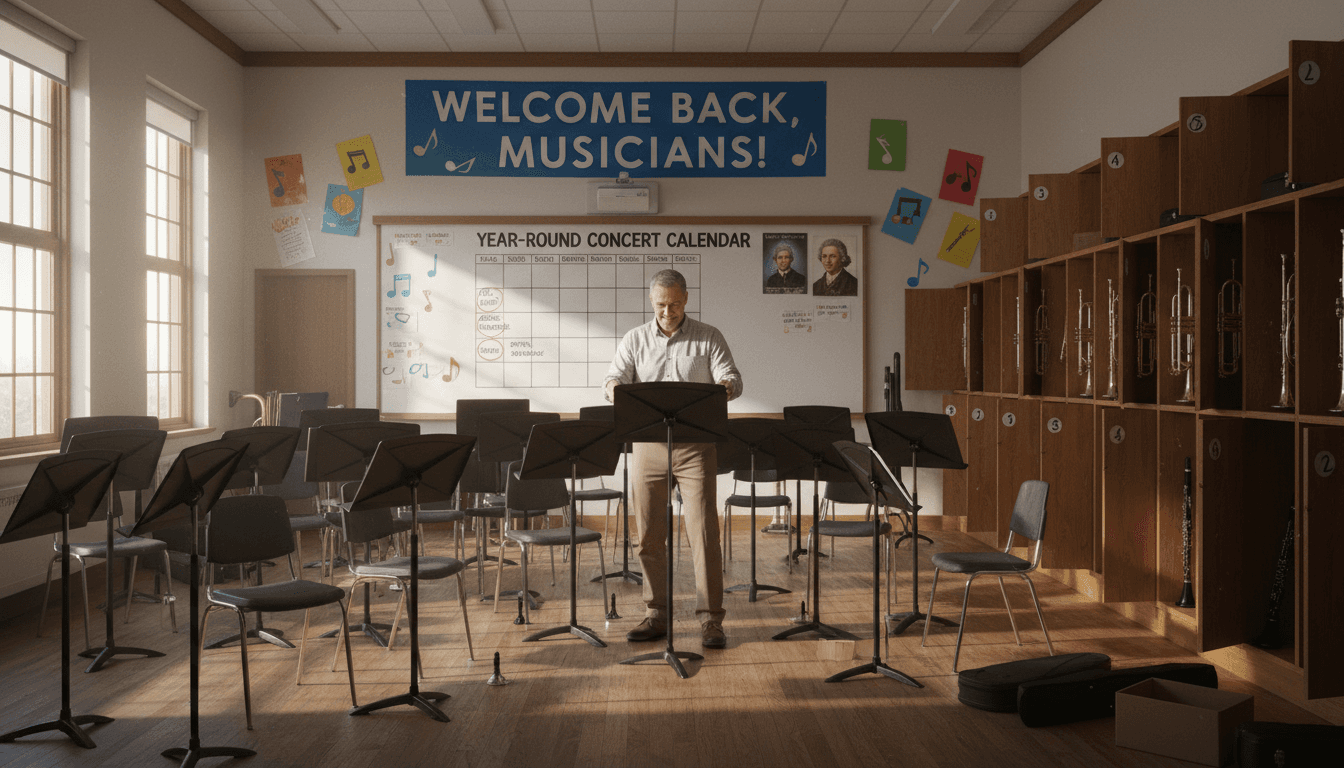
Band Teacher Newsletter: Back to School Newsletter for New Students and Parents

The first newsletter a band director sends sets the standard for family communication for the rest of the year. New families especially are forming their impression of the program in the first week. A clear, welcoming, information-dense back to school newsletter tells families that the band program is organized, that you value their involvement, and that their student is in a program that takes its work seriously.
This guide walks through what to include in a back to school band newsletter, how to communicate practice expectations to families who are new to instrumental music, and how to structure the newsletter so it is useful rather than overwhelming.
Open with a direct introduction and program philosophy
Families who are new to the band program do not know you yet. A brief, confident introduction establishes trust before any logistics are shared. State your name, your role, and how long you have been directing the program. Then share one or two sentences about what you believe makes a strong band program: the value of daily practice, the importance of listening to each other in ensemble, or the discipline that instrumental music builds over time.
This is not the place for a lengthy biography. Families read introductions to answer one question: is this someone I can trust with my student? A clear, grounded introduction answers that question quickly and lets you move into the practical information families actually need.
List what students need for the first rehearsal
First-week logistics are the area where most back to school newsletters fall short. Do not assume families know what a beginning band student needs. List every item: the instrument in working condition, all required accessories such as valve oil, rosin, or reeds, the method book or beginning lesson book, a pencil, and a practice log if your program uses one.
If students are renting instruments from a school or local music store, include the name of the rental provider, the cost range, and any paperwork that needs to be returned before the first lesson. If instrument rental assistance is available for families who need it, mention it explicitly. Families who are struggling financially will not ask unless the option is named.

Share the full year performance calendar
Give families the complete performance schedule on the first newsletter. Working parents need weeks, sometimes months, to arrange coverage for evening concerts. If a family misses a concert because they had no notice and could not rearrange a prior commitment, both the student and the family are frustrated with a program that could have prevented the conflict with earlier communication.
List every concert, festival, and community performance with date, time, and location. Note which events are required and which are optional. If there are marching band performances or parades in the fall season, include those as well. A comprehensive calendar in the first newsletter is one of the highest-value actions a band director can take for family communication.
Explain your practice expectations clearly
Beginning band families often do not know what effective home practice looks like or how much time is reasonable to expect. State the daily practice expectation in minutes and break it down by grade level if your program spans multiple grades. For beginning students, 15 to 20 minutes per day is appropriate. For middle school students, 20 to 30 minutes. For advanced ensembles, 30 to 45 minutes.
If you use SmartMusic, a practice log sheet, or another tracking tool, explain what it is and why you use it. Families are more willing to sign off on a practice log every night when they understand that it is not busywork but a record that directly informs how you plan rehearsals. Tell them what happens if a student consistently does not complete home practice: how it affects ensemble grades, chair placements, or audition eligibility.
Explain ensemble grading for new families
Band grading often surprises families who expect it to function like a traditional academic grade. Explain what factors you weigh: daily preparation, playing assessments, concert attendance, practice log completion, and participation in class. If concert attendance is a graded component, make that explicit in the first newsletter, not after a family is surprised by a grade penalty for missing a performance.
Transparency about grading builds trust and reduces the kind of conflicts that emerge mid-semester when families feel the rules were not communicated. A one-paragraph explanation of how grades are calculated in the first newsletter eliminates most of those conversations.
Give families a way to reach you and set response expectations
Close the newsletter with your contact information and a clear statement about how you prefer to communicate. If email is best, say so and give your typical response time. If you use a school communication platform, direct families there. If there are times when you are not available, such as during rehearsals or after a certain hour in the evening, mention that as well.
Families who know how to reach you and what to expect when they do are less likely to feel ignored when a response takes 24 hours. Setting these expectations at the start of the year prevents miscommunications that damage the family-director relationship before it has a chance to develop.
End with something that builds excitement for the year
Close with a genuine note about what you are looking forward to in the coming year. Name one or two specific things: a particular concert program you are excited to teach, a festival the ensemble has qualified for, or a milestone the program is working toward. Families who feel your enthusiasm for the program are more likely to be engaged partners throughout the year.
The back to school newsletter is the first impression your program makes on families. Make it count by being specific, organized, and welcoming in equal measure.
Get one newsletter idea every week.
Free. For teachers. No spam.
Frequently asked questions
What should a band back to school newsletter include?
A first-week band newsletter should cover five areas: a brief introduction from the director, a complete list of what students need to bring to their first rehearsal, the year's performance calendar, the practice expectations for home, and information about instrument rental or repair resources. If families leave the first newsletter with answers to those five questions, they are set up to support their student from day one. Anything beyond that can wait for future sends.
When should a band director send the back to school newsletter?
Send it before the first day of class if possible, or on the same day. Families who receive the newsletter before school starts have time to arrange instrument rentals, buy supplies, and prepare their student for what to expect. A newsletter that arrives a week into the school year misses the window when families are actively setting up routines. If you have a school list or contact roster from administration, send it the week before school opens.
How do you introduce yourself as a band director in a newsletter?
Keep the introduction to three to four sentences. Share your name, how long you have been teaching, and one sentence about your philosophy of band education. If you have a notable credential or performance background that is relevant to the program, include it briefly. Avoid a long biography. Families want to know they are working with someone experienced and approachable, not read a resume. End the introduction with how families should reach you and your typical response time.
How do you explain practice requirements to new band families?
State the expected daily practice time and explain why it matters. For beginning band students, 15 to 20 minutes per day is a realistic and achievable starting point. Explain that short, consistent sessions build muscle memory and technique faster than occasional long sessions. If you use a practice log or SmartMusic to track home practice, explain how it works and why you use it. New families are more likely to follow through when they understand the rationale behind the requirement, not just the rule.
How does Daystage make it easier to send a band back to school newsletter?
Daystage lets you build a reusable back to school template that you can update each August with the new year's dates and requirements. Instead of rewriting the newsletter from scratch every fall, you update the relevant fields and send in minutes. New families receive a professional, readable newsletter rather than a wordy email, and you can see who opened it so you know which families may need a follow-up call before the first rehearsal.

Adi Ackerman
Author
Adi Ackerman is a former classroom teacher and curriculum writer with 8 years in K-8 schools. She writes about school communication, parent engagement, and what actually works in real classrooms.
More for Subject Teachers
Ready to send your first newsletter?
3 newsletters free. No credit card. First one ready in under 5 minutes.
Get started free