
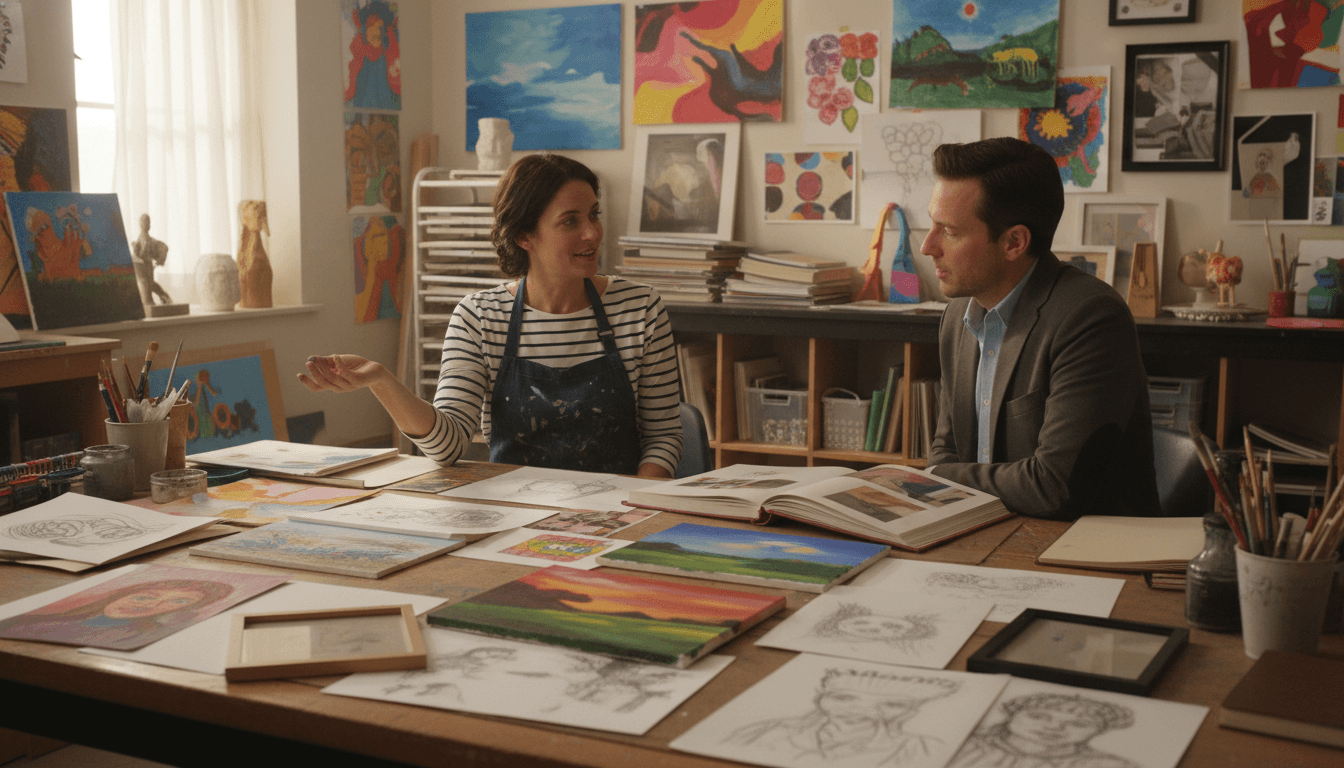
Art Teacher Newsletter: Parent Conference Newsletter Template
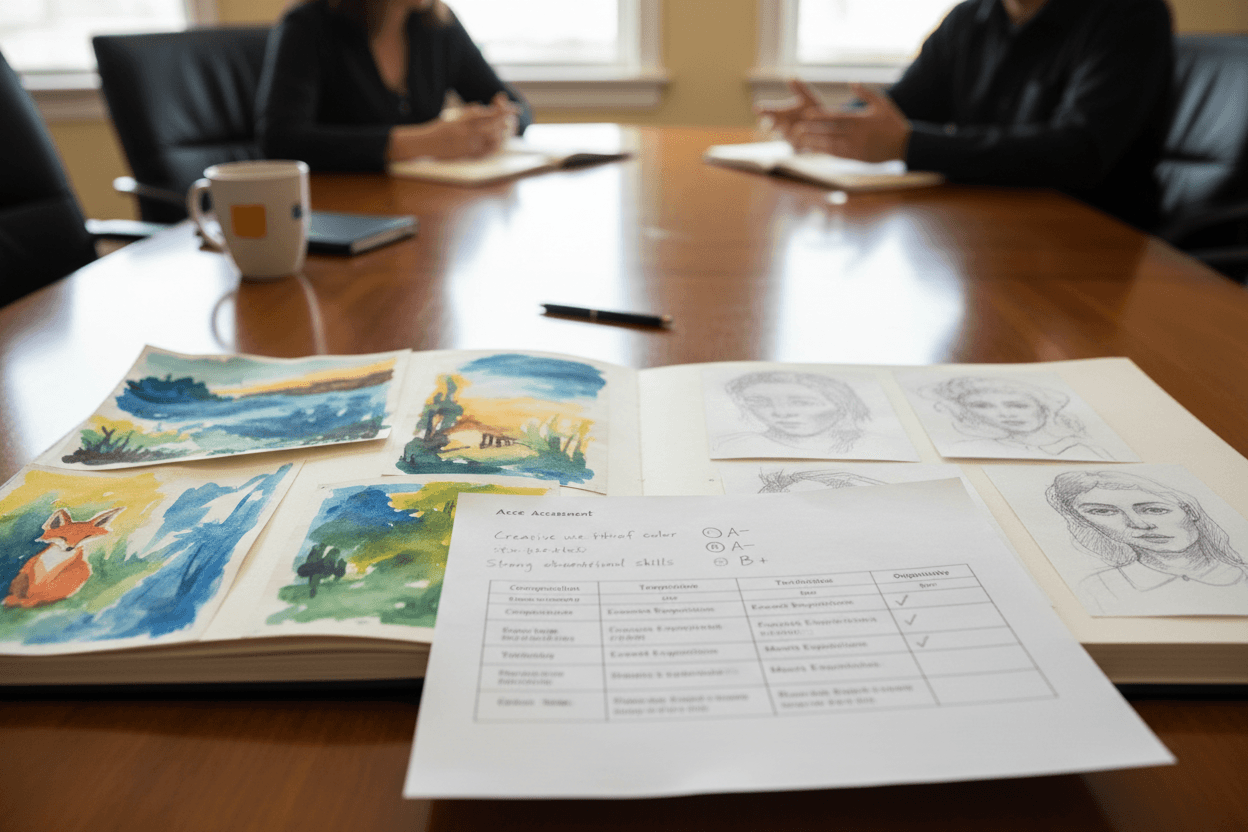
Parent conferences in the art room are different from conferences in core subjects, and families who are not prepared for that difference often walk out feeling like the conversation was too vague or they did not know what questions to ask. An art teacher conference newsletter sent before the conference solves this. It explains what will be discussed, how to look at the student's portfolio, and what artistic growth actually looks like so families can show up ready to have a real conversation.
This guide covers what to include in an art teacher conference newsletter, how to explain portfolio-based assessment to families, and how to frame growth in visual arts in ways that are specific and convincing rather than impressionistic.
Send the newsletter one week before conferences begin
One week is the right window. Earlier than that and families do not retain the details. Later than that and there is not enough time to look through the portfolio together, think about the questions, and arrive with any preparation. Your newsletter should arrive on the same day families receive their conference time slot, so the context and the logistical confirmation land together.
If students are bringing their physical portfolio home before the conference, note that in the newsletter and give families specific guidance for handling and returning it. Art portfolios are often the student's most significant creative work, and clear instructions about returning them prevent them from ending up in a backpack corner until summer.
Describe the portfolio structure before families open it
Tell families what they will find in the portfolio. "Your student's portfolio contains their three strongest pieces from the fall semester, their process documentation for the mixed-media project, a written self-reflection on growth, and a goal-setting sheet for the spring." This description turns what might be a confusing pile of papers and artwork into a legible document that families can navigate with purpose.
Name the sections explicitly. If there is a process section with sketches, drafts, and notes alongside the finished work, explain that the process documentation is part of the assessment, not just background material. Many parents look straight to the finished piece and overlook the sketches, revisions, and planning notes that reveal the most about a student's learning.
Give families three questions to ask before the conference
Prepare families to be thinking partners during the conference by giving them specific questions to ask their student when looking at the portfolio together. "Which piece are you most proud of? Tell me about one decision you made while making it." "Which piece was the hardest? What made it difficult?" "If you could redo one piece, what would you change and why?" These questions open the same reflective thinking that the conference itself will explore, and students who have already articulated their thinking will arrive at the conference with stronger answers.
Families who have gone through these questions before the conference also ask better follow-up questions during the conversation with you. Instead of "is my child good at art," they ask "I noticed she was really frustrated with the printmaking project. What was challenging about it and what does she understand now that she did not before?" That is a far more useful conference conversation for everyone.
Explain how you will describe artistic growth
Art progress reports mean different things to different families. Some parents expect a letter grade with a percentage and will not know what to make of a portfolio-based narrative description. Others understand growth language but want to know whether their student is on grade level or above it. Set expectations clearly in the newsletter: "During our conference, I will describe your student's growth in three areas: technical skill development, compositional thinking, and their ability to reflect on and revise their own work. I will use specific examples from the portfolio to illustrate where they started and where they are now."
This framing tells families what kind of conversation to expect. They should not arrive expecting you to say "your child got an 88 in art." They should arrive ready to hear specific, portfolio-supported descriptions of how their child's thinking and technique have developed.
Name the elements and principles you have focused on this year
Families who know what the class has been studying can understand the conference conversation far better. "This semester we focused on three elements of art: line, value, and space. Students learned to use varied line weights to create depth, to apply a value scale in charcoal and pencil drawings, and to think about positive and negative space in composition. When I show you your student's portfolio, you will see evidence of how each of these concepts shows up, or is still developing, in their work."
This context transforms what might look like a pile of drawings into a curriculum document. When parents understand that the progression from flat line drawings to drawings with depth and value represents specific skills being built deliberately, they see the work differently and understand what the growth documentation is showing them.
Tell families what happens after the conference
End the newsletter by describing what comes next. "After conferences, students will set two goals for the spring semester based on our conversation and their own self-assessment. I will share those goals with you by email so you know what your student is working toward." Or: "Students will take their portfolios home after the conference. We begin our printmaking unit the following week, and I will send a unit preview newsletter before we start."
Conferences that end without a clear next step feel unfinished. A forward-looking close in the newsletter, and in the conference itself, gives families something concrete to watch for and helps students see the conference as a moment in a continuing process rather than a final evaluation.
Include logistics in a short bulleted list
Conference date or date range, your room location, how to sign up for a time slot or where to find the schedule, how long each conference will last, and whether students should attend. Put this in a short bulleted list at the top or bottom of the newsletter, not embedded in paragraphs. Logistics buried in prose get missed. Logistics in a list get read, saved, and referenced on conference day.
Get one newsletter idea every week.
Free. For teachers. No spam.
Frequently asked questions
What should an art teacher conference newsletter include that other subject newsletters do not?
Art conference newsletters need to explain the portfolio structure before families arrive, describe what the teacher will discuss during the conference, and give families a framework for understanding artistic growth that does not rely on comparing their student to other students. Other subjects often communicate grades in terms of percentages and rankings. Art conferences involve growth documentation, process work, and reflection, which require more context for families who are not familiar with how visual arts learning is assessed.
How do I prepare families to look at a portfolio before the conference?
Send the newsletter with specific questions families can think about before they arrive: 'Look through your student's portfolio together. Ask them which piece represents their biggest growth and why. Ask them which technique they found most challenging. Ask them what they would change about one piece if they could start it again.' These questions prime families to have a substantive conversation during the conference rather than arriving cold and deferring entirely to the teacher's summary.
How should I explain artistic growth to parents who expect grade-based progress reports?
Use before-and-after language with specific examples. 'At the start of the year, your student's compositions used objects that were either floating in space or placed along the bottom edge. Now they are consistently thinking about negative space and creating balance across the full composition.' This kind of specific, observable description of growth is more meaningful than a letter grade and more convincing than a general statement like 'your student has improved.'
What if a student has not shown significant growth or is struggling?
Be honest and specific about where the student is and what is contributing to the gap. 'Your student has strong ideas but is struggling to execute them in the medium we have been using this semester. This is common when a student has high creative ambition but limited technical experience with the material. Here is what we are doing in class to build that technical foundation, and here is one way you can support practice at home.' Parents respond far better to specificity and a plan than to vague reassurance.
How does Daystage help art teachers prepare for parent conferences?
Daystage lets art teachers send a conference preparation newsletter to all families in one send, without copying and pasting into a classroom app or hunting for email addresses. You can include the portfolio review questions, the conference format explanation, and the scheduling link or time slot reminder all in one clean email. Families receive it formatted consistently on any device, and you can see who has opened it before conference day so you know which families may need a phone reminder.

Adi Ackerman
Author
Adi Ackerman is a former classroom teacher and curriculum writer with 8 years in K-8 schools. She writes about school communication, parent engagement, and what actually works in real classrooms.
More for Subject Teachers
Ready to send your first newsletter?
3 newsletters free. No credit card. First one ready in under 5 minutes.
Get started free