
Art Teacher Newsletter: Field Trip Newsletter to Parents

An art museum field trip is one of the highest-impact learning experiences an art teacher can offer, and a newsletter that treats it like any other field trip misses the opportunity to deepen that impact. Families who understand the specific learning purpose of a gallery visit prepare their students differently, ask better questions after the trip, and carry a different conversation home from the museum than families who only know the date and the departure time.
This guide covers what to include in an art teacher museum field trip newsletter, how to explain gallery activities to families who may not be regular museum visitors, and how to connect the trip to classroom learning in a way that makes the experience stick.
Lead with the learning purpose, not just the destination
Open the newsletter with the reason this museum visit matters for what students are studying right now. "On Thursday, April 10, our class will visit the city art museum to study original paintings from the Harlem Renaissance period. We have spent three weeks examining how Black American artists used visual art to reclaim narrative, celebrate identity, and respond to social and political conditions of the early 20th century. Standing in front of original works by Jacob Lawrence and Aaron Douglas will give students an encounter with scale, surface, and materiality that no reproduction can replicate."
This opening is more compelling than "we are going on a field trip to the art museum." It tells families this trip is the culmination of real academic work, and it gives them enough context to have a meaningful conversation with their student before and after the visit.
Describe what students will do in the galleries
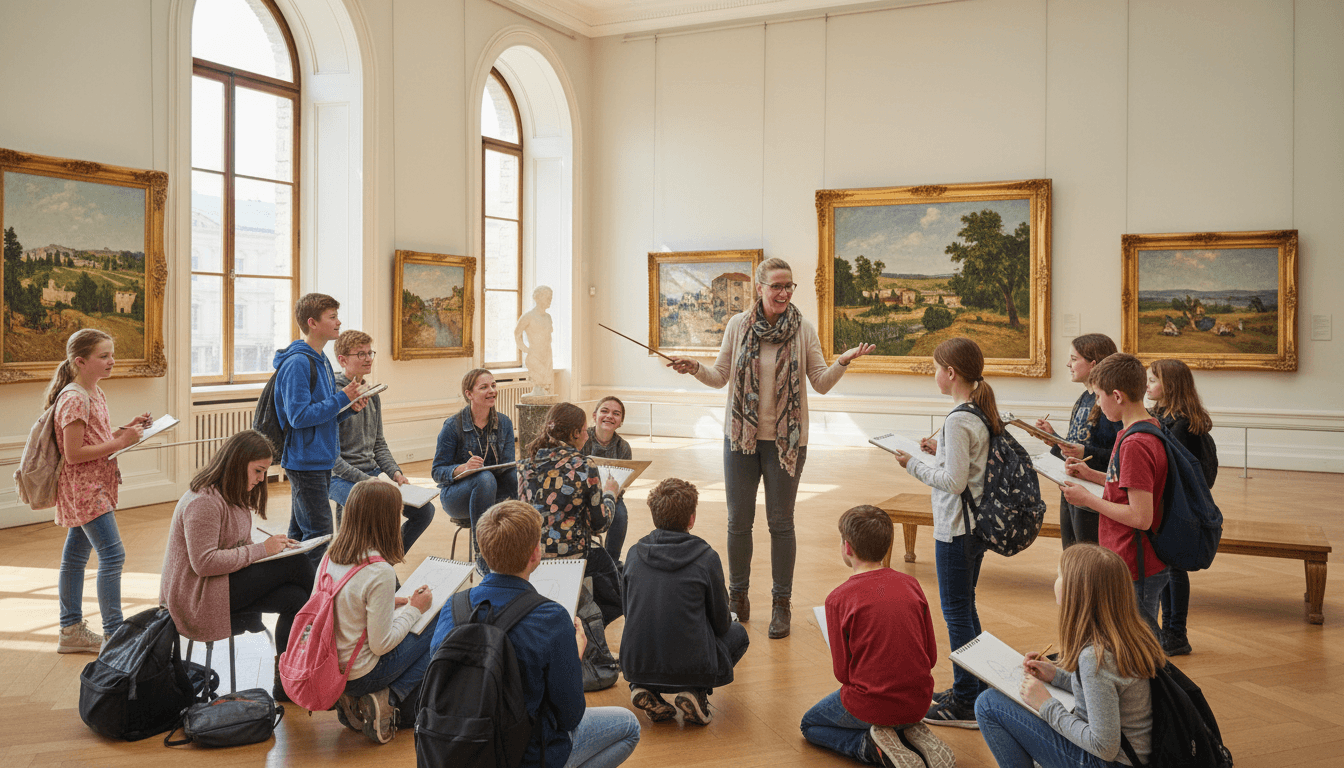
Tell families what the gallery experience actually looks like. Will students work through a visual analysis guide at each stop? Will they use the elements and principles of design as a lens for looking, asking questions like where does your eye go first, and why? Will they be sketching compositional structures or color relationships? Will there be a museum educator leading a structured gallery talk? Will students have time for independent looking after the guided portion?
When families understand that their student will be doing focused analytical and observational work in the museum, not just walking through exhibits, they treat the trip with the academic seriousness it deserves. They also understand why the sketchbook comes home with drawings rather than just a museum brochure.
Connect the museum visit to specific classroom skills
Name the concepts, skills, or units the trip supports. If students have been working on color theory and will now see how Impressionist painters built luminosity through complementary color placement, say that. If they have been learning about perspective and will see how Renaissance painters handled depth before photography existed, name the connection. If the trip is gathering inspiration for an upcoming studio project, describe the project briefly so families understand the creative purpose.
This curriculum connection also prepares students to look actively rather than passively. A student who knows they are looking for examples of compositional balance walks through a gallery differently than a student who is just waiting for the tour to end. The newsletter is part of that preparation.
Give families the supply and logistics list in a clear format
List what students will bring and what the museum allows. Include what to wear: comfortable shoes for standing and walking, weather-appropriate clothing if there will be any outdoor transit. Note any bag size restrictions or photography policies. If lunch is at the museum or packed, state this clearly. If students cannot bring phones or must keep them in their bags, explain that and why.
Museums have specific rules about art supplies in galleries, and they matter. A student who brings a pen or a wet medium into a gallery will be asked to leave or store it, which disrupts the sketching work the whole visit was built around. The newsletter is where you prevent this in advance.
Give families one question for the ride home
A single specific question turns a field trip into a lasting learning experience. "Ask your student to pick one artwork they saw and describe one decision the artist made about color or composition. What effect did that decision have on how the artwork feels?" Or: "Ask your student which work they would want to live with and which one made them feel uncomfortable, and to explain both answers using what they noticed about the art itself, not just whether they liked it."
These questions do what a casual "how was the museum?" cannot. They require the student to recall specific visual experiences and articulate their thinking, which is exactly the reflective practice the trip is designed to build. Families who ask these questions consistently are part of the art curriculum, not just bystanders to it.
Include cost, permission, and deadline logistics visibly
Put cost, permission slip deadline, and return logistics in a short bulleted list at the top of the newsletter, not buried in the fourth paragraph. If there is a financial assistance option, name it directly: "If cost is a barrier, please contact me or the main office by [date]. Every student will participate." Include the permission slip as a direct attachment or link. Each additional step between reading the newsletter and completing the form reduces follow-through.
If students who have not returned a signed permission form by the deadline will not attend, state this early and clearly. Clear advance notice produces better compliance than last-minute reminders. And the earlier you know who has not submitted forms, the more time you have to follow up before it becomes a crisis on departure morning.
Close by describing how the trip feeds into what comes next
Tell families what the class will do with the museum experience when they return. "Students will complete a visual analysis reflection based on one artwork they observed in the galleries. They will then begin their next studio project, which asks them to create a work in response to the artistic movement we studied, using the compositional and color strategies we identified in the museum." This close makes the field trip a visible part of a learning sequence rather than a day out of school, and it gives families something to watch for in the work their student brings home next.
Get one newsletter idea every week.
Free. For teachers. No spam.
Frequently asked questions
What should an art teacher include in a museum field trip newsletter?
Include the museum name, date, departure and return times, cost, permission slip deadline, what to wear and bring, and the specific learning objectives for the visit. For art museum trips, families especially benefit from knowing what students will actually do during the visit: sketch in front of specific works, complete a visual analysis guide, participate in a gallery talk, or gather inspiration for an upcoming studio project. The more specific you are about the art-learning purpose, the more families understand why the trip matters.
How do I explain to parents what their student will be doing in a museum?
Describe the gallery activities in student-visible terms. 'Students will spend 20 minutes in front of two selected works, using our observational drawing tools to sketch compositional elements and color relationships. We will discuss as a group what the artist's choices reveal about their intent.' This is far more useful than 'students will view the permanent collection.' It also gives parents a reason to ask a specific question on the way home: 'Tell me about one of the two pieces you sketched. What did you notice about how the artist used color?'
Should the field trip newsletter mention the museum's collection or specific artworks?
Yes, if you have selected specific works or galleries in advance. Name the artists, periods, or themes students will focus on, and connect them to what the class has been studying. 'We have been analyzing how Impressionist painters used broken brushwork to capture light and movement. At the museum, students will have the opportunity to stand in front of Monet's original and examine a technique we have only seen in reproduction.' This connection gives the trip academic weight and makes the museum experience feel earned rather than incidental.
How do I handle sketchbook or supply logistics in the newsletter?
Be explicit about what students will bring and what the museum allows. 'Students will bring their sketchbook and two graphite pencils. The museum does not allow pens, markers, or erasable colored pencils in the galleries, so please do not send your student with any additional art supplies.' If students are bringing a backpack, note any museum bag policies. Families who send their child with the wrong supplies create logistical problems that interrupt the gallery experience for the whole group.
How does Daystage help art teachers send museum field trip newsletters?
Daystage lets art teachers build a field trip newsletter template that covers the gallery learning objectives, packing list, logistics, and permission slip information in one clean send. Because you are working from a standing template, adding a new museum trip newsletter takes minutes rather than rebuilding the format from scratch. Families receive a professional-looking email they can reference for logistics on the morning of the trip, and you can see who opened it so you know who might need a direct reminder before the permission slip deadline.

Adi Ackerman
Author
Adi Ackerman is a former classroom teacher and curriculum writer with 8 years in K-8 schools. She writes about school communication, parent engagement, and what actually works in real classrooms.
More for Subject Teachers
Ready to send your first newsletter?
3 newsletters free. No credit card. First one ready in under 5 minutes.
Get started free