
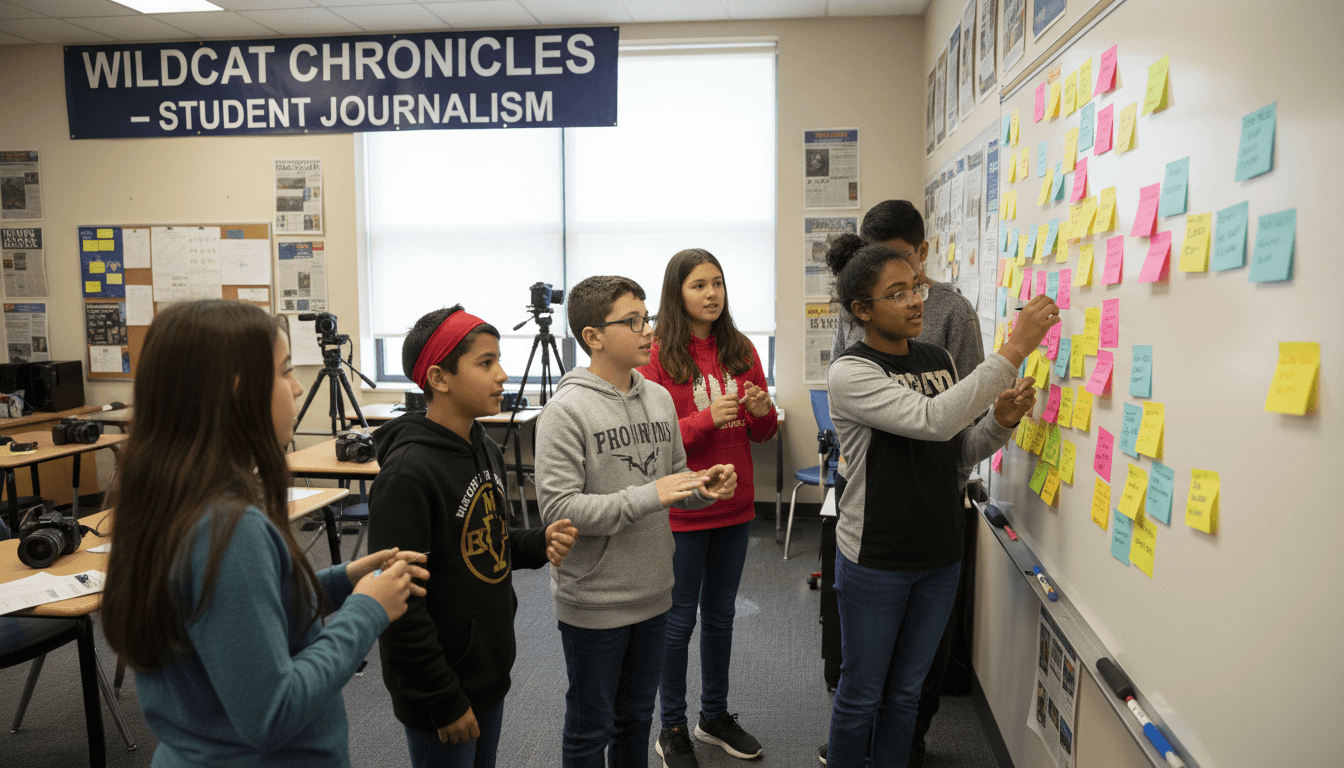
Student Mentorship Reporting Newsletter: How Student Journalists Cover Peer Support Programs

Peer mentorship programs operate in the background of most schools, pairing older students with younger ones in relationships that can change how a student experiences the building. Student journalists who cover these programs bring them into the visible life of the school, recognize the students doing the work, and inform the community about something valuable that most students do not know exists.
Why mentorship programs deserve coverage
Most school publications cover events. Fewer cover programs. Peer mentorship is exactly the kind of ongoing program that benefits from sustained coverage: it runs year-round, involves a large number of students in different roles, changes over time as the program evolves, and produces human stories that the event calendar never generates.
Coverage also creates accountability. A mentorship program that is working well welcomes attention. A program that has capacity problems, waitlists, or quality inconsistencies benefits from coverage that surfaces those gaps and gives program coordinators a reason to address them.
Story angles for mentorship coverage
The mentor-mentee profile is the most compelling format: two students, their relationship, what brought them together, and what has changed for each of them. These stories require real access and real conversations, but they produce the kind of feature that stays with readers.
The program overview story answers questions every potential participant has: how do you apply, what does the commitment involve, what kind of training do mentors get, and how are pairs matched? This story is also a recruitment tool.
Privacy and consent in mentorship reporting
Mentorship relationships often involve personal vulnerability. A reporter who is profiling a mentee needs to think carefully about what details are appropriate to include and should have an explicit conversation with the student about what they are comfortable sharing. Program coordinators can often help reporters understand what territory to approach carefully.
All students featured should have given explicit consent. When covering minors, getting that consent should include the student's parent or guardian.
Data-driven mentorship coverage
Program coordinators often track data: how many students are enrolled, what grade levels are served, whether there is a waitlist, how pair matching works, and whether there are any outcome measures. Data-driven coverage of mentorship programs adds depth to individual stories and helps the school community understand the program's scale and impact.
The progression story
Some of the most compelling mentorship stories follow a student's progression from mentee to mentor. A senior who was paired with a freshman mentor three years ago and is now mentoring an incoming freshman has a story about growth, connection, and what the school community can mean across time. These stories capture something about school culture that almost no other format reaches.
Get one newsletter idea every week.
Free. For teachers. No spam.
Frequently asked questions
Why should student journalists cover peer mentorship programs?
Peer mentorship programs are among the least visible and most impactful programs in most schools. Student coverage brings recognition to the students involved, informs other students about how to participate, and builds accountability for program coordinators to maintain quality. Coverage also gives mentors and mentees a platform to describe what the experience has meant to them.
What story angles work well for student mentorship coverage?
Feature profiles of a mentor-mentee pair (with both students' permission), a look at what training mentors receive, data on how many students the program serves and how demand compares to capacity, a first-person reflection from a student who went from mentee to mentor, and coverage of any program changes or expansions all produce compelling stories.
How do student journalists protect student privacy when covering mentorship programs?
Mentorship relationships often involve personal struggles or vulnerability on the part of the mentee. Reporters should get explicit consent from all students they feature, avoid identifying specific personal challenges unless the student chooses to share them publicly, and work with the program coordinator to understand what is appropriate to report versus what should remain within the program.
How does mentorship coverage connect to the school's broader community story?
Programs where students support other students are evidence of a school culture where belonging is actively built rather than left to chance. Coverage of these programs builds awareness of that culture and encourages more students to participate. It also gives families a specific, concrete view of what the school's community values look like in practice.
How does Daystage help school publications share mentorship program coverage with families?
Daystage gives student publications and school advisors a newsletter platform to distribute mentorship program stories to families, helping families understand the peer support systems their students can access and participate in.

Adi Ackerman
Author
Adi Ackerman is a former classroom teacher and curriculum writer with 8 years in K-8 schools. She writes about school communication, parent engagement, and what actually works in real classrooms.
More for Student-Led
Student Journalist Orientation Newsletter: How Advisors Prepare New Student Reporters
Student-Led · 5 min read
Student-Led School Newsletters: A Teacher's Guide to Making Them Work
Student-Led · 9 min read
How Student Journalists Can Cover Diversity and Inclusion in the School Newsletter
Student-Led · 5 min read
Ready to send your first newsletter?
3 newsletters free. No credit card. First one ready in under 5 minutes.
Get started free