
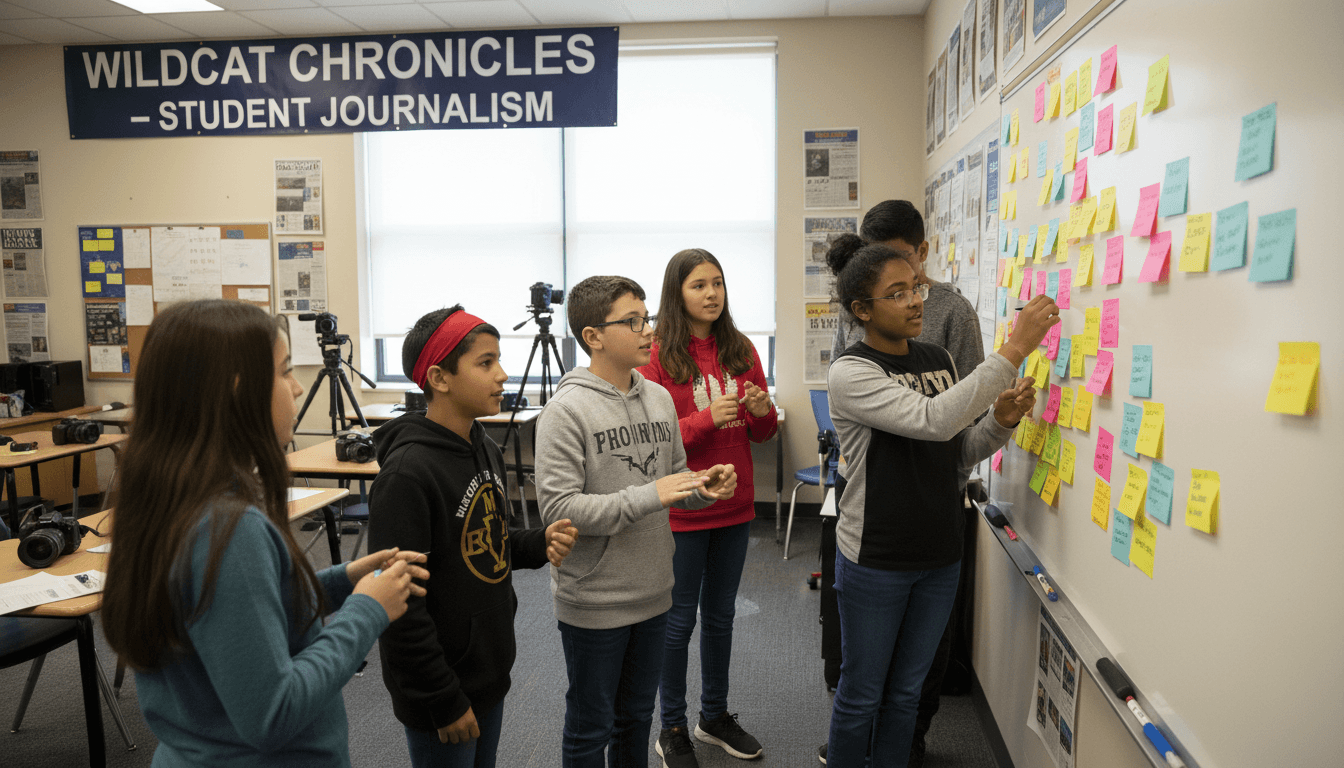
How Student Journalists Can Cover Diversity and Inclusion in the School Newsletter

The most valuable diversity and inclusion journalism a student newsletter can produce is the kind that reports on whether inclusion is actually happening, not the kind that describes the programs designed to make it happen. These are different stories, and the second one serves the school community better than the first.
Report the Experience, Not the Program
A story about the school's new diversity initiative is a story about a program. A story about whether students from underrepresented groups feel genuinely included in the school's academic and social life is a story about the school. The second story is harder to report because it requires primary sources who will share honest experiences, but it is the story that the school community actually needs.
Teach students to ask the question behind the announcement. The school announces a new program to support multilingual learners. The journalism question is: what do multilingual students say about their experience now, and what did they say before the program launched?
Center the Voices of Affected Students
Diversity coverage that is built primarily on administrator quotes and program descriptions gives readers the institution's account of the institution's own performance. The primary sources for stories about inclusion are the students whose inclusion is at stake.
This requires building genuine trust with students from groups whose experiences may not typically receive coverage in the school newsletter. That trust develops over time, through coverage that demonstrates the publication takes those experiences seriously and reports them accurately. A single issue's coverage cannot build that trust, but consistent, respectful reporting over a full school year can.
Use Language the Source Chooses
How a publication describes the students it covers communicates whether it takes their identity seriously. Use the terms sources use for themselves. Ask when unsure. Do not assume that terms the advisor or editor finds natural are the terms that the students in the story prefer.
This also means not disclosing aspects of a student's identity that the student did not volunteer for the story. A student who agrees to be interviewed about their experience as a student with a disability has not necessarily agreed to have other aspects of their identity mentioned. The reporter's obligation is to the source's privacy within the scope of what the source chose to share.
Look at the Data
Some of the most useful diversity reporting a student journalist can do requires no interviews at all. Look at the school yearbook and measure whether the student council, the honor society, the athletic leadership, and the performing arts leadership reflect the school's demographic composition. Look at the course enrollment records and see whether advanced courses have proportional enrollment across the student body. Look at the discipline records and see whether consequences are applied consistently.
Data-based reporting is harder to challenge than anecdote-based reporting. It also often reveals patterns that no single student's experience can fully capture.
Cover Consistently, Not Seasonally
Diversity coverage that appears only during awareness months signals that the publication treats those communities as seasonal topics rather than as a permanent part of the school's story. A student newsletter that covers the experiences of students with disabilities every issue, and not only during disability awareness month, is a publication that takes inclusion seriously as a coverage priority.
Get one newsletter idea every week.
Free. For teachers. No spam.
Frequently asked questions
How do you cover diversity and inclusion without making it feel performative?
Require investigation rather than announcement. Diversity coverage that consists of reprinting the school's DEI program descriptions is not journalism. Coverage that investigates whether the school's library collection reflects the student body's demographics, or whether student council representation matches the school's racial and ethnic composition, or whether students with disabilities have genuine access to extracurricular activities, is journalism. The question that separates reporting from promotion is always the same: does the reality match the stated commitment?
How do you source diversity stories so that affected students' voices are centered?
Require that any story about a group's experience begins with members of that group as primary sources, not as supplementary voices added after the main reporting. A story about whether multilingual students feel represented in the school curriculum should be built primarily on interviews with multilingual students, with teacher and administrator perspectives as secondary framing. The goal is to report the experience, not to report about it from the outside.
How do you cover a student's identity accurately and respectfully?
Use the identity terms the student uses for themselves, not terms the reporter assumes are correct. Ask sources how they prefer to be described and use that language. Do not disclose aspects of a student's identity that the student did not voluntarily share for the story. Identity coverage that centers the subject's own language and consent builds trust with the communities the publication is trying to reach.
How do you handle a diversity story where school administration disagrees with the students' perspective?
Apply standard journalistic practice: report both perspectives accurately and let readers assess them. The students' experience of the school climate is as factually relevant as the administration's description of its programs. A story that includes both is a fair story. A story that includes only the administration's perspective on its own inclusion programs is not a diversity story. It is a press release.
How does Daystage support diversity and inclusion coverage in student newsletters?
Daystage helps schools build student newsletter programs that cover diversity topics with the authenticity, accuracy, and centering of community voices that makes coverage genuinely useful. Schools use it to develop student journalists who treat inclusion as a journalism beat, not a calendar obligation.

Adi Ackerman
Author
Adi Ackerman is a former classroom teacher and curriculum writer with 8 years in K-8 schools. She writes about school communication, parent engagement, and what actually works in real classrooms.
More for Student-Led
Ready to send your first newsletter?
3 newsletters free. No credit card. First one ready in under 5 minutes.
Get started free