
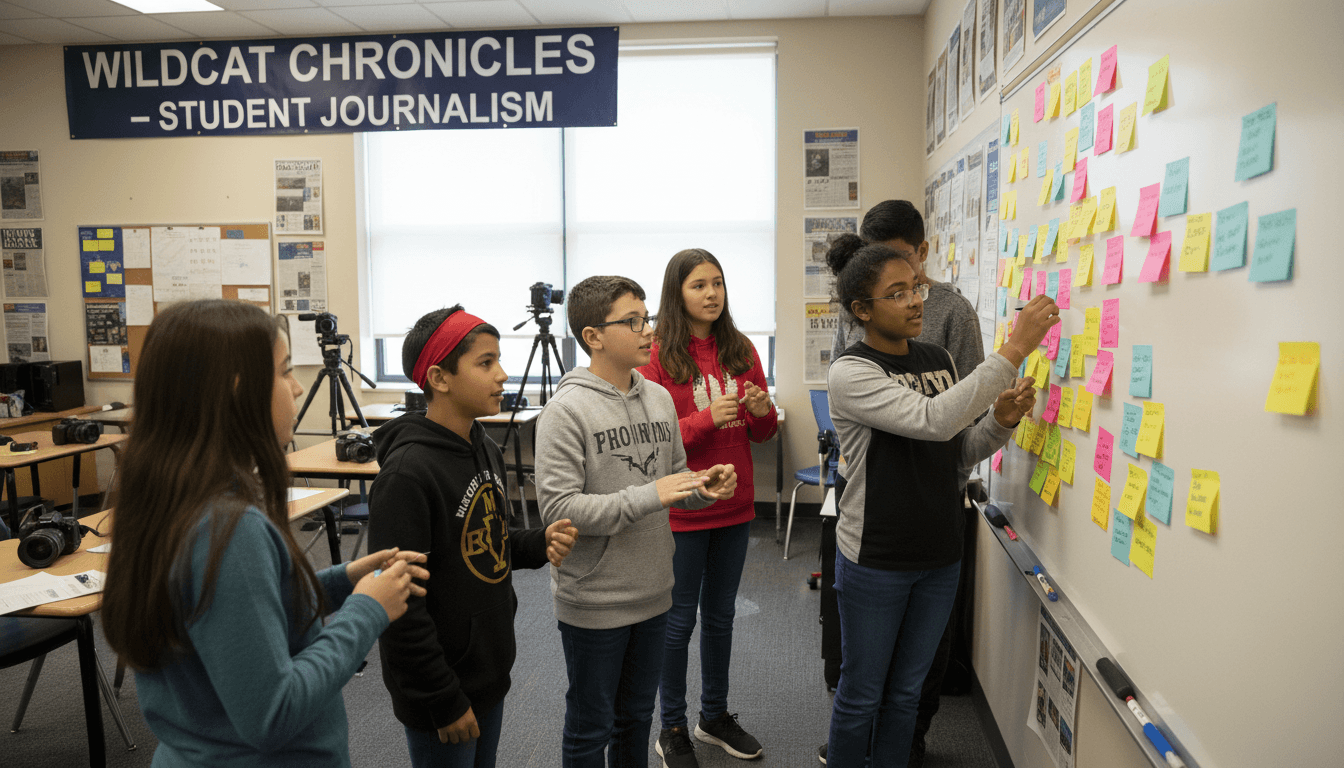
Running a Student-Led Newsletter at the High School Level

A high school student newsletter that is genuinely student-led, meaning that students make editorial decisions independent of administrative approval, produces the most valuable journalism education possible: real decisions with real consequences for real readers. That is what distinguishes a student press program from a journalism class that produces practice publications.
Define Editorial Independence Clearly
From the beginning of the program, the school and the student editors should have a shared understanding of what editorial independence means in practice. Students control editorial decisions. The faculty advisor advises on journalistic standards, legal issues, and professional ethics. The administration sets policy boundaries around libel, privacy, and obscenity. Within those boundaries, students decide what to cover and how.
This agreement should be documented and shared with school leadership before the program begins, not negotiated in the middle of a conflict over a specific article.
Develop Editors Who Lead, Not Writers Who Manage
High school student newsletters succeed when the editor-in-chief functions as a true editorial leader, assigning stories, making judgment calls about coverage, setting and enforcing standards, and holding the team accountable for quality and deadlines. This requires incremental development, not appointment.
Students who move through the roles of reporter, section editor, and then editor-in-chief develop the judgment that the top role requires. Students appointed directly to editorial leadership without that progression often struggle with the decisions that require experience to make well.
Cover Genuine News
A high school student newsletter that only covers events the administration has already announced is not a press program. It is a republication of official communications. Student journalism earns its audience by reporting on what is not already officially known: investigating why a popular teacher left, examining the effects of a new school policy on student experience, or covering a community issue that affects students.
Build in Rigorous Editorial Standards
Editorial independence does not mean unaccountable publication. Every article should have at least two named, on-record sources. Claims should be fact-checked before publication. Subjects of critical coverage should be given the opportunity to respond. These standards protect the publication's credibility and the school community's trust, which are the foundations the editorial independence rests on.
Connect Student Work to the Broader Journalism World
High school student journalists who enter state press association competitions, connect with working journalists as mentors, or publish work that earns attention beyond the school develop professional identity and ambition that classroom assignments alone cannot produce. The faculty advisor's role includes building those connections, not only teaching the craft.
Get one newsletter idea every week.
Free. For teachers. No spam.
Frequently asked questions
What is the appropriate level of editorial independence for a high school student newsletter?
High school students should control content decisions, including which stories to pursue, how to frame them, and what sources to include. The faculty advisor's role is to advise on journalistic standards and legal issues, not to approve or veto editorial choices based on whether the content is favorable to the school administration. A student publication that requires administrative pre-approval of content is not a student publication. It is a school publication with student contributors.
How do you handle a student newsletter article that the administration objects to?
Evaluate the article on journalistic standards: is it factually accurate, fairly sourced, and does it serve the community's legitimate interest in the information? If it meets those standards, it is publishable regardless of administrative objection. The school's role is to set general policies around libel, privacy, and obscenity. The student editors' role is to make editorial decisions within those policies. Administrative preference is not a journalistic standard.
How do you develop student editors who can run the newsletter with minimal adult intervention?
Give students editorial responsibility incrementally. Start with section editing, move to full edition responsibility, then full year editorial leadership. Each step requires the student to make real decisions with real consequences for the publication quality. Students who have never experienced the consequences of a real editorial decision are not ready to lead a publication. Students who have made decisions, seen the outcomes, and adjusted are.
How does a high school student newsletter differ from the school's official newsletter?
The official newsletter represents the school administration's communication. The student newsletter represents student journalists' independent reporting. Both serve the school community, but they serve different functions. Readers benefit from having access to both. The school should not attempt to merge them or use the official newsletter to substitute for student press, because both channels do something the other cannot.
How does Daystage support high school student journalism programs?
Daystage helps high school journalism programs develop student newsletters that operate with professional standards, serve real community information needs, and develop students who are ready to contribute to college and community journalism. Schools use it to ensure that the student newsletter is a publication the school community reads, not an exercise that only journalism class participants see.

Adi Ackerman
Author
Adi Ackerman is a former classroom teacher and curriculum writer with 8 years in K-8 schools. She writes about school communication, parent engagement, and what actually works in real classrooms.
More for Student-Led
Student-Led End-of-Year Reflection Newsletter: How Student Journalists Close the School Year
Student-Led · 5 min read
Student Mentorship Reporting Newsletter: How Student Journalists Cover Peer Support Programs
Student-Led · 5 min read
Student Newsletter Headline Writing Guide: How Student Journalists Write Headlines That Get Read
Student-Led · 5 min read
Ready to send your first newsletter?
3 newsletters free. No credit card. First one ready in under 5 minutes.
Get started free